
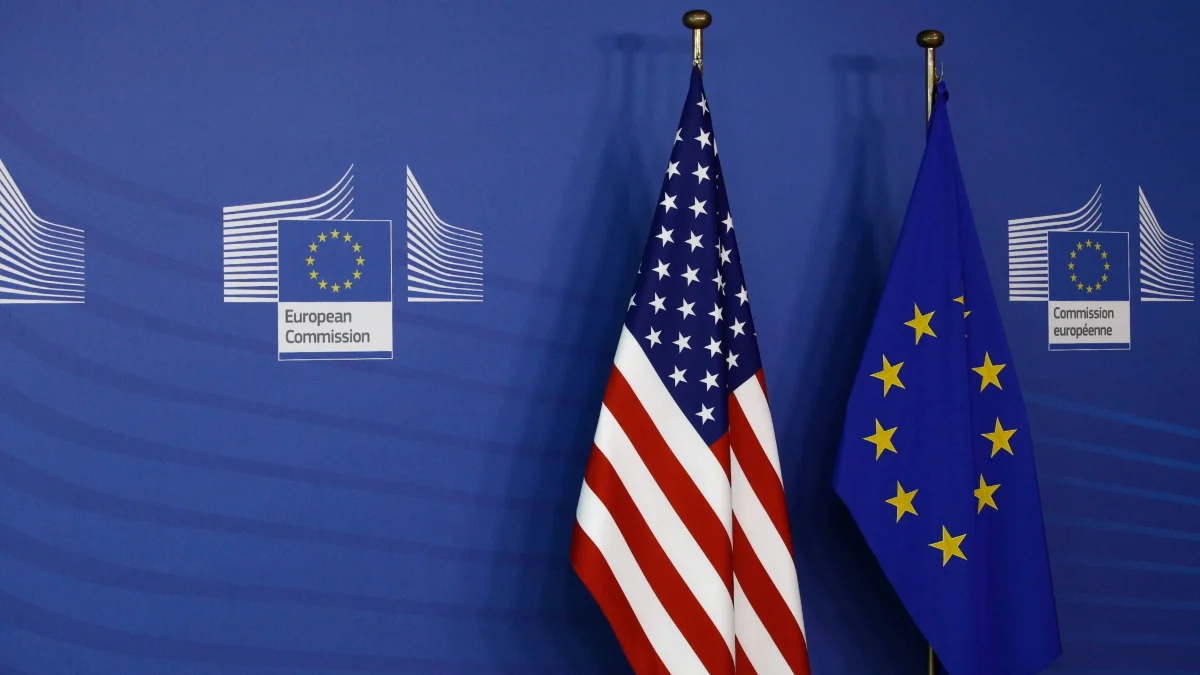
The relationship between the European Union and the United States is increasingly strained over digital policymaking, undermining cooperation on key AI governance issues even as both sides pursue similar regulatory goals. The underlying loss of trust complicates efforts to jointly address emerging challenges presented by artificial intelligence and critical digital infrastructure development.
What Happened
Since early 2026, political tensions between Brussels and Washington have deepened, highlighted by President Trump’s unsuccessful attempt to acquire Greenland, an autonomous territory of Denmark, which alarmed European officials about U.S. unpredictability in strategic matters. In response, the European Commission, under President Ursula von der Leyen, accelerated efforts for “European Technological Sovereignty” with a package announced in June 2026 targeting critical digital infrastructure, including AI hardware and semiconductors. While these initiatives focus on reducing reliance on U.S. technologies, they come amid stalled transatlantic negotiations on cooperation frameworks for law enforcement access to electronic evidence and digital safety standards. Workshops such as those held by the Atlantic Council’s Democracy + Tech Initiative reveal ongoing challenges in aligning open-source AI approaches between the regions.
Key Facts
The EU’s European Technological Sovereignty Package, unveiled in June 2026, is designed to increase self-sufficiency in AI infrastructure and high-end semiconductor manufacturing within its 27 member states. This package is intended to mitigate dependency on U.S. technology firms that dominate critical digital sectors. However, internal EU divisions persist, with countries like France endorsing rapid decoupling from U.S. suppliers, while Eastern European states remain reliant on American technology for national security reasons. In parallel, both the EU and U.S. have achieved similar regulatory milestones, such as antitrust enforcement actions against major platforms including Meta and Google. Nevertheless, progress on establishing transatlantic agreements for electronic evidence sharing remains frozen due to the broader political mistrust.
What This Means
The growing mistrust between the EU and U.S. complicates coordinated regulation and oversight of artificial intelligence, an area where alignment could otherwise streamline compliance requirements and enhance user protections. For industry players operating on both sides of the Atlantic, this division threatens increased fragmentation, elevating costs and regulatory complexity. Consumers and governments risk diminished access to innovative AI services if cooperation stalls. The EU’s ambition to build a “made in Europe” AI ecosystem illustrates a strategic pivot toward digital sovereignty but also signals a potential shift towards regionalized tech blocs, which may fragment global AI governance structures.
Beyond technology firms, this dynamic influences broader geopolitical alignments where digital governance becomes a marker of sovereignty and technological independence. The political backdrop indicates that resolving these frictions will require rebuilding fundamental trust, which is a prerequisite for advancing joint frameworks on AI transparency, safety standards, and lawful digital evidence exchange.
The Bigger Picture
This EU-US trust deficit emerges amid a global techno-geopolitical landscape marked by heightened competition with authoritarian states like China and Russia, which actively promote alternative digital governance models. The divergence between Brussels and Washington weakens Western unity on digital policy, potentially ceding influence in shaping international AI norms. The digital sovereignty initiatives reflect a broader trend in Europe to insulate critical infrastructure from foreign control, a movement that parallels concerns in other democracies but is currently fraught with internal inconsistencies and funding shortfalls.
What Remains Unclear
It remains uncertain how the EU will reconcile divergent member state approaches to reducing reliance on U.S. technology firms or how soon comprehensive transatlantic agreements on data sharing, privacy, and AI oversight will be negotiated. Moreover, the full impact of the European Technological Sovereignty Package, including budget allocations and implementation timelines, is not yet finalized. Pending political developments in the U.S., particularly changes in administration or congressional positions, also create unpredictability around future AI regulatory coordination.
What Comes Next
Details on legislative or policy steps following the European Commission’s June 2026 sovereignty package are forthcoming but have yet to be fully disclosed. Engagements such as Atlantic Council workshops and EU-US digital policy dialogues continue but so far have not resolved key trust issues. Monitoring upcoming EU digital regulation proposals, enforcement actions, and U.S. federal decisions on AI governance will be crucial indicators of progress in transatlantic collaboration.
Sources
This article is based on reporting and publicly available information from the following sources:
Read more AI Regulation stories on Goka World News.