
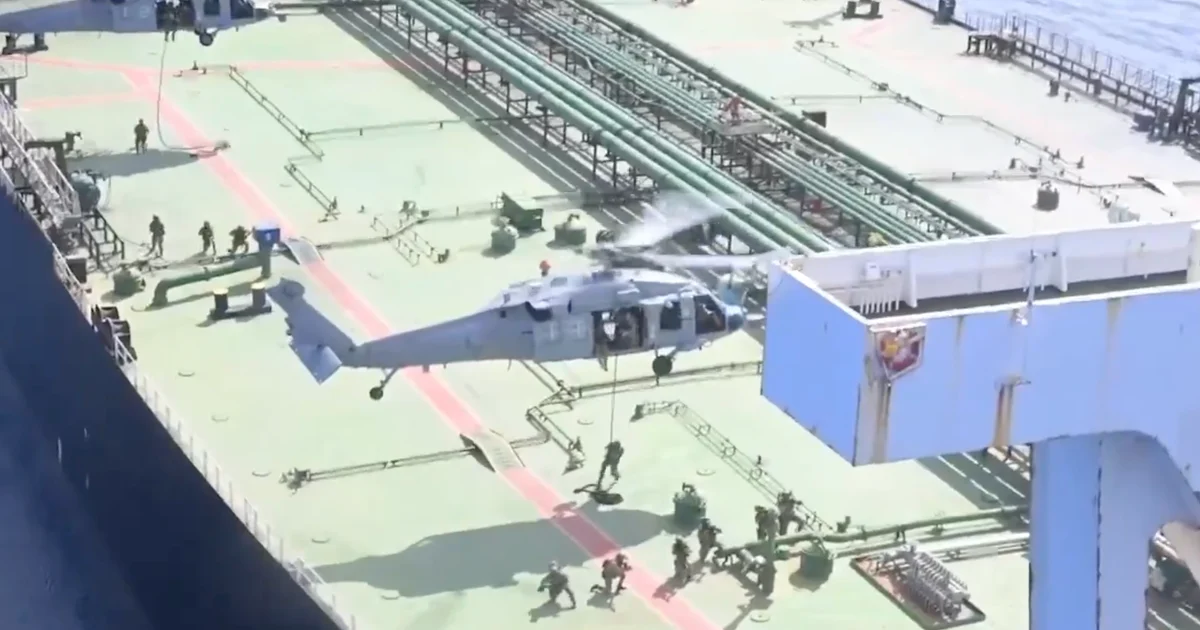
The United States is seeking to revive a centuries-old maritime legal framework to fast-track claims on Iranian oil tankers seized during ongoing hostilities with Iran, signaling a provocative step in the administration’s approach to maritime conflict enforcement.
What Happened
The Justice Department confirmed in August 2026 that the U.S. attorney’s office in southern Texas is spearheading efforts to bring back prize law, a specialized maritime legal process last regularly invoked during the Spanish-American War. This legal regime will potentially govern the adjudication of Iranian-linked vessels detained at sea by U.S. forces since Donald Trump’s presidency. The law, codified but unused for decades, enables expedited court decisions on seized ships and their cargo, distinguishing it from slower civil asset forfeiture processes.
U.S. Southern District of Texas Attorney Aaron Reitz stated that national security interests might necessitate military seizure of vessels supporting enemy states in conflict, with federal courts prepared to oversee resulting claims. Pentagon and Justice officials would need to prove vessels are carrying contraband, transporting enemy personnel, operating under enemy control, or violating blockades to have prize courts rule in favor of the U.S.
Key Facts
The prize law regime was formalized in the early 17th century and last extensively applied in the 1898 Spanish-American War. Under current federal statutes dating back to 1789, district courts have jurisdiction over prize cases once vessels enter their ports, which for Iranian tanker cases may involve Houston, Texas. Legal standards require physical custody of the seized vessels to adjudicate claims, a challenging logistical matter in this enforcement effort.
Recent seizures include the Iranian-flagged cargo ship Touska in May 2026, intercepted attempting to circumvent the U.S. blockade of Iranian maritime assets. Iran condemned the seizure as piracy and appealed for UN intervention, highlighting diplomatic tensions. This prize law invocation follows Trump administration precedents of reactivating dormant statutes to achieve policy objectives, including using the Alien Terrorist Removal Court for deportations and the Alien Enemies Act for expelling Venezuelan gang-affiliated migrants.
What This Means
This revival of prize law marks a significant escalation in the U.S.’s legal approach to maritime enforcement against Iran, one that aims to streamline the forfeiture of enemy vessels and their valuable cargoes, especially oil. For policymakers and the shipping industry, it signals an intensification of U.S. actions to assert control over Iranian maritime activities amidst unresolved hostilities.
The practical effects could include heightened legal certainty for the U.S. to confiscate Iran-linked vessels and sell their contents, generating Treasury revenues and applying pressure on Tehran’s maritime commerce. However, legal experts caution that the approach may invite diplomatic disputes, particularly with third countries whose flags vessels may sail under, and could prompt retaliatory actions targeting American shipping abroad in the future.
Moreover, physically bringing the tankers to ports within U.S. jurisdiction to satisfy prize law court requirements could pose operational hurdles with potential international ramifications. The administration’s efforts will test how historic maritime laws can adapt to modern geopolitical conflicts involving non-traditional adversaries.
Background
Prize law originally authorized privateers commissioned by governments to seize enemy ships and apportion spoils, a practice critical during the Revolutionary War and early U.S. history. Over time, prize law faded, replaced by modern sanctions and asset forfeiture regimes.
The Trump administration’s recent legal strategies revive long-unused statutes to fast-track enforcement actions in complex geopolitical disputes, particularly against Iran and Venezuela. The use of prize law reflects this trend, as the U.S. seeks stronger maritime legal tools amid conflict and sanctions enforcement.
Analysis
Maritime law experts offer mixed views. Ian Ralby, president of the nonprofit Auxilium Worldwide, notes existing naval warfare laws like blockade enforcement have already been revived, but he warns prize law could face significant domestic and international legal challenges, especially regarding consistency in U.S. policy and legal justification.
University of Texas maritime law professor Michael Sturley highlights the procedural obstacle of requiring seized vessels to be physically located in the jurisdiction of U.S. courts. Fordham University international law professor Thomas Lee adds that seizures of ships flying third-country flags may provoke legal challenges citing the lack of a formal war authorization against Iran and raise concerns about future reciprocal seizures by adversaries.
What Remains Unclear
The exact number of vessels subject to prize law actions has not been confirmed. The U.S. government’s ability to physically bring seized ships to appropriate ports and maintain custody remains uncertain. Additionally, the legality of seizing vessels operating under flags of countries not officially at war with the U.S. has not been definitively resolved. No U.S. prize court case has been held since the Spanish-American War, leading to unpredictability about how current courts will adjudicate these matters.
What Comes Next
The Justice Department and Pentagon plan to pursue prize law cases in U.S. district courts as vessels are captured or brought into jurisdiction. Legal proceedings will determine whether seized Iranian-linked ships and cargoes are officially condemned and transferred to U.S. control. Monitoring by international organizations and diplomatic responses from Iran and allied nations will continue as this unprecedented legal initiative unfolds.
Sources
This article is based on reporting and publicly available information from the following source:
Read more Politics stories on Goka World News.