
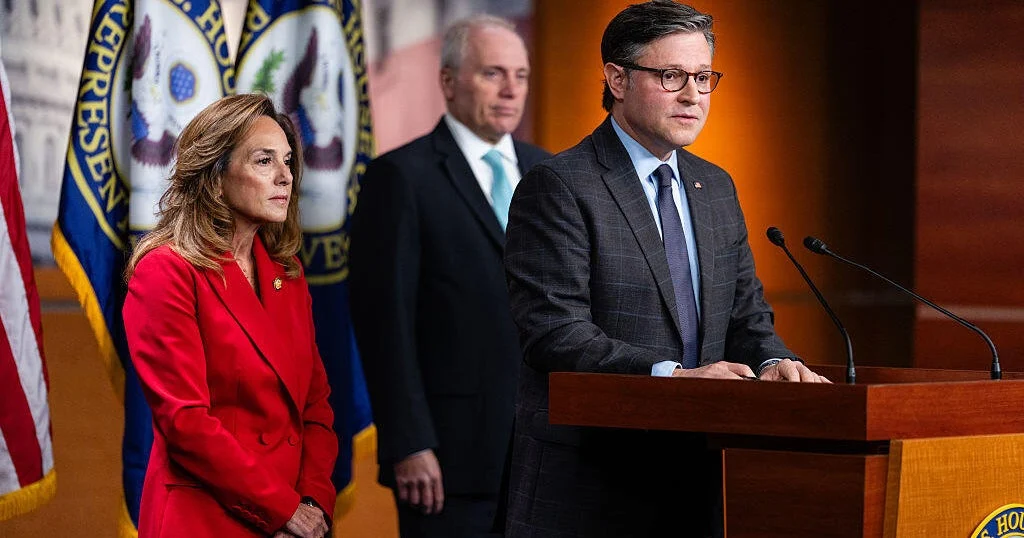
On September 1, 2026, the U.S. House of Representatives adopted a resolution to condemn socialism “in all its forms,” a politically charged measure timed ahead of the November midterm elections. The resolution passed with a vote of 220 in favor, 192 opposed, and 2 members voting present, including eight Democrats who broke ranks to join Republicans.
What Happened
The resolution, designated House Resolution 1490, was passed during a tense session in Washington. The vote aligned almost entirely along party lines, with all Republicans voting in favor and the majority of Democrats opposing it. However, eight Democratic representatives—Kathy Castor (FL), Henry Cuellar (TX), Don Davis (NC), Jared Golden (ME), Vicente Gonzalez (TX), Marie Gluesenkamp Perez (WA), Darren Soto (FL), and Gabe Vasquez (NM)—voted alongside Republicans to approve the resolution. Two Democrats, Chrissy Houlahan (PA) and Maggie Goodlander (NH), abstained by voting present.
The resolution explicitly condemned socialism and simultaneously reaffirmed support for the SAVE America Act, a Republican-backed voting reforms bill that has been stalled in the Senate due to lack of majority support. House Majority Leader Steve Scalise (R-LA) linked the condemnation of socialism to concerns about election integrity, stating condemnation included opposing non-citizen voting, which he associated with Democratic Socialists of America platforms.
Leading up to the final vote, a procedural motion to bring the resolution to the floor initially faced resistance from some Republican hardliners who opposed a short-term government funding bill, threatening to derail the legislation. Two moderate Democrats—Jared Golden and Marie Gluesenkamp Perez—voted with Republicans during this procedural moment, enabling the resolution’s eventual passage and presenting a political challenge for their Democratic colleagues.
Key Facts
The final tally was 220 for, 192 against, and 2 present. Republicans united for the resolution while most Democrats opposed it, except for eight Democrats who crossed party lines. The resolution combined condemnation of socialism with endorsement of the SAVE America Act, which seeks changes to voting regulations.
House Minority Leader Hakeem Jeffries (D-NY) announced his opposition to the resolution, criticizing the inclusion of the SAVE America Act, which he described as “toxic voter suppression legislation” promoted by “far-right extremists.”
Republicans framed their effort responding to rising democratic socialist primary victories within the Democratic Party, linking their messaging to election security and the anticipated November vote. Meanwhile, Democrats like House Democratic Caucus Chair Pete Aguilar opposed the linkage between socialism condemnation and the SAVE Act, underscoring their capitalist principles while distancing themselves from GOP messaging.
What This Means
The passage of this resolution reflects the deepening partisan divide over ideological lines and election policy ahead of a contentious midterm election cycle. By explicitly condemning socialism and linking it to voting reforms, Republicans continue to leverage concerns about democratic socialist gains to energize their base and frame their priority legislation.
For Democrats, the defection of eight members highlights internal division on how to address the issue politically, especially with a subset of their base embracing democratic socialism. The resolution’s intertwining with the SAVE America Act complicates intra-party positioning, as Democrats push back against legislation they view as suppressive while Republicans emphasize election integrity.
This exchange encapsulates the ongoing culture war shaping legislative battles: policy debates over voting rights have become proxies for broader ideological conflicts. The resolution, largely symbolic, signals messaging priorities that may dominate campaign narratives in the months to come.
Background
The resolution emerged after several primary elections saw democratic socialist candidates defeat incumbent Democrats, raising Republican alarms. The SAVE America Act, championed by former President Trump and GOP leadership, has stalled in the Senate due to insufficient bipartisan support but remains a key legislative goal for Republicans aiming to overhaul voting laws. This resolution reiterates House Republican backing for the Act as part of their broader election strategy.
What Remains Unclear
The fate of the SAVE America Act in the Senate remains uncertain, with no clear path to majority approval. It is also unclear how the defections within the Democratic Party on this resolution will impact legislative negotiations or electoral dynamics in the upcoming elections. The degree to which this resolution will influence public opinion or voter turnout is not confirmed.
What Comes Next
Republicans plan to continue pushing the SAVE America Act and related voting reform measures in the House and Senate. Democrats have indicated they will propose alternative resolutions condemning socialism without tying it to voting legislation. The midterm elections in November will serve as a referendum on these ideological and policy debates.
Sources
This article is based on reporting and publicly available information from the following sources:
Read more Politics stories on Goka World News.