
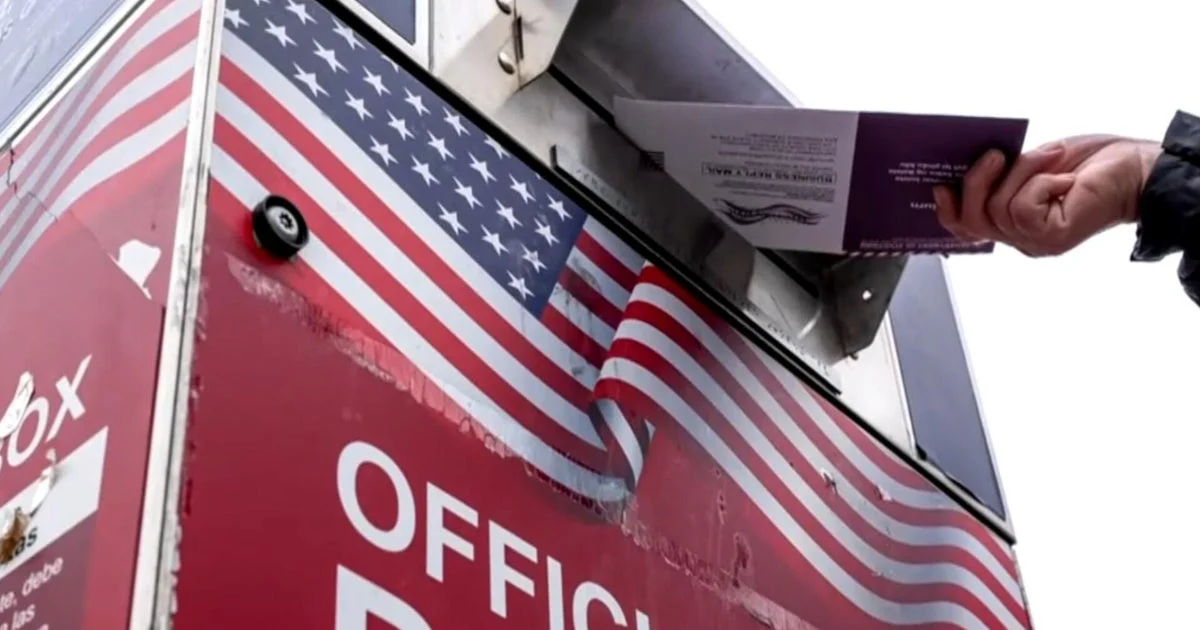
The U.S. Supreme Court on September 14 upheld a lower court’s injunction blocking the U.S. Postal Service from enforcing new regulations on mail-in ballots, halting the Trump administration’s push to implement the rules ahead of the November midterm elections. The decision preserves current mail voting procedures while ongoing litigation continues.
What Happened
The Supreme Court declined to lift a preliminary injunction issued by U.S. District Judge Indira Talwani in Massachusetts, which prevented the Postal Service from enforcing new mail ballot rules finalized by the agency late last month. These rules would have imposed specific design requirements on mail ballot envelopes, such as unique barcodes, and mandated that state and local election officials submit detailed voter information to an online portal administered by the Postal Service.
The court’s unsigned order stated the government “is unlikely to succeed on the merits of its challenge to the District Court’s preliminary injunction.” Justices Samuel Alito and Clarence Thomas dissented, supporting enforcement of the new regulations, while Justice Brett Kavanaugh joined the majority but noted that enforcing the rules for the upcoming elections would violate the Administrative Procedure Act due to insufficient time for states to comply.
These regulations generated immediate concerns among election officials from various states, many of which had already begun mailing ballots to voters. State leaders and voting rights groups have argued the Postal Service lacks authority to regulate federal election processes and warned that the new rules could disenfranchise voters and create confusion.
Key Facts
- The rules require mail ballot envelopes to feature unique barcodes and impose data reporting obligations on election officials via a new Postal Service online portal.
- The preliminary injunction blocking these rules was issued by Judge Indira Talwani on August 27, later solidified in a preliminary injunction.
- Two dozen Democratic-led states and voting rights groups filed lawsuits against the Postal Service’s new rules.
- Solicitor General D. John Sauer defended the regulations as constitutional and necessary to prevent alleged mail-in voter fraud, which he described as “particularly pernicious.”
- President Donald Trump signed an executive order in March directing the Postal Service and Department of Homeland Security to enforce mail voting regulations and track citizenship status for voters.
- Despite claims of fraud risk, no substantial evidence of widespread mail-in voting fraud has been presented, and Trump himself has cast mail ballots in Florida elections this year.
- A separate lawsuit filed by the Democratic National Committee also led to a parallel suspension of these rules in Washington, D.C.
- Postal Service officials admitted to ongoing refinements of the new online portal as of early September amid whistleblower warnings over potential system failures.
What This Means
The Supreme Court’s decision signals judicial caution about introducing substantial election administration changes close to an election, prioritizing stability and predictability in voting processes. For voters, the ruling means mail voting procedures remain consistent with prior elections in many states, reducing the risk of ballots being rejected or delayed due to new compliance demands.
Election officials benefit from this reprieve by avoiding the operational challenges and risks of adapting to untested Postal Service requirements amid tight timelines. The ruling also underscores the judiciary’s role in balancing federal agency authority with states’ traditional control over elections, especially when new federal regulations intersect with state-run electoral systems.
Politically, this decision represents a setback for the Trump administration’s effort to implement stricter rules they claim are necessary to safeguard election integrity, amidst ongoing disputes over mail ballot security and voter fraud. Voters and advocacy groups seeking to protect and expand mail voting access have hailed the ruling as a protection against potential voter disenfranchisement and chaos.
Background
This legal conflict arose after President Trump issued an executive order in March 2026 directing federal agencies to develop tighter controls on voting by mail. The Postal Service released its final rule in late August, prompting immediate legal challenges from Democratic states and voting rights advocates. Prior to the final rule’s release, the Supreme Court had already intervened in August to delay enforcement, viewing the lawsuits as premature until the rule was finalized.
Judge Talwani expressed concerns early on about the election disruptions the rules could cause and highlighted deficiencies in the Postal Service’s preparedness and transparency regarding the new system.
What Remains Unclear
It is not yet determined how the legal challenge will ultimately be resolved, including whether the courts will permanently strike down the Postal Service’s regulations or allow some modified version to take effect in future elections. Additionally, the possibility of the government appealing this injunction or revising the disputed policies remains open.
What Comes Next
The ongoing lawsuits will continue to be litigated in lower courts while the Preliminary Injunction remains in place for the upcoming midterms. Election officials will proceed with current mail voting protocols, and the Supreme Court could be asked again to intervene if circumstances change.
Sources
This article is based on reporting and publicly available information from the following sources:
Read more Politics stories on Goka World News.