
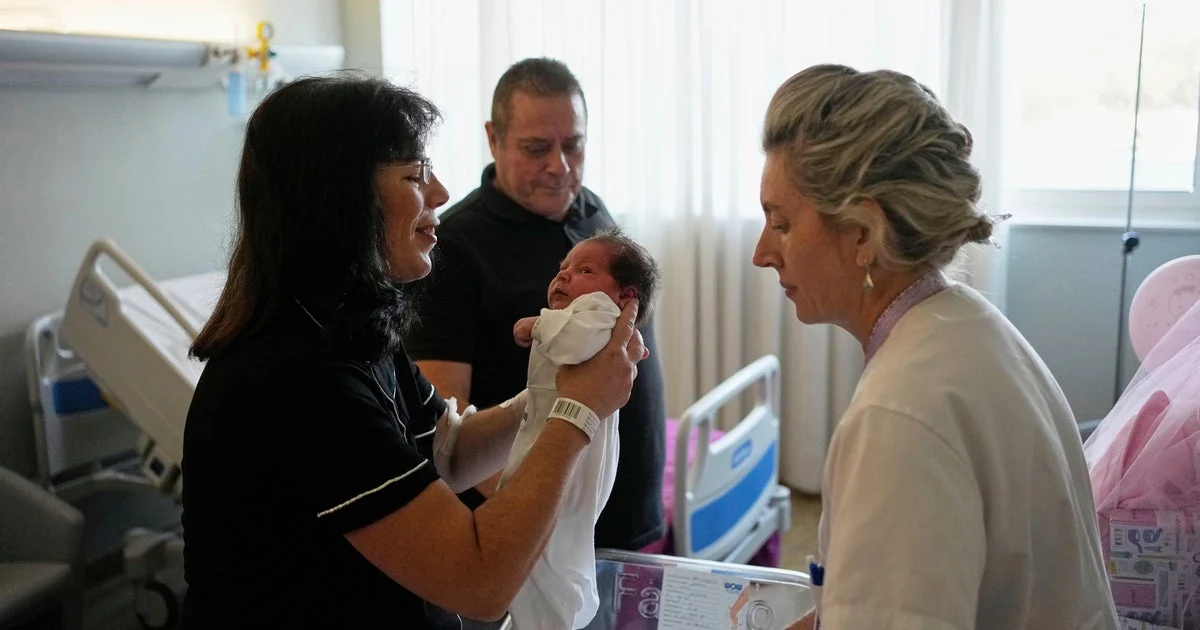
A Greek couple has experienced a remarkable new beginning after tragedy by welcoming a daughter born from an embryo frozen for more than two decades. Their story underscores both personal resilience and the pressures imposed by stringent national fertility laws in Greece, which impose a strict age limit on in vitro fertilization (IVF) treatments.
What Happened
In Athens, Greece, 54-year-old Cristina Rapti‑Tzelepi gave birth on September 9, 2026, to a healthy baby girl named Georgia, using an embryo that had been frozen for 22 years. The baby arrived just months after the couple’s 21-year-old son, Giorgos, also conceived through IVF, died in a road accident last October. Facing the Greek government’s strict cutoff of age 54 for women to complete IVF treatments and obtain regulatory approval, Rapti‑Tzelepi and her husband, Constantinos Raptis, 60, moved quickly within a 2½-month window to pursue the pregnancy.
Key Facts
Rapti‑Tzelepi’s embryo had been frozen for more than two decades before implantation, a rare duration for embryos used in successful pregnancies. The baby weighed 7 pounds, 11 ounces at birth. Greece restricts IVF eligibility by a woman’s age, barring treatments beyond 54 years and one day, a regulation now under scrutiny due to the country’s declining birth rate. Their gynecologist, Dr. Kostas Pantos, head of the Hellenic Society of Reproductive Medicine, has called for revisiting the law to allow more flexibility for hopeful parents. The couple’s son Giorgos was also born through IVF, making the continuation of their family story deeply personal.
What This Means
This birth highlights the emotional and regulatory challenges faced by families in countries with stringent fertility laws amid demographic shifts. Greece, grappling with one of Europe’s lowest birth rates, enforces strict IVF age limits that can pressure older hopeful parents to act swiftly or seek alternatives abroad. Cases like Rapti‑Tzelepi’s point to the complex intersection of reproductive technology, bereavement, and national policy. For ordinary families, it underscores how advances in fertility preservation and embryo freezing can offer new hope — even after decades — but also confront outdated age restrictions that may no longer reflect modern medical capabilities or social realities.
The couple’s experience resonates beyond the personal, touching on wider societal debates about population decline, reproductive rights, and access to assisted fertility treatments. Their story adds a human face to these issues, showing how policy decisions directly affect lives and family planning.
Background
Embryo freezing, a technique allowing fertilized eggs to be preserved for years, has been a growing practice globally. Last year, a similar international case made headlines when a baby in Ohio was born from an embryo frozen for more than 30 years, setting a Guinness World Record. In the U.S., embryo donation rates have increased exponentially as many couples choose to donate rather than discard unused frozen embryos following IVF cycles.
Within Greece, the government maintains strict regulatory controls on fertility treatments, including an upper age limit for women undergoing IVF procedures. Dr. Pantos has publicly stated the law’s rigidity may be due for revision in light of demographic realities and medical progress.
What Comes Next
The couple has expressed openness to potentially having another child, even signaling they might explore fertility options abroad if necessary. Discussions about reforming Greece’s IVF regulations remain ongoing, with medical professionals advocating for changes that reflect current reproductive technologies and demographic needs.
Sources
This article is based on reporting and publicly available information from the following source:
Read more World News stories on Goka World News.