
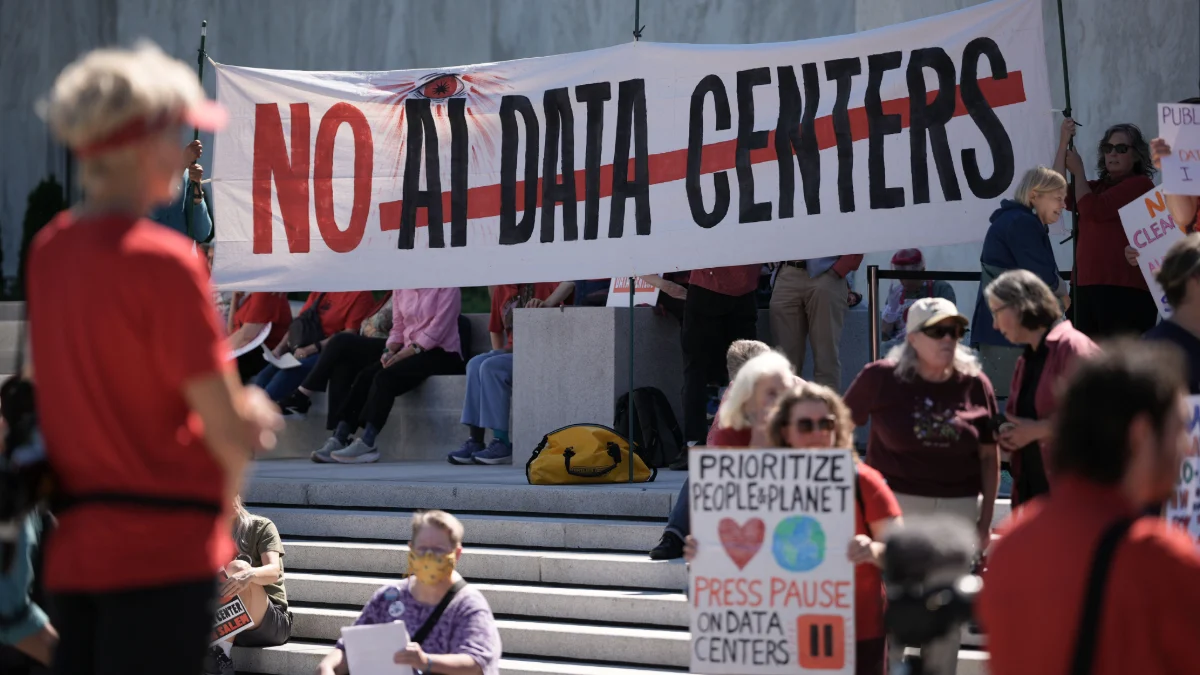
Claims that foreign governments are heavily manipulating opposition to U.S. data center projects have gained traction among investors and media, yet a careful review shows much of this alleged influence consists of amplified but factual information rather than deliberate disinformation. This nuanced picture raises important questions about how regulators and industry should interpret and respond to concerns about foreign interference in debates over AI infrastructure development.
What Happened
Throughout 2026, growing protests against data center developments in states such as Oregon and Utah have intersected with public accusations of foreign influence. Notably, Canadian investor Kevin O’Leary asserted on social media and Fox News that protest organizers opposing the 40,000-acre Stratos Project in Utah were acting as proxies for the Chinese government. O’Leary later retracted these claims, admitting to a lack of evidence while facing a defamation lawsuit. Concurrently, a July report by the New York Times cited research from Alethea, a Washington DC-based intelligence firm, alleging that foreign state media and covert accounts linked to China, Russia, and Iran have been amplifying opposition to U.S. data center builds.
Alethea’s analysis, based on data from early 2026, tracked social media posts and news articles disseminated by foreign actors targeting narratives around data centers related to electricity costs, environmental concerns, and geopolitical competition in AI technology. However, the firm explicitly stated that it did not measure the actual impact of these activities on public opinion or policy outcomes.
Key Facts
- Jurisdiction: United States, focusing on various state-level protests and federal awareness.
- Primary analysis published by Alethea in early 2026 and cited in a July 2026 New York Times article.
- Foreign actors implicated include Chinese state media, Russian-linked social media channels, and Iranian media outlets.
- The opposition involves data center infrastructure critical to AI development.
- Alethea distinguishes between disinformation (fabricated falsehoods) and malinformation (truthful but potentially damaging content) in its findings.
- Research reveals much foreign content replicates or recontextualizes legitimate U.S. media reports rather than fabricating information.
- The amplified narratives align with genuine domestic concerns over environmental and economic impacts associated with rapid AI infrastructure expansion.
- Alethea’s work has been supported in part by funding from the U.S. Department of Defense for AI-driven misinformation detection tools.
What This Means
This episode highlights the complex challenge regulators face when foreign influence is intertwined with legitimate domestic environmental and economic concerns. Labeling all opposition as foreign interference risks delegitimizing genuine public dissent and deepening mistrust between communities, government agencies, and technology developers. From a policy perspective, oversight bodies must differentiate between deliberate manipulations intended to deceive and the amplification of true grievances by foreign entities.
Moreover, technology firms and infrastructure developers should be mindful that accusations of foreign meddling may sometimes be used to undermine democratic engagement efforts or to bypass meaningful public consultations. The entanglement of factual information amplification with geopolitical narratives implies that regulatory frameworks need to incorporate nuanced assessments of information sources and impacts rather than relying on standard disinformation definitions alone.
The involvement of companies like Alethea in providing AI-powered threat monitoring further adds to the stakes: the demand for solutions to mitigate narrative risks can shape how foreign influence is defined and prioritized, potentially influencing regulatory scrutiny and corporate communications strategies in sensitive AI infrastructure projects.
Background
This issue emerges amid growing attention to the role of data centers as foundational infrastructure for artificial intelligence, with their expansion spurring local protests over land use, environmental impacts, and electricity consumption. The Biden administration and federal agencies have expressed concerns about foreign efforts to disrupt AI sector growth through influence operations, reflecting broader national security priorities. However, public discourse reveals tensions between government ambitions for AI leadership and grassroots demands for environmental and social accountability.
The Bigger Picture
The narrative of foreign influence exploiting societal divisions mirrors historical instances where domestic opposition movements become framed as puppet of external actors. This pattern affects not only technology infrastructure debates but also wider political polarization, complicating efforts to foster inclusive policymaking around emerging technologies. AI’s rapid development exposes gaps in governance that foreign state and non-state actors may seek to deepen by amplifying existing fractures in public trust.
What Remains Unclear
Accurate measurement of foreign influence impact on policy outcomes and public opinion in U.S. data center debates remains unresolved. The extent to which amplified narratives translate into tangible political consequences is still uncertain, as is the precise identification of domestic actors who may seed or mirror these messages. Additionally, transparency about the clientele and influence of firms offering AI-driven narrative monitoring services has yet to be fully clarified.
Sources
This article is based on reporting and publicly available information from the following sources:
Read more US News stories on Goka World News.