
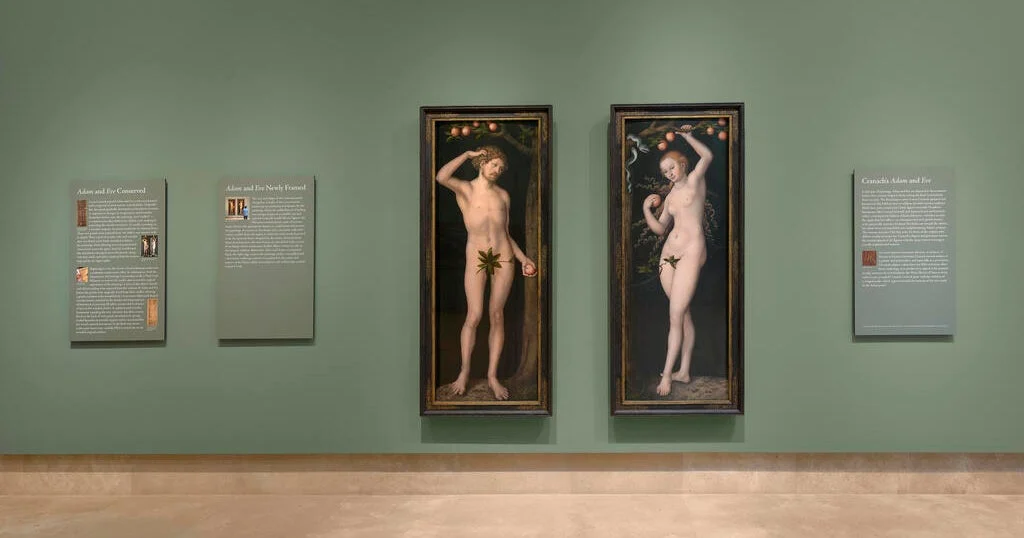
Jewish heirs of Holocaust victims and their representatives have initiated two lawsuits in California demanding the return of paintings taken by Nazis during World War II that are currently displayed in U.S. institutions. The lawsuits mark a significant legal effort under new laws passed by California and the U.S. Congress to strengthen claims for recovering art looted from Jewish families during the Holocaust.
What Happened
On September 18, 2026, two lawsuits were filed in Los Angeles courts seeking restitution of Nazi-looted artworks. The first lawsuit, lodged in Los Angeles Superior Court, involves the Jewish Federation of Greater Los Angeles and its board chair, Daniel Gryczman, who sued the Norton Simon Museum in Pasadena over the retention of “Adam and Eve,” two large oil-on-panel paintings by Lucas Cranach the Elder dating from 1530.
The second lawsuit was filed the same day in federal court in Los Angeles by the daughters of Dinah Gottliebova Babbitt, a Holocaust survivor and former California-based animator who was imprisoned at Auschwitz. This suit demands the return of watercolors she was forced to paint under Nazi physician Josef Mengele’s orders, depicting fellow prisoners and victims of Nazi experiments.
The Norton Simon Museum and the Auschwitz Memorial have both stated they hold legal titles to their respective works and intend to keep displaying the paintings publicly. Neither lawsuit specifies monetary valuations for the contested artworks.
Key Facts
Between 1933 and 1945, the Nazi regime seized more than 600,000 artworks across Europe from Jewish individuals, families, collectors, and museums, constituting the largest art theft in history. Many of these works remain in museums globally today, complicating restitution efforts.
The Cranach paintings at the Norton Simon Museum were previously owned by the Stroganoff family and later acquired by Dutch Jewish art dealer Jacques Goudstikker before being forcibly taken by Hermann Göring, a top Nazi official. The Jewish Federation of Greater Los Angeles plans to use most proceeds from any recovered art to support around 2,500 Holocaust survivors residing in the Los Angeles area.
California Assembly Bill 2867, signed into law in September 2024, facilitates lawsuits from California residents or heirs to reclaim art seized during Nazi persecution. Assemblyman Jesse Gabriel authored the bill, citing a 2023 federal court ruling that favored the Thyssen-Bornemisza Museum in Madrid in a similar Nazi-era art claim by the Cassirer family.
The Norton Simon Museum cited a 2018 federal court ruling and a 2019 Supreme Court decision decline as affirming its ownership rights over the Cranach paintings, noting these works were legally acquired following complex transfers from their original owners. The museum has displayed the paintings publicly for nearly 50 years.
Representatives from the Auschwitz Memorial maintain that the watercolors painted by Gottliebova Babbitt under duress should remain in the museum as critical historical documentation of Nazi atrocities rather than being categorized as looted artwork.
What This Means
These lawsuits underscore ongoing tensions between the ethical imperative to return stolen cultural heritage and museums’ missions to preserve and educate the public about history. The cases illustrate how Holocaust-era injustices continue to resonate through generations, driving legal and moral battles over ownership rights.
For survivors’ descendants and Jewish communities, recovering looted art is not only about reclaiming property but about restoring dignity and honoring the memories of those lost. At the same time, museums confront challenges balancing legal ownership with historical responsibility, as contested artworks serve as tangible reminders of Nazi crimes.
Legislative advances like California’s AB 2867 are shifting the legal landscape, making it easier for families to pursue claims domestically and challenging institutions to re-examine provenance and exhibit policies. These developments may lead to increased restitution efforts, impacting museum collections and how Holocaust history is publicly presented in the United States.
Background
The passage of AB 2867 followed a 2023 federal ruling that allowed Spain’s Thyssen-Bornemisza Museum to keep a Pissarro painting taken by Nazis from the Cassirer family, sparking criticism from Jewish organizations and lawmakers in California. The law aims to close gaps that previously allowed foreign institutions to retain looted art despite U.S. legal claims by affected American heirs.
The Norton Simon Museum, formerly the Pasadena Museum of Modern Art, inherited artworks through a series of transactions complicated by theft, forced sales, and inheritance disputes in the decades following World War II.
What Remains Unclear
Authorities and courts have not publicly confirmed many details, including the full scope of claimed works, or the exact legal arguments that will be employed in ongoing litigation. The motives of current owners and potential settlements remain to be seen. Furthermore, whether the watercolors held by the Auschwitz Memorial will be returned or remain as exhibits for educational purposes awaits judicial review.
What Comes Next
The case involving the Cassirer family’s claim against the Thyssen-Bornemisza Museum is scheduled for a federal court hearing in California next month, potentially setting a precedent for other ongoing disputes. The Norton Simon and Auschwitz-related lawsuits’ timelines for court proceedings or settlement discussions have not been detailed in public records.
Sources
This article is based on reporting and publicly available information from the following source:
Read more US News stories on Goka World News.