
The United Nations’ upcoming 2027 review of the Global Digital Compact, a framework adopted in 2024 to guide international cooperation on digital governance, is poised to become a decisive moment in shaping the future of technology governance, including artificial intelligence. The scope of this review will influence whether developing countries—many with limited current leverage—can meaningfully participate in determining digital standards and policies or be sidelined in favor of early movers and powerful states.
What Happened
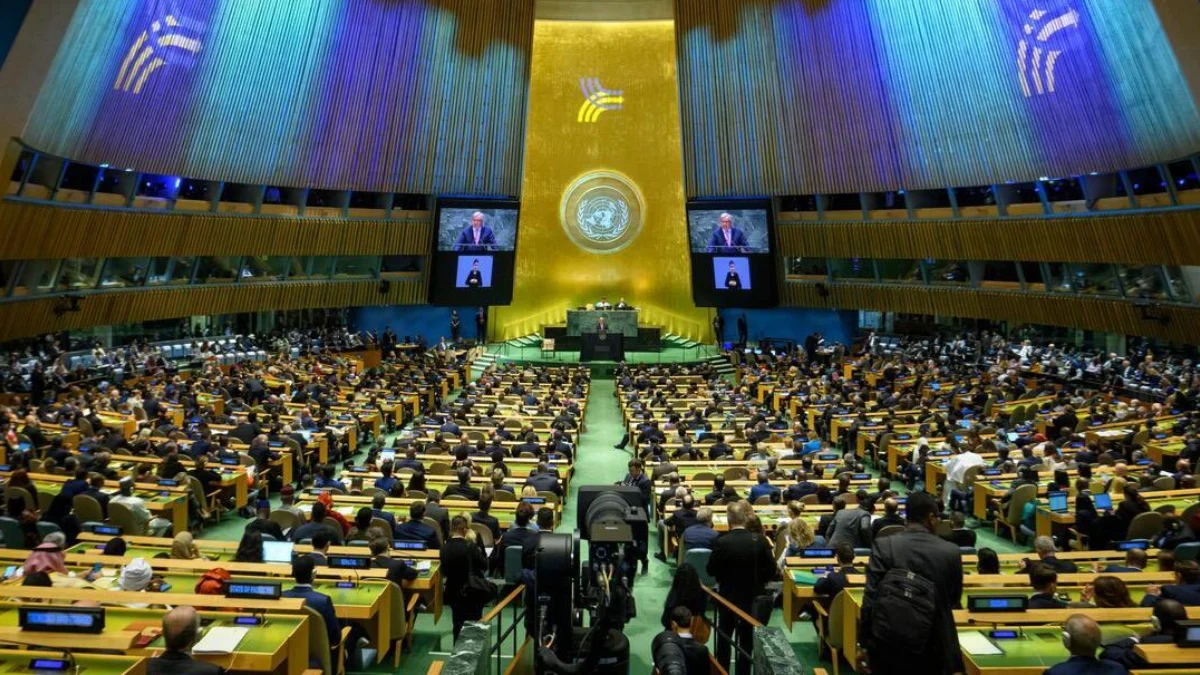
The Global Digital Compact was unanimously adopted during the UN General Assembly in New York City on September 23, 2024. This compact established broad principles for international cooperation on digital governance topics, including connectivity, data use, cyber security, public digital infrastructure, and AI. A mandated review, scheduled for 2027, will assess the Compact’s relevance and impact. The review’s procedural design—decided by co-facilitators appointed by the President of the General Assembly—will determine whether it is narrowly confined to evaluating the Compact’s existing provisions or broadly scoped to encompass the fragmented global landscape of digital governance mechanisms.
Key Facts
- The Global Digital Compact was adopted unanimously by UN member states in 2024.
- The Compact covers areas such as AI governance, data management, cybersecurity, and digital infrastructure.
- The review of the Compact is set for 2027 under the incoming UN Secretary-General.
- The review process will be influenced by co-facilitators appointed by the President of the UN General Assembly.
- Current global digital governance is fragmented, featuring diverse initiatives like the China-led World AI Cooperation Organization, US-led resource coordination efforts, and regional frameworks in OECD, G7, and ASEAN.
- Many governance initiatives exclude states lacking technological or resource leverage, often leaving developing countries marginalized.
- The Group of 77 and China have emphasized the risk that the next global divide will center on the capacity to shape technology.
What This Means
The 2027 review of the Global Digital Compact represents a unique opportunity for the United Nations to reclaim a universal and inclusive role in digital governance. Should the scope of the review extend beyond the Compact’s text, it could enable an assessment and potential harmonization of the myriad overlapping and often exclusive governance bodies related to AI, data standards, cybersecurity, and infrastructure. This inclusivity is critical because existing frameworks tend to favor powerful states and tech-rich nations, often requiring developing countries to accept externally set standards and conditions.
This dynamic risks deepening a “digital divide” where states that currently lack technological capability or resources are excluded from negotiations that define future technology norms and governance structures. As such, the review’s breadth will directly influence whether developing countries can have a substantive voice in shaping AI policies, data governance rules, and digital infrastructure standards, or whether they remain dependent actors on terms set elsewhere.
Moreover, the review process could enable the UN to coordinate capacity-building support for less technologically developed countries, ensuring their delegations have the expertise and resources necessary to engage effectively in the negotiations. This would mark a substantial shift from the current landscape, where the complexity and technicality of digital governance often preclude equitable participation.
Background
Prior to the Global Digital Compact’s adoption, the international governance of digital technology was highly fragmented. Various regional and thematic initiatives, such as the World AI Cooperation Organization and OECD AI principles, operated along different lines of membership and regulatory focus. While these efforts advanced governance in their own ways, they collectively posed challenges for universal inclusion, leaving many developing states outside formal rule-making processes.
The Bigger Picture
The debate over the Compact’s review occurs against a backdrop of intensifying geopolitical competition over technology leadership and control. The early establishment of digital standards often locks in advantages for the first movers, perpetuating inequalities. The UN is uniquely positioned as a global convening institution to foster consensus and ensure that governance mechanisms are interoperable and inclusive, rather than creating additional exclusionary frameworks.
What Remains Unclear
It is not yet determined how the co-facilitators will scope the 2027 review or what modalities for participation will be adopted. The degree to which the review will critically evaluate the existing mosaic of governance frameworks, or merely reaffirm the Compact’s own provisions, remains an open question. Furthermore, the extent of capacity-building funding and support available to less-resourced delegations is undecided.
What Comes Next
The primary upcoming milestone is the initiation of the 2027 review process under the new UN Secretary-General. This will involve setting the procedural rules and participation criteria, which will shape how broadly the current challenges in global digital governance can be addressed through this mechanism. Observers and stakeholders are closely monitoring these developments as they have long-term implications for global digital equity.
Sources
This article is based on reporting and publicly available information from the following sources:
Read more Digital Policy stories on Goka World News.