
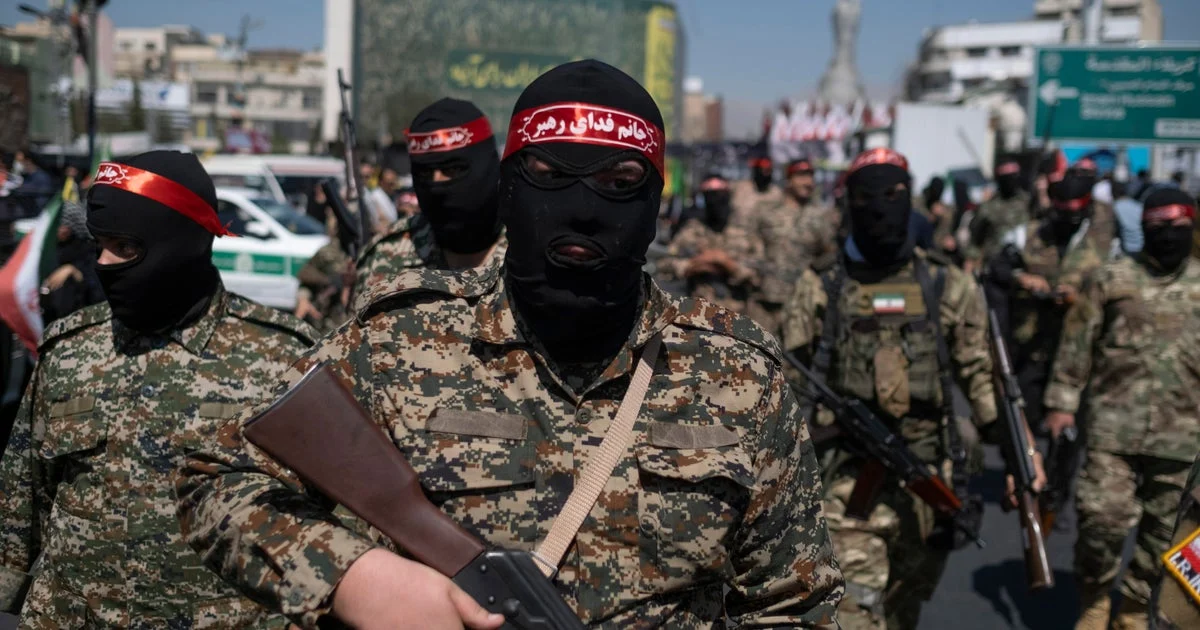
Iran’s Islamic Revolutionary Guard Corps (IRGC) has issued a stark warning that any new U.S. military attack will lead to a broader expansion of the ongoing conflict’s geographic scope, signaling a potentially wider regional destabilization. This announcement comes as tensions remain high nearly seven months into the war between the two countries, with U.S. President Donald Trump publicly considering a range of options from renewed military strikes to diplomatic negotiations.
What Happened
On Sunday, September 20, 2026, IRGC spokesman Hossein Mohebbi declared through Iran’s semi-official Fars news agency that any fresh U.S. aggression would prompt Tehran to change both the weaponry and the “geography of the war.” The ongoing conflict, which has already drawn in multiple countries across the Middle East, now risks escalating further after months of stalemate and intermittent clashes. President Trump confirmed he was in a “deciding mode” regarding U.S. strategy, outlining possibilities including “wiping Iran out,” imposing economic pressure, or pursuing a diplomatic deal. He also remained open to meeting Iranian President Masoud Pezeshkian during the United Nations General Assembly meeting in New York City later this week.
Key Facts
The conflict involves Iran and the United States, centered on ongoing tensions and hostilities in the Middle East that have lasted roughly seven months. The IRGC’s warning signifies potential escalation, as spokesman Mohebbi explicitly referenced expanding the war geographically and deploying new weapons.
U.S. embassies in numerous Middle Eastern countries, including Israel, Saudi Arabia, Iraq, Kuwait, Lebanon, Jordan, Bahrain, the United Arab Emirates, and Qatar, issued security alerts advising American citizens to remain vigilant amid concerns about sudden escalation. The heightened warnings cite intensified clashes between Saudi Arabia and Iran-backed Houthi rebels in Yemen, who recently extended control over vast areas of Yemen’s Red Sea coast and critical maritime routes such as the Bab el-Mandeb Strait, important for global oil transportation.
President Trump’s public statements outline three possible courses: annihilating Iran’s regime, imposing crippling economic sanctions, or negotiating a peace agreement. Trump’s openness to a face-to-face meeting with Iran’s President Pezeshkian marks a rare diplomatic overture amid persistent conflict.
Key regional players are also involved diplomatically. CIA Director John Ratcliffe met Egyptian President Abdel Fattah al-Sisi in Cairo to discuss conflicts in Iran, Yemen, Gaza, Sudan, and maritime security in the Gulf region. Egypt, Jordan, and Kuwait condemned a recent missile attack on Riyadh by the Houthis, underscoring regional concerns about expanding violence and violations of international law.
What This Means
The IRGC’s warning points to an alarming potential shift in the Middle East’s security dynamics, suggesting that any renewed U.S. attack could spark a wider conflagration, pulling in additional countries and fronts. This expands the risk not only to regional stability but to global economic interests reliant on secure energy supplies, given the conflict’s proximity to vital shipping routes like the Strait of Hormuz and Bab el-Mandeb Strait.
For ordinary citizens, particularly in the region, this could mean increased insecurity, travel disruptions, and economic instability as warfare extends beyond current hotspots. The international community’s energy markets could face further strain due to conflict-related blockades and attacks on oil infrastructure already reported in Saudi Arabia and Yemen.
President Trump’s simultaneous consideration of severe military action or renewed diplomacy illustrates the fragile balance that could tip either toward escalation or cautious negotiation. The prospect of talks at the United Nations offers a slim pathway to de-escalation but remains uncertain against a backdrop of hardened positions and recent hostilities.
Background
The war between Iran and the United States entered its seventh month in September 2026, emerging from complex regional power struggles involving Iran-backed militias, notably the Houthi rebels in Yemen, and Saudi Arabia-led coalitions. The conflict has affected major maritime trade routes critical for global oil shipments. Iran has maintained a blockade on the Strait of Hormuz, while the Houthis have conducted missile and drone attacks on Saudi infrastructure in recent weeks.
What Comes Next
The upcoming United Nations General Assembly meeting in New York may serve as a diplomatic stage where President Trump and Iranian President Masoud Pezeshkian could meet, potentially opening channels for dialogue. Meanwhile, U.S. and allied embassies remain on heightened alert for sudden security shifts. With regional actors like Egypt increasingly engaged in diplomatic talks, efforts to prevent further escalation will be closely monitored.
Sources
This article is based on reporting and publicly available information from the following source:
Read more World News stories on Goka World News.