
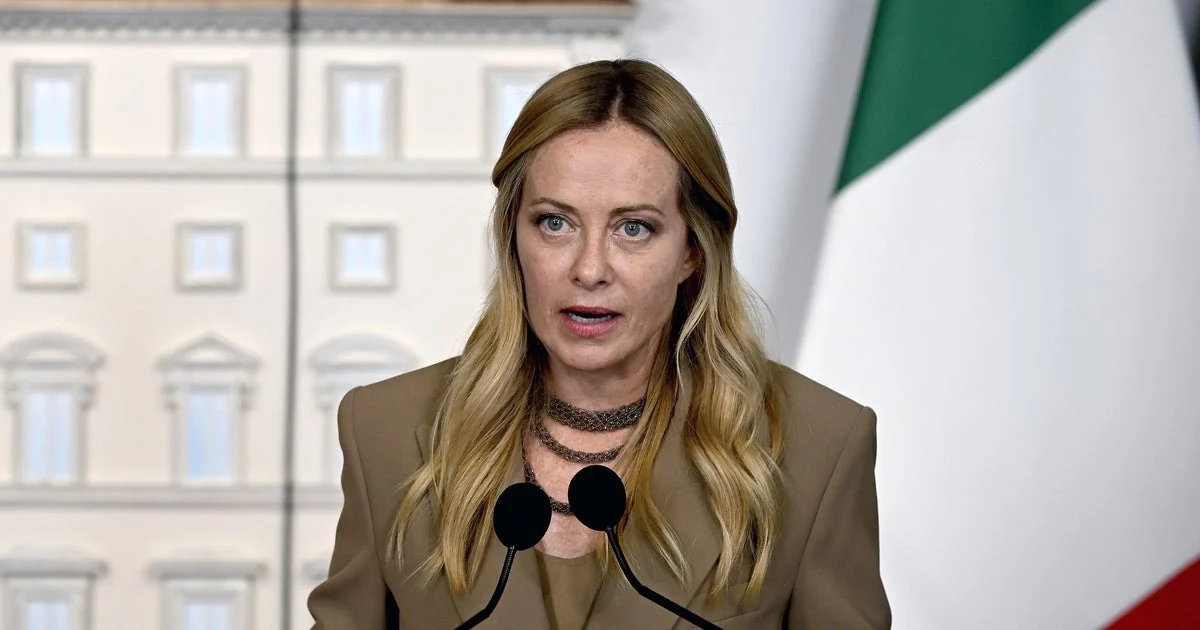
Italian Prime Minister Giorgia Meloni revealed plans to introduce legislation that would limit foreign student enrollment in schools to approximately 30% per classroom and prohibit face-covering garments, including burqas and niqabs, in educational settings. The announcement, made at a political event on September 20, 2026, aims to reshape integration policies and school environment requirements within Italy.
What Happened
On September 20, 2026, in Italy, Prime Minister Giorgia Meloni addressed attendees at Fenix, an event hosted by Gioventù Nazionale, the youth wing of her Brothers of Italy party. Meloni declared her government’s intention to propose a legal cap on foreign student presence in classrooms, setting a threshold of about 30% to ensure that Italian children do not become a minority. Alongside this, she announced plans to ban face-covering garments that conceal the face—specifically targeting the burqa and niqab—from schools. The legislation is to be presented to the Council of Ministers before requiring parliamentary approval to become law.
Key Facts
According to data cited by the ISMU ETS Foundation from the Italian Ministry of Education, students holding non-Italian citizenship currently constitute roughly 11.6% of school enrollments nationwide. Italy’s legal framework typically does not grant automatic citizenship at birth to children of non-Italian parents, with citizenship eligibility emerging only after turning 18 if individuals have resided continuously in the country.
Meloni asserted that classrooms with significant numbers of foreign-language learners risk hindering integration rather than fostering it. She emphasized the importance of maintaining Italian students’ prominence within local schools.
The face-covering ban targets only garments that cover the full face, not general Islamic headscarves, reinforcing Meloni’s stated commitment to gender equality. Sociologist Mariagrazia Santagati from Milan’s Catholic University weighed in, noting that Italy’s public schools traditionally promote inclusion for all children regardless of legal status or religion, and questioned the practical implementation of such limits.
Some European countries, including France and Belgium, have enacted face-covering restrictions in certain public spaces, but a legal cap on foreign student numbers in classrooms would be unprecedented in Europe.
What This Means
Meloni’s policy proposals mark a significant shift in Italy’s approach to educational diversity and social integration. If enacted, the cap on foreign student enrollment could reshape classroom demographics, potentially affecting how schools allocate resources and design curricula to meet varied linguistic and cultural needs. This limit may also ignite debate on inclusivity versus assimilation policies in European education systems.
The ban on full-face coverings in schools aligns with broader European trends prioritizing secularism and gender equality but raises questions about religious freedom and personal expression among Muslim students and families. These measures might impact community relations and spark discussions about minority rights within Italy’s increasingly multicultural society.
For Italian families, educators, and immigrant communities, these proposals signal a government push toward stricter integration controls, which could alter the day-to-day experience within schools and communities. The effectiveness, fairness, and enforceability of such policies remain uncertain, with implementation challenges likely to arise if Parliament approves the legislation.
Background
Italy currently faces growing diversity within its school population due to immigration trends, with foreign and noncitizen students representing a growing but uneven proportion of enrollment. The country’s citizenship laws are distinct in Europe, as children born within Italy to non-citizen parents do not automatically gain citizenship at birth.
Previous European face-covering bans focus primarily on broader public or civic spaces rather than limiting such garments within education specifically, making Italy’s proposed legislation novel.
What Remains Unclear
The Italian government has not clarified how the foreign student limit would be implemented in practice across varied regions, particularly where immigrant populations are concentrated. It is also uncertain how enforcement of the face-covering ban would be managed and what penalties, if any, would apply. The political timing ahead of Italy’s 2027 general election adds complexity to these initiatives.
What Comes Next
The Italian Cabinet will review Meloni’s proposals before seeking parliamentary approval. The legislative process timeline and whether the measures will be modified remain to be seen as the government navigates political competition and public response.
Sources
This article is based on reporting and publicly available information from the following source:
Read more Politics stories on Goka World News.