
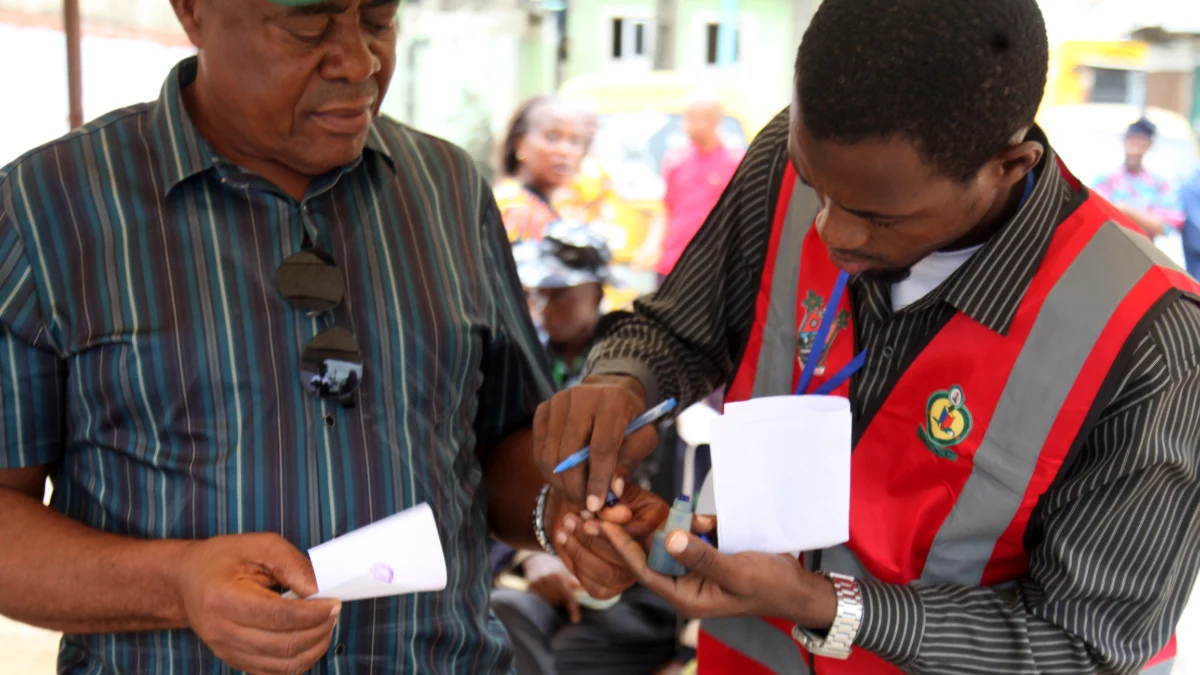
Nigeria’s 2026 Electoral Act requires voters to be verified through biometric technology, but reports from recent state elections reveal troubling gaps when the Bimodal Voter Accreditation System (BVAS) fails to recognize legitimate voters. The issue highlights unresolved legal questions on individual voter redress and technological accountability as Nigeria approaches its next national election in January 2027.
What Happened
On June 20, 2025, during the governorship election in Ekiti State, a 90-year-old registered voter was unable to verify her identity using Nigeria’s BVAS technology, which relies on fingerprint and facial recognition to confirm voters before permitting them to vote. Polling officials reported repeated instances with elderly voters where the system failed to capture biometric data correctly.
The 2026 Electoral Act includes Section 47(3), which addresses technological failures in accreditation devices by allowing their replacement or rerunning of elections if the failure cannot be remedied. However, it remains unclear how the law applies when the device functions but does not authenticate an otherwise eligible voter. This ambiguity surfaced as similar BVAS recognition failures occurred later in Osun State.
Key Facts
The legal requirements stem from Nigeria’s Electoral Act 2026, which mandates biometric verification via BVAS or another INEC-approved device under Section 47(2). Section 47(3) outlines procedures for device failures, while Section 60(3) preserves paper results when electronic systems fail communication. INEC’s 2026 Regulations and Guidelines maintain that failure to match biometrics locks out the voter, with no alternative verification avenue clearly specified.
In the 2025 Ekiti election, observers from the Nigeria Civil Society Situation Room and partner networks documented that biometric failures, particularly facial recognition, disproportionately affected elderly voters. Yiaga Africa’s statistical sample found that 10 percent of polling units experienced voter denials due to BVAS failures. Meanwhile, the EU-SDGN Election Observation Hub reported 96 percent overall BVAS functionality.
Section 9 of the Act mandates voter registers to record disability status, and Section 54 requires accommodations for voters with disabilities—including Braille, sign language, or off-site voting. Yet biometric accreditation remains a potential barrier before these protections can apply.
What This Means
The current legal framework raises significant questions regarding voter inclusion and technological fairness. While BVAS is designed to secure electoral integrity through reliable biometric verification, its inability to recognize certain legitimate voters, especially vulnerable groups such as the elderly and disabled, exposes a gap without clear statutory remedy. This creates a scenario where citizens can be effectively disenfranchised despite being registered and physically present to vote.
The absence of an explicit fallback procedure for voters who fail biometric authentication means that the electoral process depends heavily on a technology that is reliable but not infallible. Given the scale of Nigeria’s electorate, even a minor failure rate could affect thousands of voters nationally, with real consequences for democratic participation and trust.
INEC’s responsibility now includes transparently reporting how many voters are blocked by biometric mismatches and clarifying whether any alternative verification methods are lawful under the current Act. Failure to do so diminishes accountability and leaves an unresolved policy question for lawmakers: should the law be amended to provide clear redress for individuals excluded by biometric verification?
Background
The 2026 Electoral Act represents the latest effort by Nigeria’s Independent National Electoral Commission (INEC) to leverage technology for improved election transparency and security. The Act’s biometric accreditation clause aims to reduce fraud by ensuring that each voter is accurately identified. Under previous regulations published in 2022, three failed biometric attempts led to a formal “Failed Accreditation” record, with no subsequent fallback option, effectively excluding voters after repeated attempts.
Since then, updates to the law and INEC guidelines have reiterated biometric verification’s central legal role but have not established alternative measures for voters who fail biometric matching once devices are operational.
What Remains Unclear
At present, it is not publicly known how many voters failed biometric recognition during the 2025 state elections in Ekiti and Osun, nor how these failures are aggregated or addressed internally by INEC. The statute’s ambiguity regarding biometric mismatches leaves open whether officials can or must provide alternative verification options.
Whether Nigeria’s National Assembly will consider amending the Act to explicitly authorize individual exceptions or fallback verification routes remains to be seen. Public and civil society pressure for such legislative action is mounting as the 2027 general election approaches.
What Comes Next
INEC faces a key accountability test ahead of the January 16, 2027 national election: it must disclose data on biometric failures from previous elections and clearly communicate procedures for voters unable to pass biometric checks. The effectiveness of existing rules regarding technological failure recovery and voter inclusion will be under close scrutiny.
Meanwhile, lawmakers may need to revisit the Electoral Act to bridge the identified legal gaps on biometric exclusion to ensure the election system upholds the constitutional and international rights to vote without unreasonable barriers.
Sources
This article is based on reporting and publicly available information from the following source:
Read more Politics stories on Goka World News.