
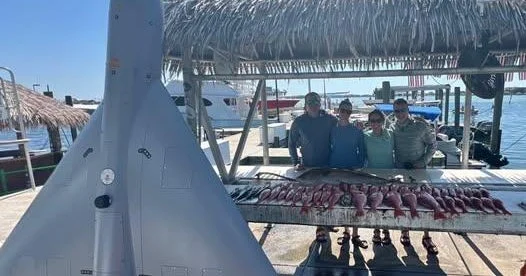
A fishing boat operating off the coast of Florida recently recovered an unexpected catch: a U.S. military drone. The incident unfolded in the Gulf waters not far from Eglin Air Force Base, drawing attention from local authorities and military officials.
What Happened
On September 17, 2026, Daniel Arsenault, a charter captain aged 36, was fishing in Gulf waters off Florida when he spotted an unusual object floating upside down. Upon closer inspection alongside active-duty military helicopter pilots onboard, the object was identified as a U.S. military target drone. The vessel, operated by Hot Spots Charters, hauled in the drone along with mahi-mahi, snapper, and grouper caught nearby.
Arsenault brought the drone back to dock where they took photos before handing it over to the local sheriff’s department. The sheriff’s department then transferred the drone to the U.S. government, which confirmed it as a LUCAS drone, short for Low-cost Uncrewed Combat Attack System, operated by Eglin Air Force Base. The base had reported the drone had impacted the water during routine scheduled testing several days prior.
Key Facts
The recovering fishing boat was Hot Spots Charters. Daniel Arsenault, the captain, was fishing with professional military helicopter pilots at the time of the sighting. The drone was recovered shortly after it crashed on September 17, 2026. A spokesperson from Eglin Air Force Base confirmed the drone was a LUCAS type that had impacted the water during scheduled testing. The drone is part of a munitions test series conducted by the base in the Gulf region. The drone has since been retrieved and returned to the Department of Defense.
What This Means
The recovery of a military drone by a civilian fishing crew highlights the intersection between military testing and local maritime activity, underscoring the potential for unexpected encounters in coastal waters. For local fishermen and residents, this incident serves as a reminder of active military presence and ongoing testing programs in their vicinity, which may occasionally result in the unplanned arrival of equipment. It also illustrates the cooperation between civilians, local law enforcement, and federal agencies in managing such recoveries safely and efficiently.
Moreover, the presence of LUCAS drones reflects the U.S. military’s expanding use of unmanned systems for combat and surveillance, especially in light of recent deployments in conflict zones. While the incident itself was non-harmful, it draws public attention to the operational footprint of modern warfare technologies beyond conflict areas, including routine testing environments.
Background
The LUCAS drone is a low-cost, one-way attack drone used by U.S. Central Command’s Task Force Scorpion Strike, which is responsible for operations in the Middle East. Officially deployed in combat for the first time during the 2026 U.S. and Israeli conflict with Iran, these drones serve as a response to similar Iranian and Russian drone threats in regional conflicts. Routine testing of such drones takes place at bases like Eglin Air Force Base in Florida, which often conducts exercises and munitions tests in nearby Gulf waters.
What Comes Next
The drone has been fully recovered by the Department of Defense following its recovery by local law enforcement. Eglin Air Force Base continues its scheduled testing and munitions exercises in the Gulf waters. No further public details have been released regarding investigations or changes to testing protocols.
Sources
This article is based on reporting and publicly available information from the following source:
Read more US News stories on Goka World News.