
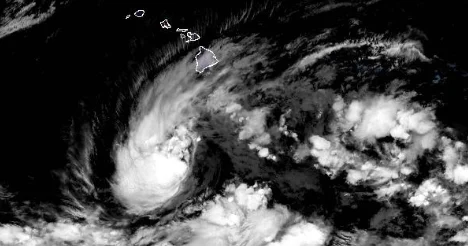
Hawaii’s Big Island is under a hurricane watch as Tropical Storm Nolo gathers strength in the Pacific Ocean. The National Hurricane Center warns that Nolo is expected to become a hurricane by Thursday night, posing a significant threat to the island with heavy rain and potential flooding.
What Happened
Tropical Storm Nolo formed in the Pacific Ocean and was positioned about 460 miles south-southeast of Honolulu and 285 miles south of South Point on Hawaii’s Big Island late Wednesday night. With maximum sustained winds of 50 mph, the storm was moving slowly north at 2 mph. The National Hurricane Center forecasted a general north to north-northeast movement through Friday, followed by a sharp turn westward near the Big Island on Saturday. The hurricane watch for the Big Island was issued as Nolo is projected to approach the island Friday and Saturday.
Key Facts
- Tropical Storm Nolo had sustained winds of 50 mph as of late Wednesday night.
- Nolo is expected to strengthen into a hurricane by Thursday night and could develop into a major hurricane (Category 3 or higher) by the weekend with winds exceeding 111 mph.
- Heavy rainfall is forecasted, with 15 to 20 inches anticipated on the Big Island, and localized totals up to 35 inches possible.
- The storm could cause catastrophic, life-threatening flooding and mudslides, particularly in steep terrain areas.
- Maui is expected to receive 5 to 10 inches of rainfall, with some regions potentially reaching 20 inches, also risking severe flooding and mudslides.
- Other Hawaiian islands could see lighter amounts ranging from 1 to 3 inches, with isolated flooding possible.
What This Means
The issuance of a hurricane watch for Hawaii’s Big Island signals a significant threat to communities, infrastructure, and public safety in the coming days. Residents must prepare for the possibility of intense winds and heavy rains that could trigger dangerous flooding and mudslides, particularly in vulnerable areas with steep geography. The forecasted rainfall amounts are sufficient to cause widespread damage to homes, roads, and utilities, potentially leading to power outages and disruptions in transportation and emergency services.
This situation underscores the ongoing challenges Hawaii faces amid an unusually active Pacific hurricane season, with multiple storms already impacting the state in recent months. Close monitoring and timely emergency response will be critical to minimize harm and support affected communities. The alert also serves as a reminder for tourists and residents alike to heed official advisories and prepare for rapidly changing weather conditions.
Background
The 2026 Pacific hurricane season has been unusually active for Hawaii. Earlier this month, Hurricane Lowell caused damage with wind and rain on the western islands of Kauai and Niihau, resulting in fallen trees, road damage, and widespread power outages. The previous month, Hurricane Lala passed near Hawaii, destroying approximately 100 homes and causing landslides and extensive power disruptions.
What Comes Next
The National Hurricane Center will continue to monitor Tropical Storm Nolo’s development and update forecasts accordingly. Residents and officials on the Big Island and other islands should expect more detailed guidance and warnings as the storm approaches. Emergency preparedness measures and community alerts have likely been or will be activated as the situation evolves over the next several days.
Sources
This article is based on reporting and publicly available information from the following source:
Read more US News stories on Goka World News.