
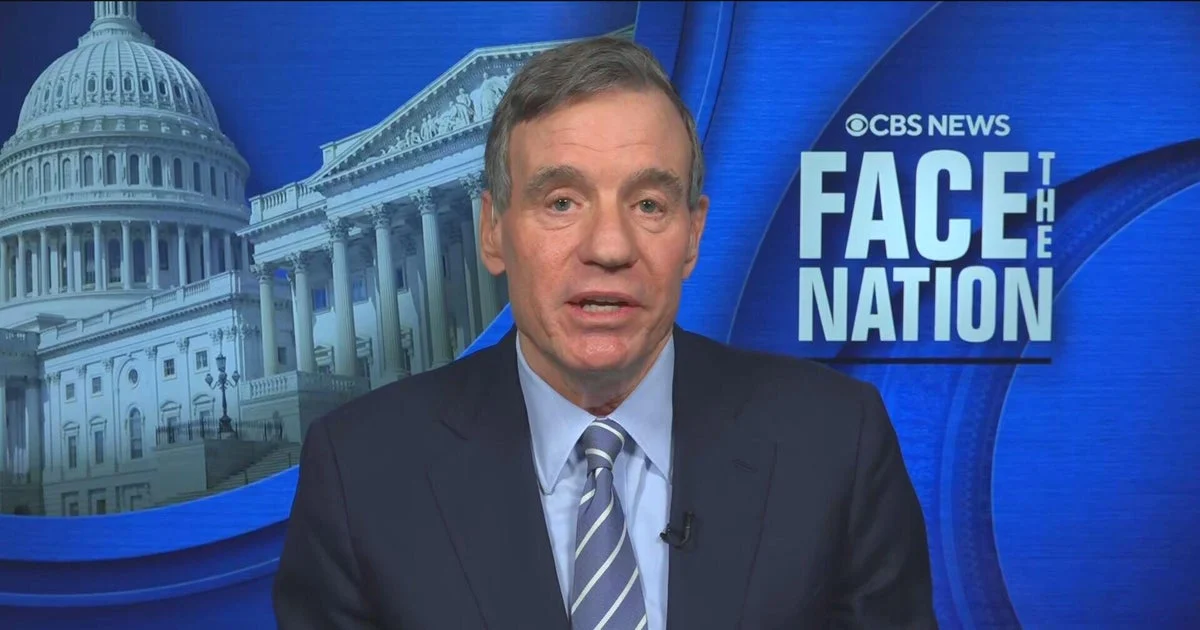
Sen. Mark Warner, the Democratic vice chairman of the Senate Intelligence Committee, said Sunday that he would “take a look at anything” when asked whether he would oppose additional funding for the ongoing war with Iran if the White House formally requests it. Warner made the remarks on CBS’s Face the Nation with Margaret Brennan as Congress prepares to return from a recess and potentially address a supplemental funding request related to the conflict.
Warner criticized the Trump administration for not informing Congress or the American public before initiating military action. “This president should have come to the American people and Congress first and said, ‘I’m going to choose to go to war, here’s what I want to try to accomplish,’” he said.
The cost of the conflict remains uncertain. Military officials told Congress that the first week of the war alone cost approximately $11.3 billion. Media reports indicate the White House plans to request between $80 billion and $100 billion in supplemental funding, a significant reduction from the $200 billion initially sought by the Pentagon. Defense Secretary Pete Hegseth acknowledged the funding figure could still change.
Warner expressed skepticism about the administration’s stated objectives, which include regime change in Iran, restricting uranium enrichment, limiting missile capabilities, and securing the Strait of Hormuz. “Those four goals… we only got those goals about 10 days into the war,” he noted. “On any honest assessment, I don’t think we’ve accomplished any of them so far.”
The potential supplemental funding request has sparked debate in Congress. While some Democrats criticize the handling of the war, certain Republicans have indicated their support might wane if the conflict does not conclude within 60 days, the limit on unauthorized military engagements established by the 1973 War Powers Resolution.
In fiscal 2025, Congress approved more than $150 billion in defense spending through supplemental bills related to the conflict, and also passed an $839 billion annual defense budget earlier this year. Separately, the Trump administration’s proposed budget for fiscal year 2027 includes $1.5 trillion in defense spending, not including any supplemental requests.
Why it matters
Warner’s willingness to consider the funding request reflects ongoing uncertainty and debate in Congress regarding U.S. military involvement in Iran. The administration’s failure to establish clear war objectives before engaging militarily complicates lawmakers’ decisions on approving further expenditures. Given the significant financial implications and potential for prolonged conflict, congressional scrutiny of the supplemental funding request will be pivotal.
Background
The war with Iran escalated rapidly, catching Congress off guard amid limited public discourse on U.S. war aims. The War Powers Resolution of 1973 requires congressional authorization for prolonged military action beyond 60 days. As spending on the conflict rises, lawmakers face pressure to balance national security interests with war accountability and fiscal responsibility. The Strait of Hormuz, a strategic waterway, has been a critical focus due to its importance for global oil shipping.
Read more Politics stories on Goka World News.