
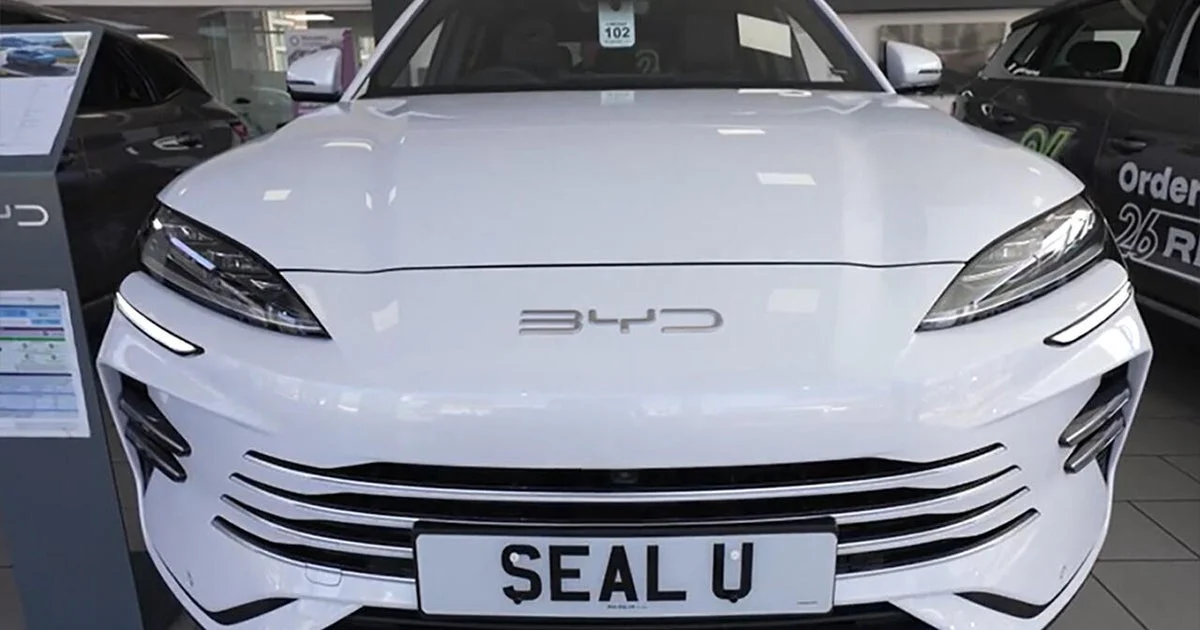
Chinese automaker BYD has emerged as the world’s leading seller of fully electric vehicles and hybrids, overtaking Tesla in 2025, reflecting significant changes in the global electric vehicle (EV) market. This development comes amid growing consumer acceptance, technological advancements, and contrasting trade policies affecting EV imports in key regions like the United States.
BYD’s Market Rise and Consumer Reception
BYD, which stands for “Build Your Dreams,” has been praised for its blend of quality, technology, and affordability. Customers like Justin Watson describe the driving experience as superior to luxury brands they previously owned. Watson recently traded his Lexus for a BYD vehicle, indicating that the stigma once associated with buying Chinese cars is fading in favor of quality craftsmanship.
Paul Tanner, managing director of the Alan Day Motor Group in London, highlighted the rapid growth and high quality of BYD’s vehicles, despite the company’s relatively recent entry into European markets traditionally dominated by European brands. BYD markets features like amphibious capabilities, advanced turning technology, extended battery life, and aims to introduce five-minute charging times.
China’s EV Innovation and Cost Advantage
According to Ben Nelmes, executive director of UK-based New Automotive think tank, China’s long-term investments in EV battery technology give companies like BYD a competitive edge. BYD originated as a battery manufacturer and controls its complete supply chain, enabling it to produce vehicles up to 25 percent cheaper than Western competitors. The company also exports batteries globally, further strengthening its position in the EV market.
Impact of U.S. Trade Policies on Chinese EV Imports
While BYD leads globally, its presence in the U.S. market is limited due to tariffs imposed by the Biden administration in 2024, which doubled the cost of Chinese electric vehicles. President Biden emphasized that the future of EVs in America must come from unionized domestic manufacturers. These tariffs remain in place despite efforts under former President Trump to relax emissions standards and remove EV tax incentives.
Nelmes notes the tariffs effectively block Chinese EVs from the American market, raising questions about whether protectionist policies ultimately hinder innovation and competition. Although tariffs may protect some domestic jobs in the short term, experts warn they could delay the U.S. auto industry’s transition to electric vehicle manufacturing and leave it vulnerable to stronger foreign competition in the future.
EV Market Growth Disparities Globally
China currently accounts for about half of all new vehicle sales being electric, far exceeding the less than 10 percent EV market share in the United States. In other parts of the world such as Norway, EVs represent 97 percent of new car sales, demonstrating varying degrees of adoption based on policy and market dynamics.
Why it matters
BYD’s ascent signals a major shift in the global electric vehicle industry, with China becoming the dominant force in EV production and innovation. Trade policies like U.S. tariffs directly shape market access and competition, which can impact the pace of EV adoption and domestic manufacturing transformation. As energy prices fluctuate and geopolitical tensions influence global supply chains, the balance of EV leadership will affect economic and environmental outcomes worldwide.
Read more Business stories on Goka World News.