
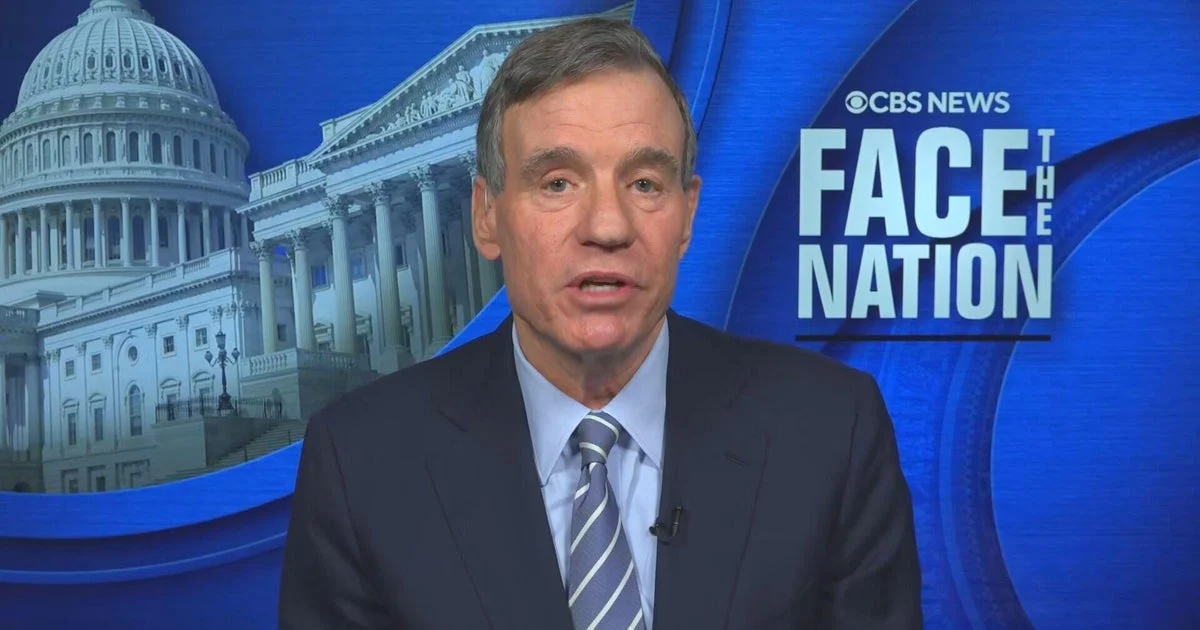
Senator Mark Warner, the top Democrat on the Senate Intelligence Committee, outlined significant concerns about the United States’ ongoing war with Iran during an interview on CBS’s “Face the Nation” on April 12, 2026. Warner emphasized that there was no imminent threat from Iran against the U.S. before the conflict and framed the war as a “war of choice” made by the president. He questioned the feasibility of achieving the administration’s war goals without a substantial ground troop commitment.
Assessment of Intelligence and War Goals
Warner disputed reported claims that Israeli intelligence assessments were accurate and confirmed by the CIA, stating he had reviewed all intelligence and found no evidence of an immediate threat from Iran requiring military action. The senator also cited comments from Secretary of State Marco Rubio, who had anticipated Israeli strikes and suggested the U.S. acted preemptively to counter a predicted Iranian attack. Warner characterized four main objectives of the war: regime change, removal of enriched uranium, destruction of ballistic missiles, and reopening the Strait of Hormuz, noting little progress has been made toward these goals.
One major logistical challenge, according to Warner, is securing and removing Iran’s enriched uranium, which he estimated would require at least 10,000 troops to guard a perimeter around underground bunkers. Warner stressed the dangers of such an operation given Iran’s capacity to bomb those bunkers and the presence of thousands of drones and ballistic missiles still capable of threatening U.S. forces.
Regional and Geopolitical Concerns
Warner described China’s planned delivery of new air defense systems to Iran as significant, highlighting Beijing’s role despite claims the transactions are conducted by private companies. He also criticized the Trump administration’s decision to ease sanctions on Russian and Iranian oil exports, a move he argued has funded Iran’s capability to purchase weapons. He connected these oil policies directly to rising energy prices, including a spike in gasoline costs from $2.81 to above $4 in Virginia since the war began.
The senator further pointed out that the Strait of Hormuz was open prior to the conflict and dismissed claims that closing it would lower gas prices. Instead, he explained, Iran’s use of speed boats to mine the strait or attack tankers keeps regional oil trade at risk, affecting global energy markets and causing economic disruptions, particularly in Asia.
Funding and Congressional Oversight
Warner conveyed caution regarding additional war funding, saying he would “take a look” at any new supplemental requests but expressed frustration that the administration did not seek Congressional approval before initiating the conflict. He insisted that any further funding should prioritize the safety and welfare of U.S. troops, who he praised for their performance thus far.
On domestic issues, Warner briefly addressed the ongoing Homeland Security funding standoff, noting a Senate vote to fund most of the department except ICE, which stalled over policy disagreements. He remarked that public support for aggressive ICE enforcement remains limited.
Why it matters
Warner’s comments highlight critical challenges facing U.S. policymakers as the Iran conflict persists, including the complexities of achieving military objectives without a large-scale ground presence and the economic consequences of disrupted energy supplies. His skepticism about the intelligence underpinning the war decision and the current administration’s handling signals pressure on Washington to reassess strategy and congressional involvement as public dissatisfaction grows.
Read more Politics stories on Goka World News.