
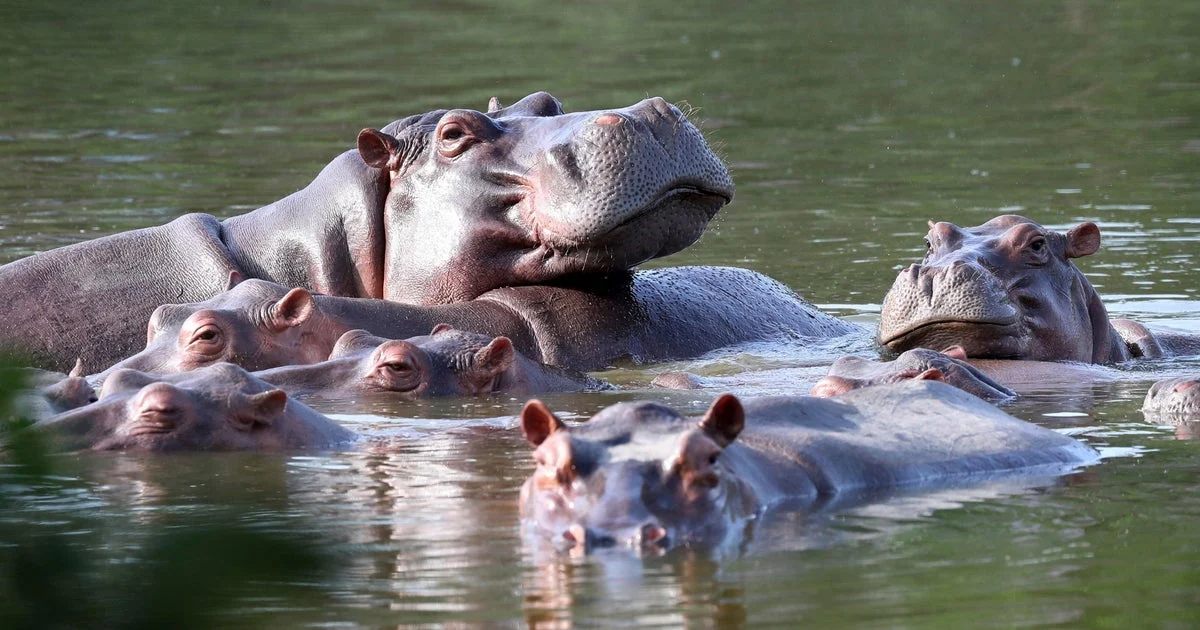
Colombian authorities have authorized a plan to euthanize dozens of invasive hippos that are roaming freely in the central part of the country, posing threats to villagers and native wildlife. The animals are descendants of four hippos brought by drug lord Pablo Escobar in the 1980s to his private zoo at Hacienda Nápoles.
Environment Minister Irene Vélez announced Monday that previous attempts to manage the hippo population—including neutering and relocation to zoos—have been costly and largely ineffective. The new measure will affect as many as 80 hippos; however, the timeline for euthanasia operations has not been announced.
“If we don’t do this we will not be able to control the population,” Vélez stated, emphasizing the need to preserve Colombia’s native ecosystems. The hippos have migrated beyond their original habitat, with sightings more than 60 miles north of Hacienda Nápoles, where the animals now compete with species such as river manatees and threaten local farming communities.
Why it matters
Colombia is the only country outside Africa with a wild hippo population, originating from Escobar’s private menagerie. The hippos are classified as an invasive species because they disrupt local ecosystems by grazing on grasslands and polluting rivers with their waste, which affects aquatic life and endemic species like manatees, otters, and turtles.
Environmental experts warn that sterilization alone cannot contain the fast-growing population, estimated at around 170 hippos as of 2022 by a study from Colombia’s National University. Relocating the animals abroad has been considered but deemed unfeasible due to high costs—estimated at $3.5 million—and concerns over disease transmission from the limited gene pool of Colombia’s hippos.
Background
Originally imported by Escobar to enhance his estate’s private zoo, the hippos have thrived in Colombia’s Magdalena River valley due to the absence of natural predators. In the years since Escobar’s death, the animals have multiplied beyond control, with three female and one male hippo at the origin of the population.
While they present ecological and safety challenges, the hippos have become a tourist attraction in the region, with local businesses offering hippo-spotting tours and merchandise. The Hacienda Nápoles ranch itself now operates as a theme park featuring animal exhibits and recreational areas.
The plan to cull the hippos has met opposition from animal welfare advocates who argue that killing the animals is inhumane and reflects a broader neglect by government authorities. Senator Andrea Padilla called the euthanasia decision “cruel,” asserting that the hippos are victims of governmental negligence.
Over the past decade, several administrations have attempted to control the hippos through sterilization, but the difficulty of capturing and performing surgery on wild hippos has limited success. The Colombian government continues to balance ecological concerns, public safety, animal welfare, and economic costs as it moves forward with the euthanasia plan.
Read more Climate & Environment stories on Goka World News.