
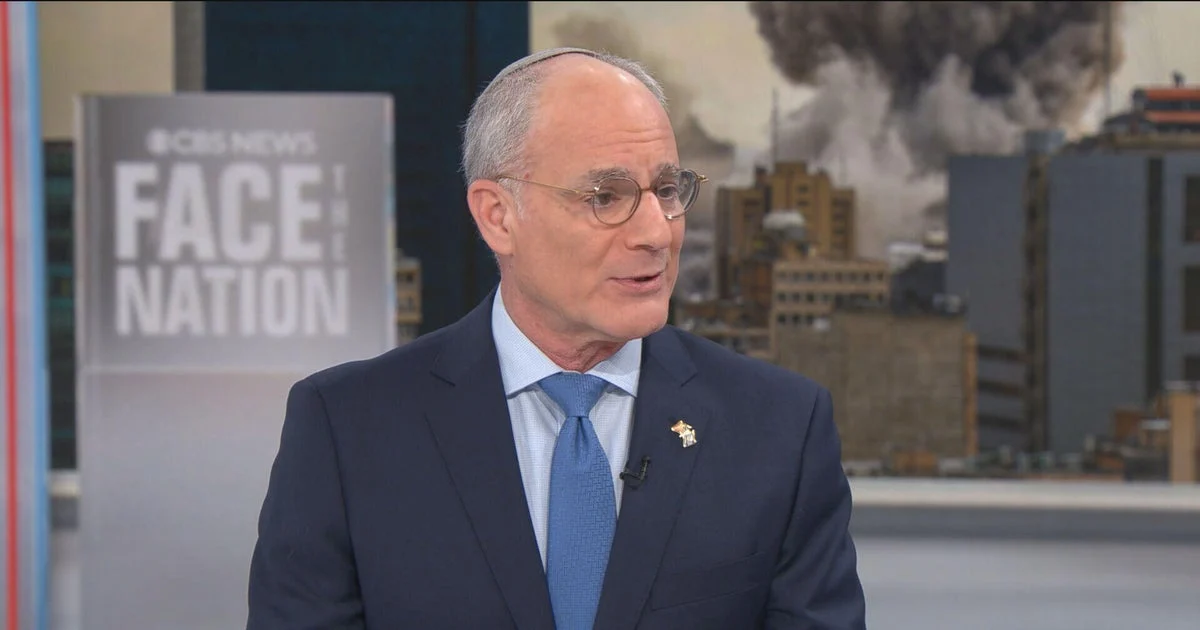
Israeli Ambassador to the United States Dr. Michael Leiter confirmed on April 12, 2026, that Israel remains aligned with the U.S. in maintaining military pressure on Iran even as diplomatic talks continue to resolve the ongoing conflict. Speaking on CBS News’ “Face the Nation,” Leiter underscored that while negotiations have not yet ended, Israel is prepared for military action if needed.
Current Status of Diplomacy and Military Strategy
Leiter emphasized that U.S. President Trump and Israeli leadership share the goal of ending the crisis with Iran without renewed kinetic conflict, but he described Iran’s regime as obstinate in pursuit of nuclear weapons. The ambassador noted that the ongoing ceasefire is still in effect, with one week remaining in a planned two-week pause designated by the U.S. administration to facilitate talks.
Despite this, Leiter asserted skepticism about Iran’s intentions, calling the regime “tyrannical” and highlighting Iran’s past nuclear enrichment to 60%, which Israel views as a near-weapons-grade level. He also rejected Iran’s claim that its nuclear program is purely civilian, pointing to secret underground facilities as evidence of a weapons agenda.
Remaining Security Threats from Iran
Leiter described three primary concerns regarding Iran’s military capabilities: the pursuit of nuclear weapons, advancing ballistic missile technology, and maintaining proxy militias such as Hezbollah. He warned Iran’s missile range has expanded to 4,000 kilometers, potentially threatening areas far beyond the Middle East, including U.S. territories, with Israel’s intelligence estimating Iran could achieve a nuclear arsenal in less than nine years.
The ambassador stressed that Iran’s proxies continue to be a source of regional instability and pose an ongoing threat to Israel’s security.
Israel’s Position on Hezbollah and Lebanon
Regarding the conflict with Hezbollah in Lebanon, Leiter reaffirmed Israel’s position that Hezbollah is a terrorist organization acting as an Iranian proxy bent on Israel’s destruction. He noted that while Israel continues to respond militarily to Hezbollah attacks, diplomatic engagement with Lebanon itself remains possible and desirable.
Leiter recounted a recent U.S.-mediated conference call involving Israeli and Lebanese ambassadors, which he described as constructive and indicated potential for peace negotiations separated from Hezbollah’s influence.
U.S.-Israel Coordination and Military Conduct
Leiter addressed reports about the scale of Israeli airstrikes in Lebanon, which have resulted in substantial civilian casualties. He confirmed that Israel and the United States are coordinating to calibrate the intensity of military operations, aiming to reduce the “cadence” of strikes while maintaining operational effectiveness in response to ongoing threats.
Why it matters
The Israeli ambassador’s comments illustrate the complex balance between diplomacy and military readiness as the United States and Israel seek to prevent Iran from acquiring nuclear weapons while managing the broader regional conflict. Israel’s cautious support of negotiations alongside its continued military actions highlights the fragile nature of current Middle East stabilization efforts.
Read more Politics stories on Goka World News.