
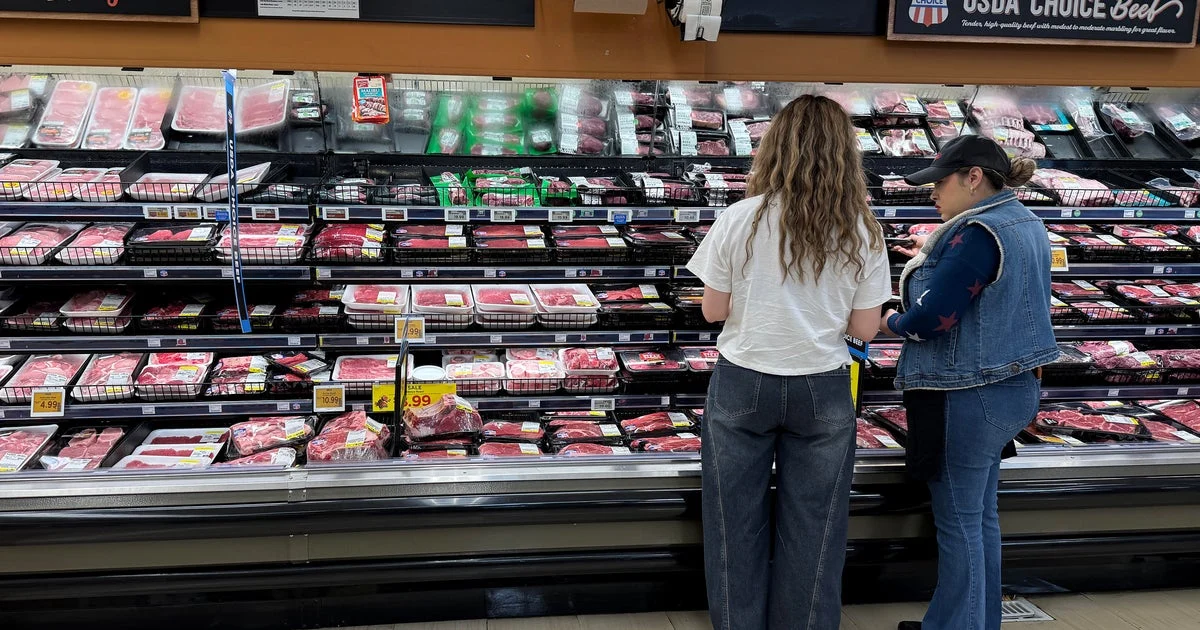
Americans are facing significantly higher beef prices this year, with ground beef costing $6.70 per pound and beef steaks at $12.73 per pound in March 2026—each up nearly 16% compared to a year earlier. This sharp increase is primarily due to shrinking U.S. cattle herds, persistent inflation, and rising costs along the food supply chain.
Beef prices reach multi-year highs
Data from the Federal Reserve Bank of St. Louis reveals that ground beef prices have climbed sharply from as low as $3.96 a pound in 2021 and around $3.75 a decade ago. Meanwhile, steak prices have followed a similar upward trajectory. Experts warn that relief from these high prices is unlikely soon. Derrell Peel, a professor of agricultural economics at Oklahoma State University, stated that there is “nothing to suggest any relief from high beef prices.”
The U.S. Department of Agriculture (USDA) projects beef prices could rise by 10-18% during 2026. David Ortega, a food economist at Michigan State University, expects beef prices to remain high throughout this year and potentially into 2027.
Factors driving higher beef costs
The key factor behind rising beef prices is a decline in the U.S. cattle herd, which dropped to under 28 million in January 2026. This level is the smallest since the 1960s and reflects a 1% decrease from the previous year, as reported by USDA data. Severe drought conditions, especially in the western U.S.—a major cattle-producing region—have reduced grazing pasture and forced ranchers to rely more on expensive feed or cull herds.
Additionally, broader inflationary pressures compounded by geopolitical tensions have contributed to rising costs. The conflict in the Middle East has driven up diesel prices, which affects transportation and supply chain costs from feed delivery to meat distribution. Ortega explained that higher diesel prices increase expenses across the agricultural supply chain, pushing up beef prices further.
Inflation in U.S. food prices overall reached nearly 20% from January 2022 to March 2026. The U.S. Consumer Price Index rose 3.3% year-over-year in March, influenced partly by rising energy costs linked to the Iran war.
Consumer demand remains strong despite price hikes
Despite steep price increases, beef demand in the U.S. has shown resilience. NielsenIQ data indicates that beef unit sales have dropped only 4% year-over-year, while dollar sales—reflecting total revenue—have increased by 8%. This suggests consumers are still purchasing beef even as prices climb.
Andrew Coppin, CEO of Ranchbot, a company supplying ranchers with water-monitoring technology, noted that beef has maintained demand better than pork and chicken amid moderate inflation. He attributed this partly to sustained consumer preferences for beef.
Signs of potential herd recovery in the future
There are early indicators that cattle producers may begin rebuilding herds. USDA data shows a reduction in cattle slaughter rates alongside an increase in female breeding cows, suggesting that ranchers are investing in herd replenishment.
Ortega emphasized that high beef prices serve as an economic signal for producers to expand supply. Any new supply increases would likely take time to materialize due to cattle’s long gestation period but could moderate prices in the coming years.
Why it matters
Rising beef prices directly impact U.S. consumers’ food budgets, especially as they coincide with broader inflation affecting essentials like fuel and heating. With summer barbecue season approaching, households may face higher grocery bills. Additionally, the supply challenges faced by the cattle industry highlight vulnerabilities in U.S. food production linked to climate conditions and global market disruptions.
Background
The American cattle herd has been contracting due to recurring droughts and elevated feed costs following global disruptions such as Russia’s invasion of Ukraine in 2022. This has tightened beef supply even as domestic consumer demand remains robust. Historically, cattle herd size and feed prices are key determinants of beef availability and cost.
Read more Business stories on Goka World News.