
The United States has entered the second day of a naval blockade against Iranian ports, aiming to pressure Tehran to relinquish control over the Strait of Hormuz, a vital maritime chokepoint for global shipments of oil, fertilizer, and other commodities. Iran has warned that if the blockade persists, no ports in the Gulf will remain safe, escalating concerns of further regional instability as the conflict enters its seventh week.
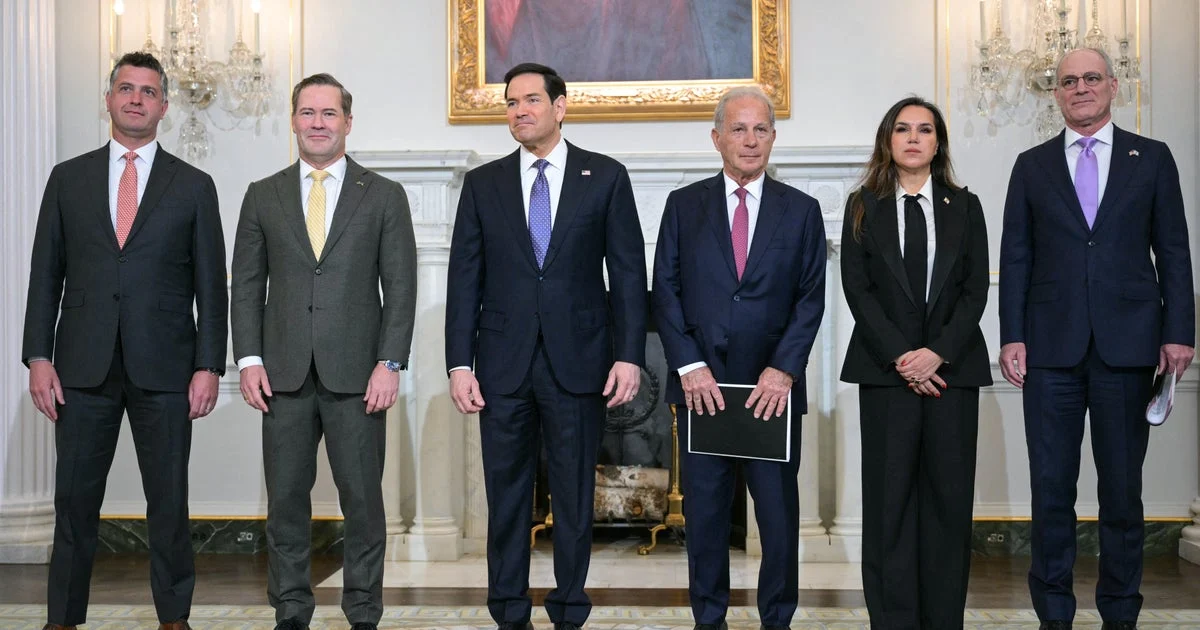
In parallel diplomatic developments, Lebanese and Israeli officials convened in Washington, D.C., for the first direct talks since 1993. U.S. Secretary of State Marco Rubio participated in the sessions, which concluded with a joint announcement to “launch direct negotiations.” These talks signal a significant shift toward potential conflict resolution between Israel and Lebanon, two countries long embroiled in tension, notably involving the militant group Hezbollah.
U.S. Blockade and Regional Tensions
Washington’s blockade of Iranian ports aims to curtail Tehran’s control over the Strait of Hormuz, through which a substantial portion of the world’s oil passes. Despite the blockade, maritime tracking data showed at least three ships recently crossed the strait from Iran, although some vessels returned, reflecting heightened security risks and operational uncertainty. The blockade further complicates the transport of essential goods and threatens to exacerbate regional hostilities.
Pakistan has taken an active diplomatic role by attempting to mediate a second round of peace talks between the U.S. and Iran following an initial session in Islamabad that ended without agreement. Pakistani officials remain committed to facilitating dialogue, with the nation’s finance minister expressing determination to continue efforts to broker peace.
During the initial talks, the U.S. reportedly proposed suspending Iran’s nuclear enrichment activities for at least 20 years, along with additional restrictions. However, the two sides have yet to reach consensus on key issues, including Iran’s nuclear program and control of the Strait of Hormuz.
Lebanon-Israel Talks and Regional Implications
The direct diplomatic engagement between Lebanon and Israel marks an unprecedented step after decades of indirect or absent communication. Israeli Ambassador Yechiel Leiter highlighted a mutual interest in reducing Hezbollah’s influence in Lebanon, describing the meeting as a “wonderful exchange” and noting both countries appear aligned in their objective to liberate Lebanon from what he termed “an occupation power dominated by Iran.”
Lebanese Ambassador Nada Hamadeh Moawad emphasized the need to end the Israel-Hezbollah conflict, uphold territorial integrity and state sovereignty, and focus on humanitarian issues such as the return of displaced persons. The two governments agreed to continue negotiations at a future date and location yet to be determined.
Why it matters
The U.S. blockade of Iran’s ports poses significant risks to global oil supply chains and heightens the threat of military escalation in a strategically critical region. It underscores the urgent need for diplomatic solutions as economic and security pressures mount.
The resumption of direct talks between Lebanon and Israel, brokered by the U.S., represents a potentially historic step towards de-escalating longstanding regional conflicts. Progress in these negotiations could influence broader dynamics in the Middle East, including efforts to contain Iran’s regional influence and reduce Hezbollah’s power in Lebanon.
Read more Politics stories on Goka World News.