
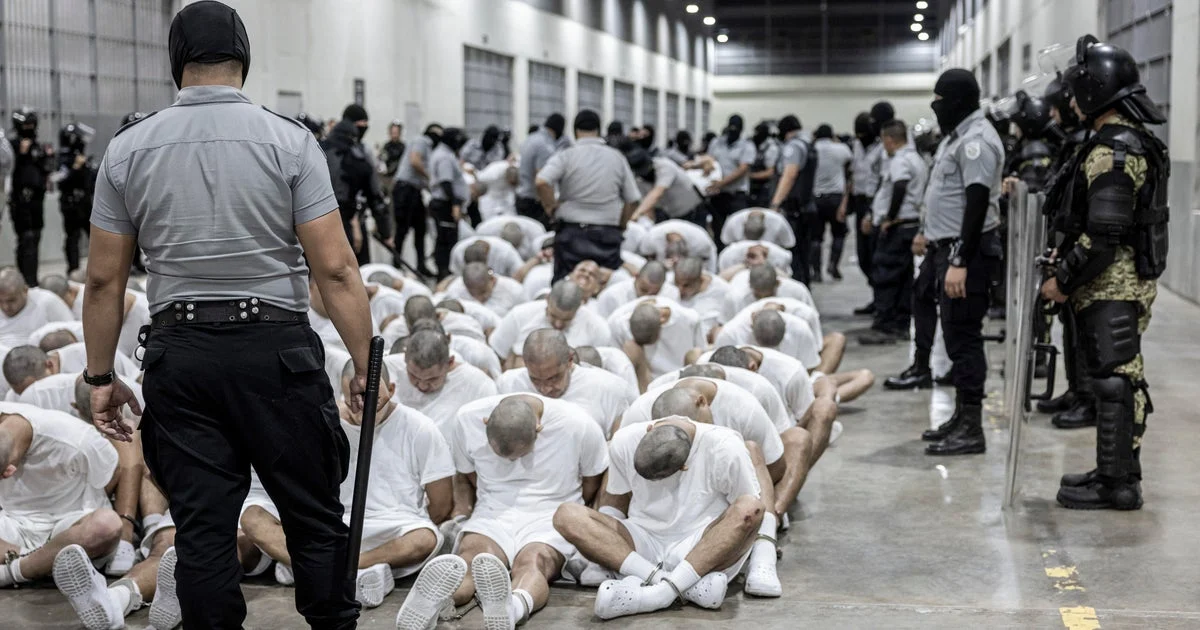
A federal appeals court on Tuesday blocked criminal contempt proceedings against Trump administration officials involved in deportation flights of Venezuelan migrants to El Salvador, ruling the investigation intruded on executive branch authority.
The issue arose after U.S. District Judge James Boasberg issued an order instructing federal immigration officials to turn back two planes carrying Venezuelan migrants suspected of gang affiliations. The administration defied that order and deported the migrants, prompting Boasberg to launch a criminal contempt inquiry to determine who was responsible for continuing the flights.
The migrants were deported under President Trump’s invocation in March 2025 of the Alien Enemies Act, with the administration asserting the men belonged to the Venezuelan gang Tren de Aragua. However, a CBS News investigation found that most of those deported appeared to lack criminal records.
The U.S. Court of Appeals for the District of Columbia Circuit ruled 2-1 that the contempt investigation was an “abuse of discretion” and improperly encroached on the executive branch’s autonomy in matters of national security and foreign policy. Judge Neomi Rao, writing for the majority, emphasized the constitutional separation of powers, stating that judicial inquiry into executive decision-making on sensitive security and diplomatic issues was inappropriate.
The majority opinion noted the investigation threatened an open-ended inquiry into executive actions related to ongoing military and diplomatic initiatives. Judge Justin Walker joined Rao in the majority, while Judge J. Michelle Childs dissented, arguing the contempt inquiry was necessary to uphold the rule of law and enforce judicial orders.
Acting Attorney General Todd Blanche welcomed the decision, saying it should end what he described as a “year-long campaign against the hardworking Department attorneys” enforcing immigration laws. Conversely, Lee Gelernt of the ACLU, representing the Venezuelan migrants, criticized the ruling as a setback for the rule of law, asserting that the Trump administration willfully violated court orders.
Why it matters
The ruling highlights ongoing tensions between the judiciary and executive branches over immigration policy enforcement and national security decisions. It underscores constitutional limits on courts investigating executive officials’ compliance with orders in areas the courts consider political question territory. The case reflects continuing legal disputes over the Trump administration’s use of the Alien Enemies Act—a rarely invoked law more than two centuries old—to justify mass deportations.
Background
The deportations under the Alien Enemies Act began after Trump declared Venezuelan migrants associated with the Tren de Aragua gang as enemy aliens. Several lower courts blocked these deportations during ongoing litigation. Judge Boasberg’s order to turn around deportation flights was issued during fast-moving legal proceedings more than a year ago but was ignored by the government, prompting his contempt inquiry.
Efforts to secure testimony from Justice Department officials and former Homeland Security Secretary Kristi Noem—who the government identified as responsible for the decision to continue the flights—were unsuccessful. The controversy has involved multiple court rulings and appeals, with the D.C. Circuit previously intervening to limit aspects of the contempt proceedings, though allowing parts to continue before Tuesday’s ruling permanently halted the inquiry.
Read more Politics stories on Goka World News.