
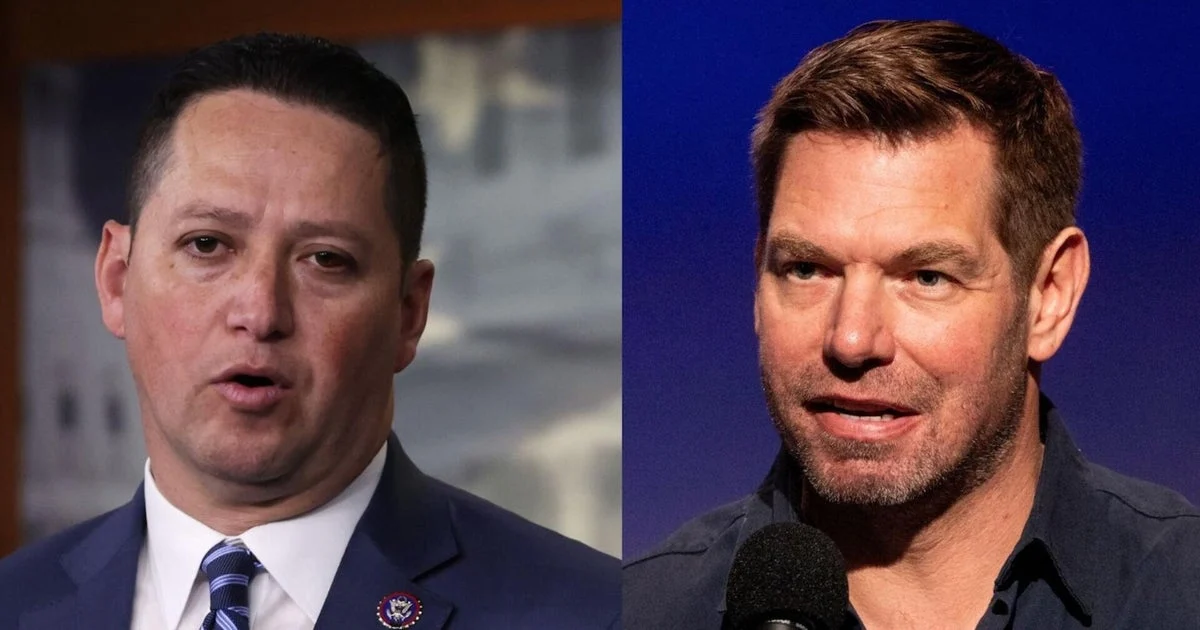
Democratic Representative Eric Swalwell and Republican Representative Tony Gonzales formally resigned from the U.S. House of Representatives on Tuesday, stepping down amid separate sexual misconduct controversies and avoiding anticipated expulsion votes.
Swalwell submitted his resignation effective 2 p.m. Tuesday, following allegations of sexual assault that surfaced recently. These accusations led Swalwell to end his campaign for governor of California. In his resignation letter, Swalwell apologized to his family, staff, and constituents for past mistakes in judgment, while also asserting his intention to contest what he described as “serious, false allegations.”
“I must take responsibility and ownership for the mistakes I did make,” Swalwell wrote. He criticized efforts to expel members of Congress swiftly without due process but acknowledged that resigning would prevent distractions from his duties.
Gonzales’s resignation took effect at 11:59 p.m. Tuesday. In March, Gonzales admitted to having an affair with a subordinate, who later died by suicide. Although he had previously announced he would not seek reelection, he resisted resigning until the renewed scrutiny prompted by Swalwell’s situation. Gonzales expressed gratitude for representing Texas’s 23rd congressional district in his brief resignation letter.
House colleagues had prepared motions to expel both members if they did not resign voluntarily, with the resignations occurring just hours apart on Monday evening. Their official letters were read aloud on the House floor as the chamber reconvened to consider other legislative business Tuesday afternoon.
Why it matters
The resignations highlight increasing pressure within Congress to address allegations of sexual misconduct among lawmakers. By resigning, Swalwell and Gonzales spared the House from having to conduct formal expulsion proceedings, which require a two-thirds majority vote and have significant political and procedural consequences. These developments come amid broader discussions on accountability and workplace conduct in the federal government.
Background
Eric Swalwell, a Democratic representative from California, faced multiple allegations of sexual misconduct late in his term, prompting calls for expulsion and the end of his gubernatorial campaign. Tony Gonzales, a Republican from Texas, publicly acknowledged an extramarital affair in early 2026 and faced scrutiny following the subordinate’s suicide. Both cases contributed to heightened congressional attention on ethics and member conduct during the 2025-2026 legislative session.
Read more Politics stories on Goka World News.