
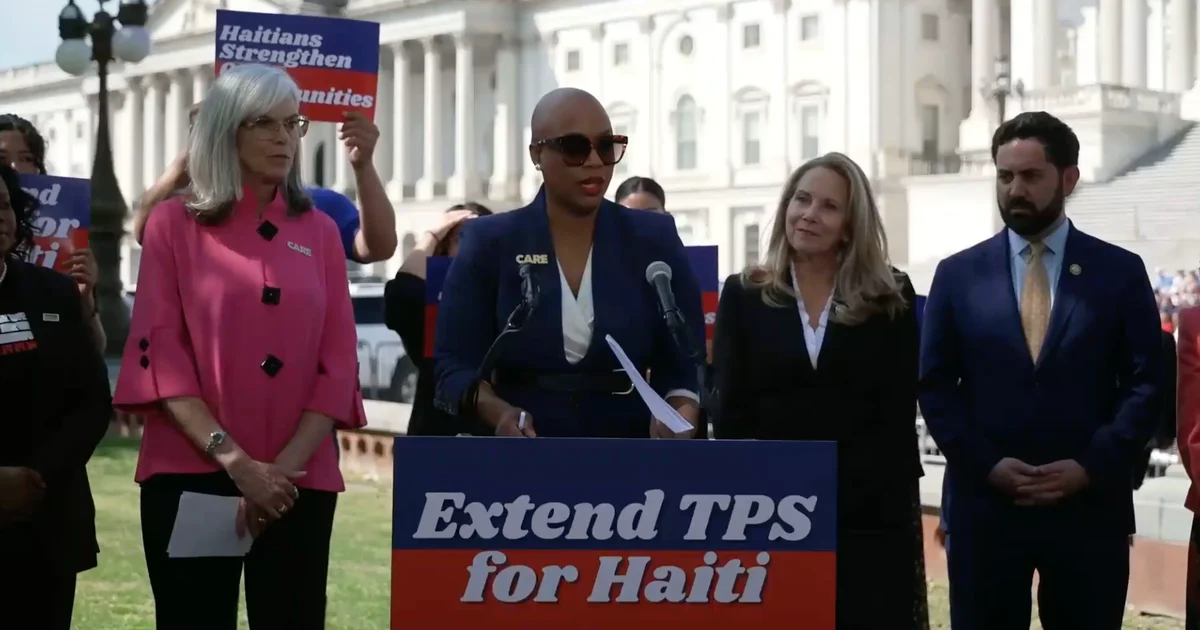
The U.S. House of Representatives is preparing to vote on legislation that would extend temporary protected status (TPS) for Haitian nationals, opposing the Trump administration’s move to end these deportation protections. The measure, led by Rep. Ayanna Pressley and supported by Democrats and a handful of Republicans, would require the Department of Homeland Security (DHS) to continue TPS for Haitians until 2029.
The bill was brought to the floor through a discharge petition, an uncommon procedural tool allowing members of the House to bypass Republican leadership and force a vote. The petition reached the necessary 218 signatures in late March, aided by four Republicans—Reps. Maria Elvira Salazar, Brian Fitzpatrick, Mike Lawler, and Don Bacon—who joined all Democrats in support. Additional Republicans supported advancing the bill in a procedural vote held on Wednesday.
Originally introduced last year by Rep. Laura Gillen, the bill reflects bipartisan concern about conditions in Haiti. It mirrors a 2019 bill introduced by then-Senator Marco Rubio. The legislation would extend TPS through 2029, ensuring Haitians residing in the U.S. temporarily can continue to live and work without fear of deportation.
TPS is a legal status created by Congress in 1990 to protect immigrants from countries deemed unsafe due to armed conflict, natural disasters, or extraordinary conditions. Haiti has held TPS since the 2010 earthquake that devastated the country, killing more than 300,000 people. The status was most recently extended for 18 months in August 2024 by the Biden administration, citing ongoing economic, security, political, and health crises in Haiti. More than 330,000 Haitian nationals held TPS as of last year.
The Trump administration announced in November its plan to terminate TPS for Haitians, arguing that it was “contrary to the U.S. national interest.” The administration stated that U.S. immigration policy should align with its foreign policy goal of fostering a secure and self-reliant Haiti, despite acknowledging continuing challenges in the country.
The proposed end of TPS faced immediate legal challenges. A federal judge blocked the termination in February just before the protections were set to expire, and an appeals court refused to overturn that decision. The Supreme Court is expected to hear further arguments on this matter.
Supporters of the bill argue that ending TPS would force Haitians back into dangerous conditions. Rep. Pressley called the administration’s plan “a death sentence,” while Rep. Gillen described it as “cruel” to expect Haitians to return to unsafe environments. Republican Rep. Lawler added that returning Haitians under current conditions was “unjust and unwise,” noting inconsistencies between State Department travel warnings and DHS determinations.
The bill still faces hurdles in the Senate and a likely veto from President Trump. Overriding a veto requires a two-thirds majority in both chambers, a threshold that has not been reached by previous immigration-related legislation this year.
Why it matters
This vote highlights growing bipartisan resistance within Congress to the Trump administration’s immigration policies, particularly around vulnerable populations. TPS status not only protects immigrants from deportation but also impacts millions of U.S. residents and workers, making the decision significant for both humanitarian reasons and economic implications.
Background
Temporary Protected Status (TPS) was established in 1990 as a way to temporarily shelter individuals from countries experiencing crises. Haiti’s TPS designation began after the catastrophic 2010 earthquake and has been renewed several times amid ongoing instability. The Trump administration’s efforts to terminate TPS for several countries have sparked legal challenges and political debates around immigration policy, foreign relations, and human rights.
Read more Politics stories on Goka World News.