
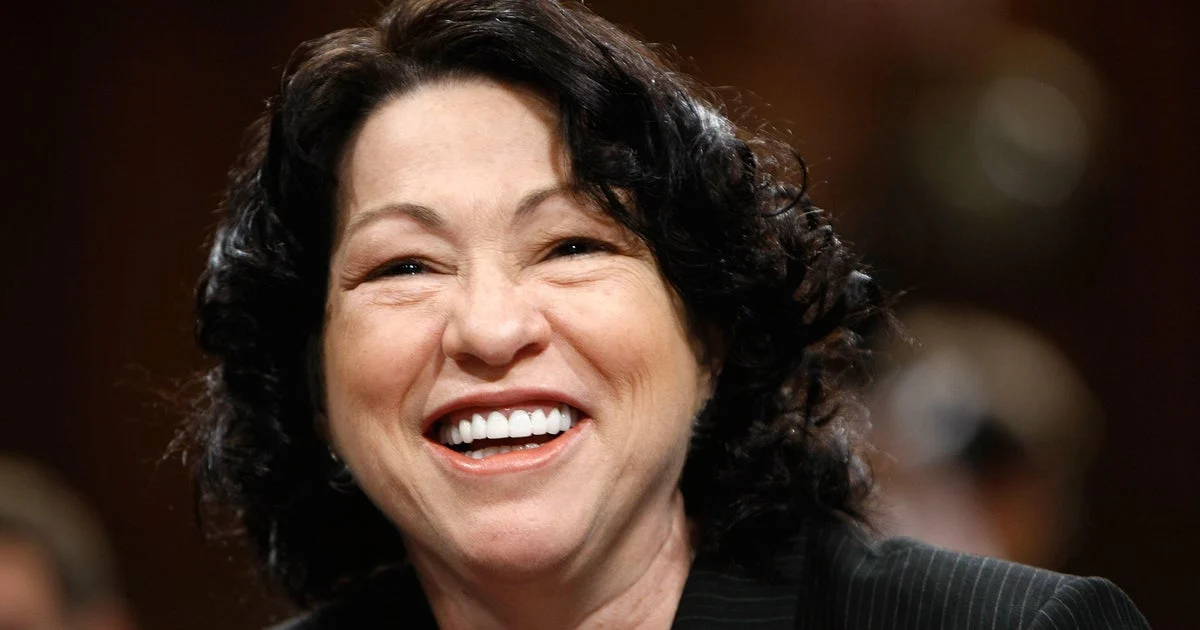
Supreme Court Justice Sonia Sotomayor issued a public apology on April 15, 2026, for remarks she made criticizing Justice Brett Kavanaugh’s views on immigration enforcement.
Sotomayor’s apology followed comments from a recent public appearance at the University of Kansas School of Law where she referenced a disagreement with one of her colleagues over a Supreme Court order involving Immigration and Customs Enforcement (ICE) arrests. Although she did not name Kavanaugh, it was clear she was responding to his written concurrence in the case.
The September 2025 order allowed ICE to resume broad immigration sweeps in Los Angeles, reversing a lower court ruling that had restricted the agency’s detention practices. The lower court found that ICE had unlawfully detained individuals based on factors such as race, occupation, or use of Spanish, which it ruled could not alone establish reasonable suspicion of illegal presence.
Justice Kavanaugh, the sole justice to write a separate opinion, argued that while ethnicity cannot be the sole basis for stops, it could be a relevant factor. He also described the immigration encounters as “brief” and stated that detainees are typically released once they prove lawful presence in the United States.
During her Kansas appearance, Sotomayor criticized the characterization of these interactions as merely “temporary stops,” adding a personal observation about the background of the colleague who authored those remarks. According to reports, she noted that this justice came from a privileged background and likely lacked direct experience with hourly wage workers. Kavanaugh grew up in a professional family in the Washington, D.C. area, whereas Sotomayor was raised in Bronx public housing.
In her official apology, Sotomayor said: “I made remarks that were inappropriate. I regret my hurtful comments. I have apologized to my colleague.” Such personal criticism among justices is rare, as they typically emphasize that their legal disagreements are not personal.
Sotomayor previously dissented from the Court’s decision to allow ICE’s actions, joined by two other liberal justices, citing concerns that the ruling enabled the government to target Latinos unlawfully. She wrote that the ruling effectively allowed ICE to seize people based on their appearance, language, or occupation, which infringed on constitutional freedoms.
Why it matters
This incident underscores tensions on the Supreme Court over immigration enforcement and the limits of constitutional protections against racial profiling and unlawful detention. It also highlights the delicate balance justices maintain between robust legal debate and collegiality in a polarized court.
Background
In the underlying case, the Supreme Court reversed a ruling that imposed strict limits on ICE’s use of race, language, and occupation as factors for stops. The decision reflects ongoing national legal debates about immigration enforcement policies and civil rights protections for Latino and immigrant communities.
Read more Politics stories on Goka World News.