
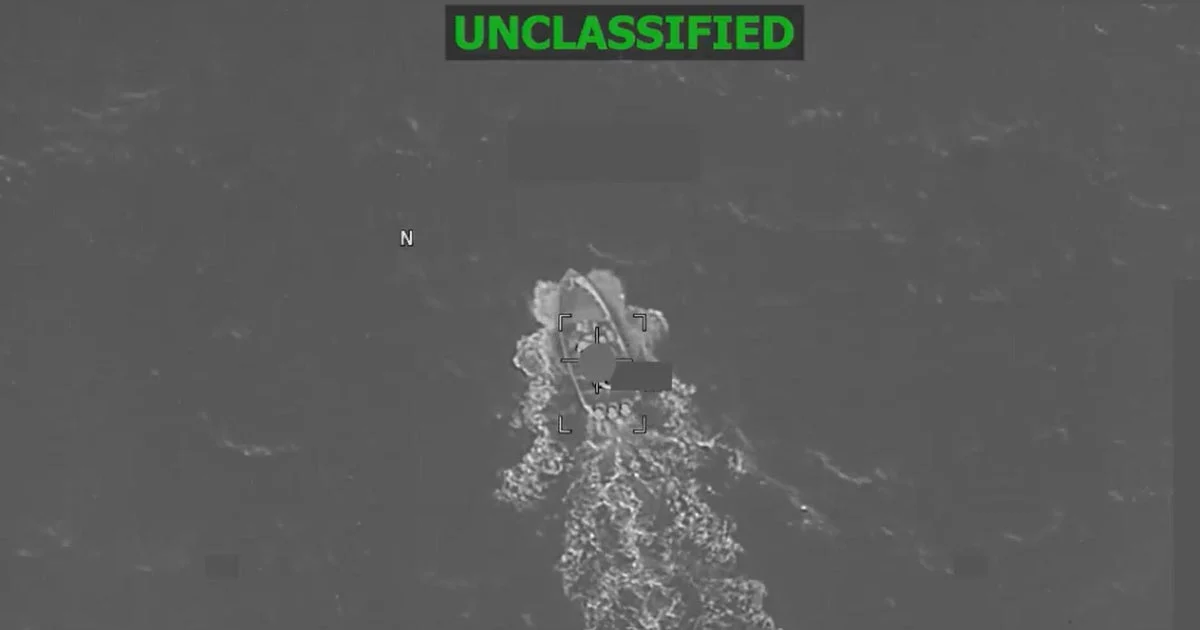
The U.S. military conducted a strike on Wednesday against an alleged drug-carrying vessel in the eastern Pacific, killing three individuals identified by the Pentagon as “male narco-terrorists,” according to U.S. Southern Command (SOUTHCOM).
SOUTHCOM, which manages U.S. military operations in Latin America, described the event as a “lethal kinetic strike” targeting a boat operated by designated terrorist organizations. The command released an unclassified video documenting the strike.
This strike is part of a recent wave of U.S. military actions against drug trafficking vessels in the region. On Tuesday, a similar strike killed four people, while Monday’s operation resulted in two deaths. In addition, two strikes on Saturday targeted separate vessels, killing five people and leaving one survivor, whose search has since been suspended by the U.S. Coast Guard.
Since these operations began in early September, at least 53 vessels have been targeted, with a confirmed death toll of at least 178 individuals.
President Donald Trump has characterized the situation as an “armed conflict” between the U.S. and Latin American cartels, justifying the strikes as necessary measures to reduce the flow of drugs into the United States. Despite these claims, the administration has provided limited public evidence to verify that those killed were narcoterrorists.
The increased military actions preceded a high-profile January raid in which former Venezuelan President Nicolás Maduro was captured and charged with drug trafficking in the United States. Maduro has pleaded not guilty to these charges.
Why it matters
The continuing U.S. strikes on alleged drug trafficking vessels highlight an escalating military approach to combating narcotics flow in Latin America, with implications for regional security and international law. Critics have questioned both the legality of these maritime operations and their effectiveness, noting that much of the fentanyl and other drugs causing overdoses in the U.S. are trafficked overland through Mexico.
Background
The operations target vessels associated with designated terrorist organizations involved in drug trafficking. The strikes focus on stopping shipments primarily in the eastern Pacific and Caribbean, regions known for drug smuggling routes. The U.S. military and Coast Guard coordinate these efforts under SOUTHCOM’s jurisdiction.
Opposition voices have raised concerns about potential war crimes, especially regarding attacks on survivors of targeted vessels. The overall impact of these strikes on the narcotics trade remains a topic of debate among policymakers and law enforcement experts.
Read more US News stories on Goka World News.