
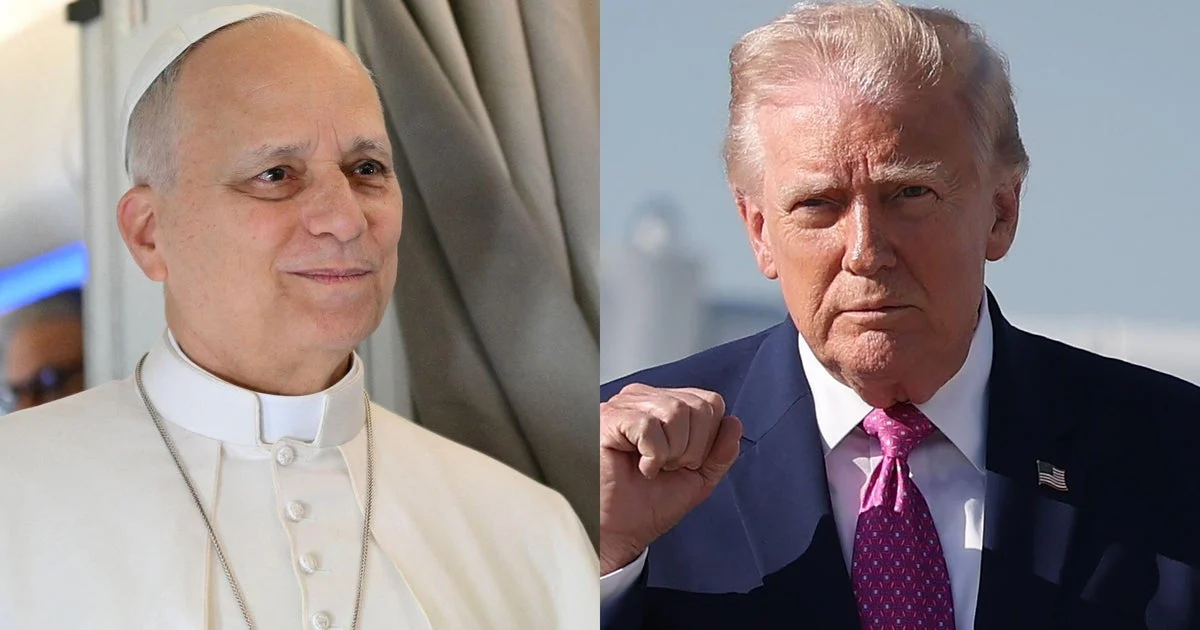
President Donald Trump and Pope Leo XIV have entered a public dispute following the pope’s critical comments on the U.S.-led military actions in Iran and the Trump administration’s immigration policies. The conflict has highlighted a rare and pronounced rift between the leader of the United States and the head of the Catholic Church, the largest Christian denomination worldwide.
The tensions escalated notably after the start of Operation Epic Fury on February 28, involving coordinated U.S. and Israeli airstrikes on Iranian targets. The day after the operation began, Pope Leo expressed “deep concern” over the violence and urged all parties to halt the conflict to prevent irreparable damage. As the situation progressed, the pope condemned Trump’s threat to “destroy Iranian civilization” as “unacceptable” and encouraged the public to pressure elected officials for peace.
The strained exchange intensified following a 60 Minutes segment focused on Pope Leo’s denouncement of the war and the Trump administration’s mass deportation efforts. U.S.-based Catholic cardinals appearing on the program argued that the war with Iran did not align with the Catholic Church’s “just war” doctrine, which governs ethical conduct during armed conflict.
On April 12, Trump responded to the segment via Truth Social, calling Pope Leo “weak on crime” and “very liberal” and criticizing him for opposing the president’s immigration policies and military stance. Trump also suggested that Pope Leo’s election was influenced by the White House, labeling it a “shocking surprise” and claiming the Church chose him as a strategic response to Trump’s presidency. Trump urged the pope to “stop catering to the Radical Left” and focus on his religious role rather than politics.
The president reiterated his criticisms in public remarks and interviews, emphasizing disagreement with the pope’s peace appeals and warning about the risks of Iran acquiring nuclear weapons. Despite his harsh tone, Trump claimed there was no personal animosity toward Pope Leo and acknowledged the pope’s right to speak his mind.
Vice President JD Vance and House Speaker Mike Johnson, both identifying with Christian faith traditions, sided with Trump on some points. Vance advocated that the Vatican should “stick to matters of morality” and avoid political interference, while Johnson defended the U.S. military actions under the “just war” doctrine, describing the campaign against Iran as a necessary defensive measure.
Pope Leo responded on April 13 by emphasizing his role as a peacemaker guided by the Gospel rather than a political actor. He rejected Trump’s attacks and stressed the Church’s mission to advocate for peace and dignity, particularly criticizing the administration’s treatment of immigrants as “extremely disrespectful.”
The dispute also drew international attention when Iranian officials condemned Trump’s insults against the pope and framed them as disrespectful to religious peace values. Meanwhile, the White House remained firm, with officials including border czar Tom Homan urging Catholic leaders to avoid political commentary.
Why it matters
The public clash between President Trump and Pope Leo XIV underscores the complexities when religious and political authorities confront each other on global issues such as war, immigration, and ethical governance. The dispute raises questions about the appropriate role of religious leaders in political debates and the influence of faith-based principles on international conflict. It also illustrates the heightened polarization surrounding U.S. foreign policy and domestic immigration enforcement in a global context.
Background
Pope Leo XIV assumed the papacy last year, becoming the first American pope in history. His tenure has been marked by vocal criticism of U.S. immigration actions—echoing concerns raised by his predecessor, Pope Francis—and calls for peace amid rising conflicts in the Middle East. Operation Epic Fury’s launch intensified existing tensions between the Vatican and the Trump administration, triggering reciprocal accusations and politicized dialogue. The Catholic Church’s doctrine on just war has often served as a framework to evaluate military interventions, adding moral dimension to the debate over the Iran conflict.
Read more Politics stories on Goka World News.