
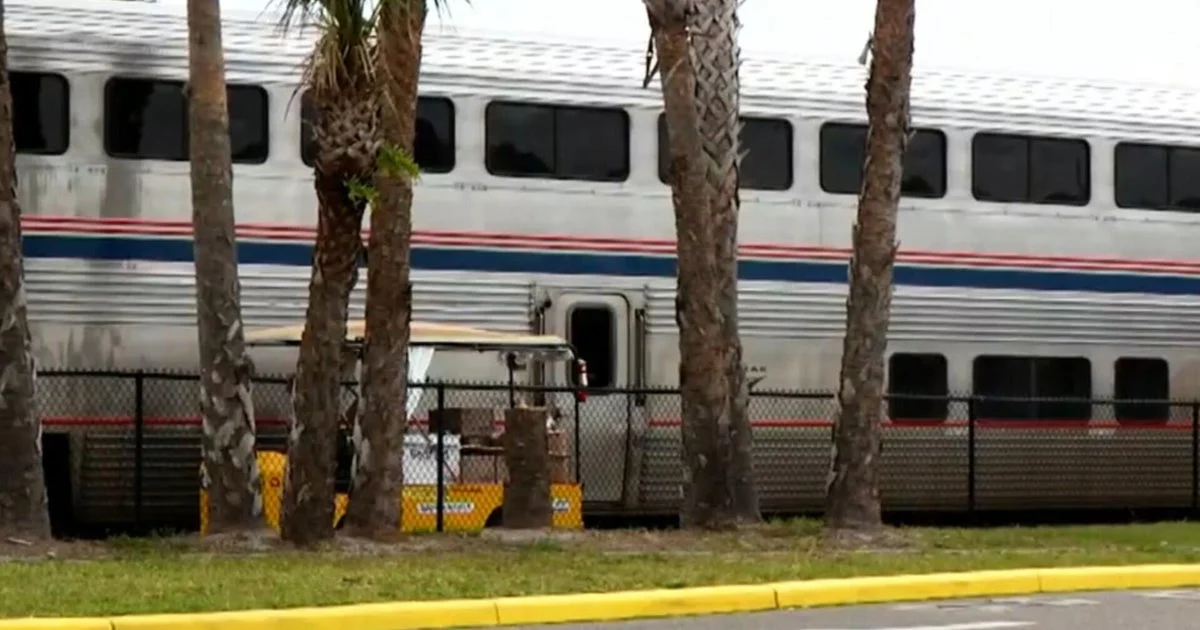
More than 200 people were stranded on an Amtrak train in Florida for nearly 24 hours after a wildfire forced train operations to come to a complete halt. The fire disrupted rail traffic along the affected route, preventing the train from continuing its journey and leaving passengers confined onboard for an extended period.
The incident occurred amid growing wildfire activity in the region, which posed immediate safety risks and logistical challenges for transportation authorities. Passengers reported experiencing significant delays and uncertainty while waiting on the train. Cristian Benavides, a correspondent, spoke with several individuals affected by the disruption to document their experiences during the ordeal.
Wildfire Impact on Train Operations
The wildfire’s proximity to the rail line necessitated an immediate suspension of service to ensure passenger safety and allow emergency crews to contain the fire. This resulted in a bottleneck in rail traffic, with no alternative routes available for rerouting the train. Amtrak officials communicated with passengers throughout the delay but were constrained by conditions on the ground.
Passenger Conditions and Response
While stranded, passengers remained on the train, which lacked facilities to comfortably accommodate the delay of almost a day. The situation highlighted vulnerabilities in rail network contingency planning when facing natural disasters like wildfires. Emergency responders and Amtrak coordinated to resolve the situation as quickly as possible, prioritizing safety but also passenger welfare amid the prolonged stoppage.
Read more US News stories on Goka World News.