
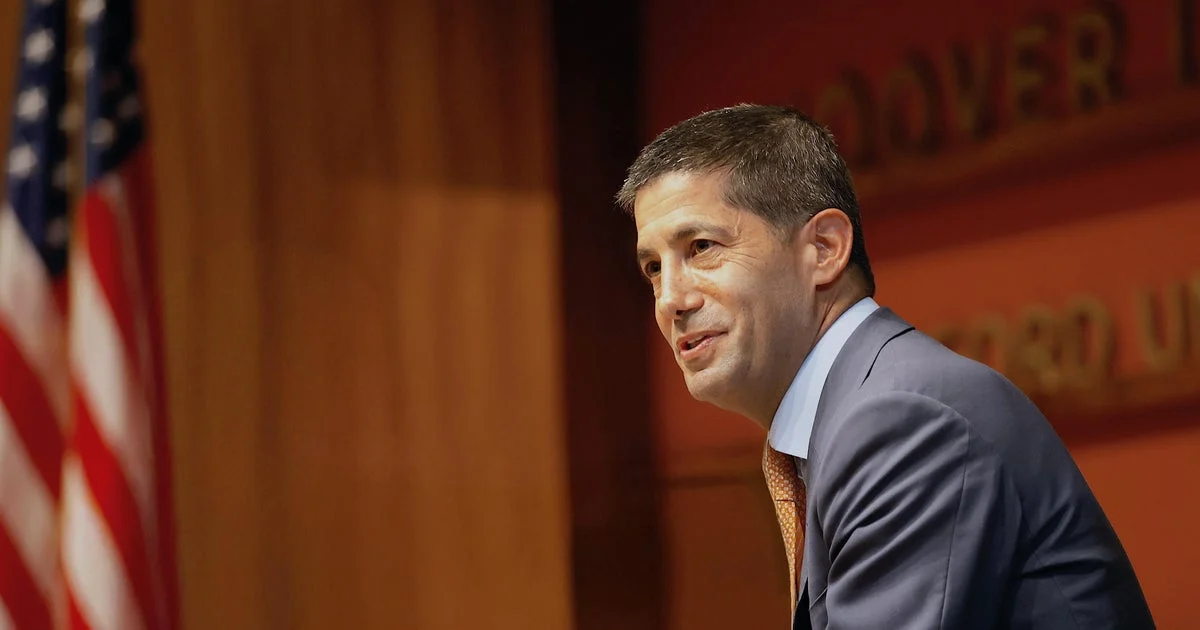
President Trump’s nominee to lead the Federal Reserve, Kevin Warsh, faces significant obstacles in securing Senate confirmation due to a Justice Department investigation into current Fed Chair Jerome Powell, raising questions about the central bank’s leadership after Powell’s term expires on May 15.
Senate Opposition Linked to DOJ Investigation of Powell
The Justice Department has launched a criminal probe into Powell concerning a renovation of the Federal Reserve headquarters. Powell has accused prosecutors of attempting to pressure him for resisting interest rate cuts favored by President Trump. Republican Senator Thom Tillis of North Carolina has labeled the investigation “weak and frivolous” and has pledged not to support any Federal Reserve nominees, including Warsh, until the investigation concludes. This blockade complicates Warsh’s confirmation prospects, as the Senate Banking Committee is nearly evenly split with 13 Republicans and 11 Democrats, and even a single Republican defection could cause a deadlock. Warsh, a former Fed official and Hoover Institution fellow, underwent a confirmation hearing last week but faces an uncertain path in the committee.
Recent developments have intensified the standoff: a judge nullified subpoenas related to the investigation, which prosecutors vowed to contest, and prosecutors unexpectedly visited the Fed’s headquarters. Meanwhile, Powell has publicly committed to remaining as interim Fed chair until the legal inquiry is resolved and a successor is confirmed.
Potential Leadership Implications After Powell’s Term Ends
Powell’s term as Fed chair officially ends on May 15, but the Federal Open Market Committee (FOMC), which he chairs, will hold a key interest rate meeting on June 16 and 17. Experts identify this date as the critical “drop-dead” deadline for confirming a new chair to prevent market uncertainty. Powell, unanimously reelected to a one-year term as FOMC chair earlier this year, has signaled his intention to stay until the successor is in place, and he does not plan to leave the Fed board before the investigation ends.
The White House has not outlined how it will proceed if Warsh remains unconfirmed by May. Though President Trump has publicly threatened to fire Powell “if he’s not leaving on time,” such a dismissal faces legal challenges because Federal Reserve board members can only be removed “for cause,” a provision currently under judicial review in related litigation.
Legal Ambiguity Over Interim Fed Chair Appointment
If Warsh’s confirmation fails, the White House might seek to appoint an interim Fed chair from among existing board members, relying on a rarely invoked 1978 Justice Department legal opinion granting the president such authority. However, this legal basis has not been tested in court and may conflict with subsequent laws requiring Senate confirmation of Fed chairs. Legal experts warn such a scenario could trigger a constitutional dispute potentially resolved only by the Supreme Court.
Among the sitting Fed board members appointed by Trump are Stephen Miran, Michelle Bowman, and Christopher Waller, though it remains unclear if the president will attempt to elevate one of them to acting chair in the absence of Warsh’s confirmation.
Why it matters
The uncertainty over Federal Reserve leadership comes at a critical moment for U.S. monetary policy amid global economic challenges and geopolitical tensions, including the ongoing conflict in Iran. Markets typically rely on clear Fed guidance during FOMC meetings, and any ambiguity in leadership could undermine confidence and destabilize financial markets. The dispute highlights the intersection of legal, political, and economic pressures affecting the central bank’s ability to function effectively.
Read more Politics stories on Goka World News.