
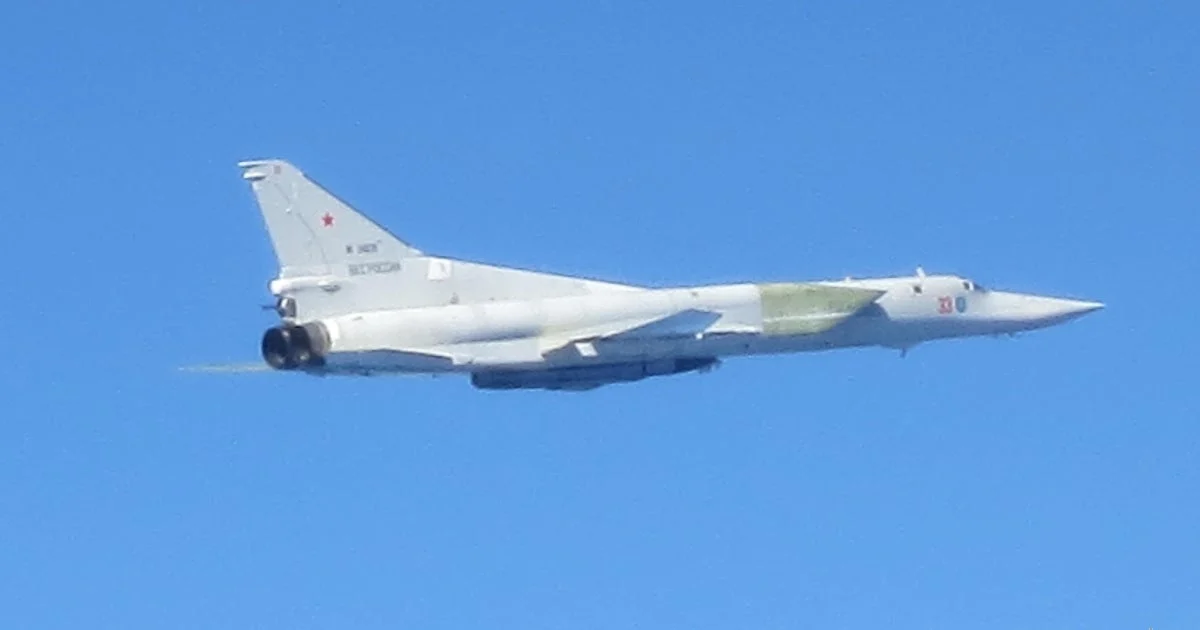
NATO scrambled armed fighter jets from multiple member states to intercept Russian military aircraft that flew over the Baltic Sea on Monday, marking a continued show of alliance air power near its eastern border.
French Rafale fighters stationed at the Lithuanian Šiauliai Air Base as part of NATO’s Baltic air-policing mission joined jets from Sweden, Finland, Poland, Denmark, and Romania to detect and monitor two Russian supersonic Tu-22M3 strategic bombers. They were accompanied by approximately ten Russian fighter jets, including Su-30s and Su-35s, which took turns escorting the bombers during their four-hour flight, according to a statement from the French military detachment.
The Russian Defense Ministry confirmed the flight was planned and took place over international waters in the Baltic Sea. It stated that at points in the mission, the bombers were accompanied by foreign fighter aircraft. The ministry emphasized that all flights complied with international rules governing airspace use and highlighted that Russian long-range aviation regularly operates over neutral waters in multiple regions, including the Arctic, North Atlantic, Pacific, Baltic, and Black Seas.
The frequent Russian flights near NATO airspace have led to a routine NATO response where military jets are deployed to identify and escort Russian aircraft, many of which reportedly do not use transponders or file flight plans, according to NATO officials. The Baltic air-policing mission has been active since Lithuania, Latvia, and Estonia joined the alliance in 2004.
A journalist from The Associated Press observed the French Rafale crews’ rapid scramble at the Šiauliai base, where pilots suited up and launched within minutes after receiving orders. This operation reflects NATO’s ongoing vigilance on its eastern flank amid heightened regional tensions.
Why it matters
The interception highlights NATO’s continued commitment to securing its northeastern borders amid increased Russian military activity in the Baltic region. It underscores ongoing tensions and the potential risks of aerial encounters, emphasizing the importance of NATO’s air policing to maintain regional stability and deter unauthorized airspace incursions.
Background
NATO’s Baltic air policing mission was established in 2004 following the Baltic states’ accession to the alliance. The operation involves continuous monitoring and interception of Russian aircraft, which often operate near or around NATO airspace. Over the years, these encounters have increased in frequency, with Russian aircraft frequently flying without transponders or flight plans. In recent years, several close calls between U.S. and Russian military aircraft have also raised concerns about aerial safety in the region. NATO maintains constant readiness through multi-national deployments at the Šiauliai base and other locations to respond quickly to any potential threats.
Read more World News stories on Goka World News.