
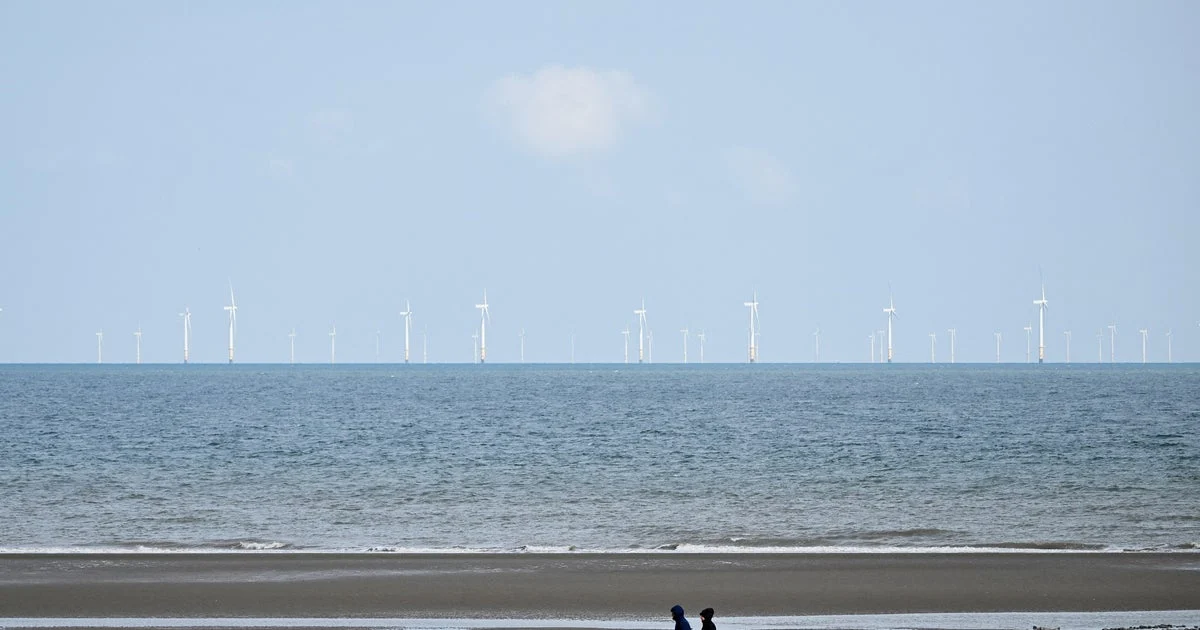
The United Kingdom government has reaffirmed its commitment to achieving net-zero emissions, emphasizing a transition away from fossil fuels despite surging energy costs linked to the ongoing U.S.-Iran conflict. This stance directly contrasts with calls, including from former U.S. President Donald Trump, for increased North Sea oil drilling to alleviate energy shortages.
U.K. Energy Secretary Ed Miliband stated Tuesday that recent global energy shocks—the first following Russia’s 2022 invasion of Ukraine and now the conflict in Iran—demonstrate “the era of fossil fuel security is over,” underscoring the urgent need to advance clean energy security. Miliband argued that reliance on fossil fuels has become untenable amid geopolitical instability affecting global markets.
Prime Minister Keir Starmer echoed this perspective, announcing a series of new policies aimed at insulating British electricity prices from volatile international gas markets. “We need to get off the fossil fuel rollercoaster,” Starmer said, signaling a strategic shift toward renewable energy sources despite short-term price pressures.
This position contrasts sharply with calls from opposition parties and Trump, who have urged the U.K. to reverse its 2025 ban on North Sea oil and gas drilling. Trump posted on social media advocating for renewed exploitation of the region’s oil reserves, which he described as among the world’s greatest. He also criticized wind energy developments, reiterating his longstanding opposition to wind turbines.
However, analysts caution that the North Sea is a “mature basin” with approximately 90% of its oil reserves already extracted, according to the Energy & Climate Intelligence Unit. Restarting large-scale production would require years to identify new reserves, develop infrastructure, and commence extraction, making it an unlikely immediate solution to rising energy costs.
International energy markets remain volatile. Rumors that the Strait of Hormuz might reopen briefly lowered oil prices, but those hopes were quickly dashed over the weekend as the ceasefire negotiations between the U.S. and Iran face uncertainty with an imminent expiration date.
Why it matters
The U.K.’s doubledown on clean energy reflects growing recognition of fossil fuel market instability amid global conflicts. With energy prices sharply affected by the war involving Iran and ongoing geopolitical tensions, shifting toward renewables aims to reduce future economic shocks and reliance on politically sensitive oil sources. This policy direction also highlights tensions between immediate energy demands and long-term climate goals.
Background
Energy disruptions have increased in recent years due to major geopolitical events. The 2022 Russian invasion of Ukraine caused significant fuel price spikes, followed by volatility linked to the current U.S.-Iran conflict. The U.K. government had previously set a 2025 deadline to ban new offshore drilling in the North Sea as part of its net-zero emissions strategy. However, rising energy costs have led to political debates over the feasibility of this approach amid global uncertainty.
Read more Climate & Environment stories on Goka World News.