
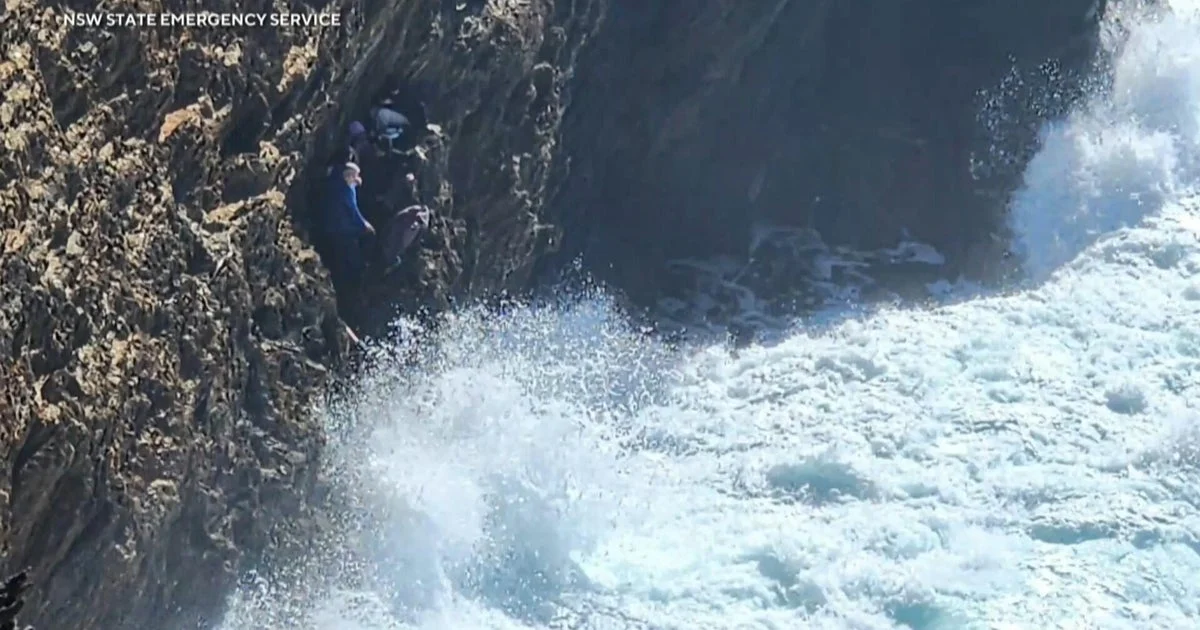
A group of seven tourists, including three children, were rescued from a cliff along Australia’s east coast after becoming trapped due to rising tides during a morning beach walk.
The tourists climbed to a ledge on the cliff as waves up to 16 feet high neared. They used their phones to call emergency services for help, according to Pete Collins, commander of the local emergency services.
Initial rescue attempts involved a helicopter, but rescuers determined the helicopter’s downdraft risked pushing the stranded group into the water, leading to an alternative approach.
Emergency volunteers employed ropes alongside a specialized piece of equipment called the Arizona vortex, designed to prevent ropes from being damaged by sharp cliff edges. Collins explained that without this device, the cliff’s rocks would have destroyed the ropes during the operation.
The rescue took about three hours. The team that successfully brought the tourists to safety comprises unpaid volunteer rescue workers with years of training in scenarios like this.
Why it matters
This incident highlights the risks posed by rapidly changing tides and rough surf for beachgoers in coastal Australia. It also underscores the importance of specialized equipment and volunteer rescue teams in conducting safe cliff rescues under hazardous conditions.
Background
The Australian east coast is known for unpredictable tides and strong waves, presenting hazards for tourists unfamiliar with local conditions. Volunteer emergency services routinely train for cliff and water rescues to respond quickly to such emergencies.
Read more World News stories on Goka World News.