
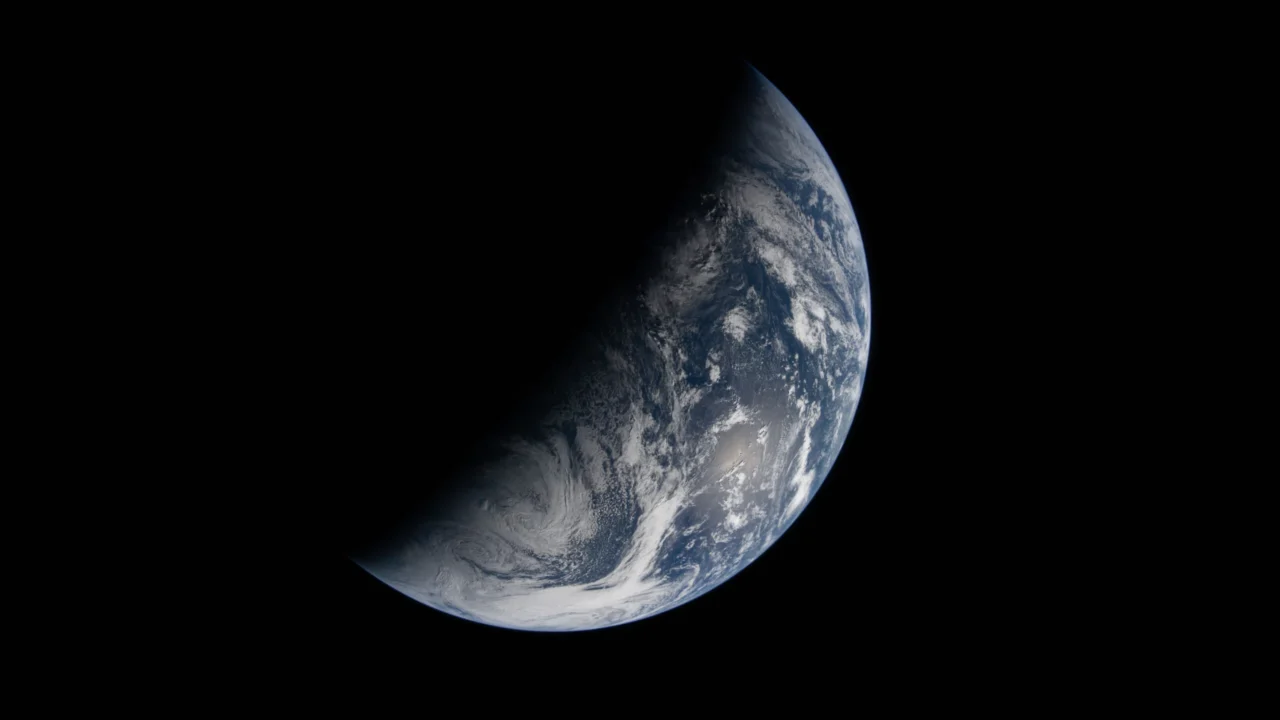
NASA has released a vivid image of Earth’s terminator—the boundary line that separates night from day—captured by astronauts aboard the Artemis II mission on April 2, 2026, during their journey to the Moon. The image was published in celebration of Earth Day.
This view highlights the division between the sunlit and dark portions of the planet, offering a unique perspective only achievable from space. The Artemis II mission is part of NASA’s broader efforts to explore beyond Earth while simultaneously advancing scientific understanding of our home planet.
NASA’s Earth Science and Exploration Synergy
NASA uses observations collected from space to improve life on Earth by providing critical satellite data to decision-makers. These insights support environmental monitoring, disaster response, and climate science, demonstrating how space technology benefits terrestrial life.
Moreover, the technology and knowledge gained from observing Earth form the foundation for sustaining human presence beyond our planet. NASA leverages this expertise in its plans for future exploration of the Moon, Mars, and other destinations in the solar system.
Importance of Space-Based Earth Observation
Images like the terminator captured by Artemis II are more than visually stunning—they symbolize the interconnectedness of space exploration and Earth science. Such data help refine models of Earth’s atmosphere and climate, supporting global efforts to understand and address environmental challenges.
NASA makes Earth Day posters annually to engage the public with these perspectives. The 2026 poster, featuring this terminator image, is available for download, emphasizing the agency’s commitment to celebrating and protecting the planet through exploration and science.
Read more Space & NASA stories on Goka World News.
Sources
This article is based on reporting and publicly available information from the following source: