
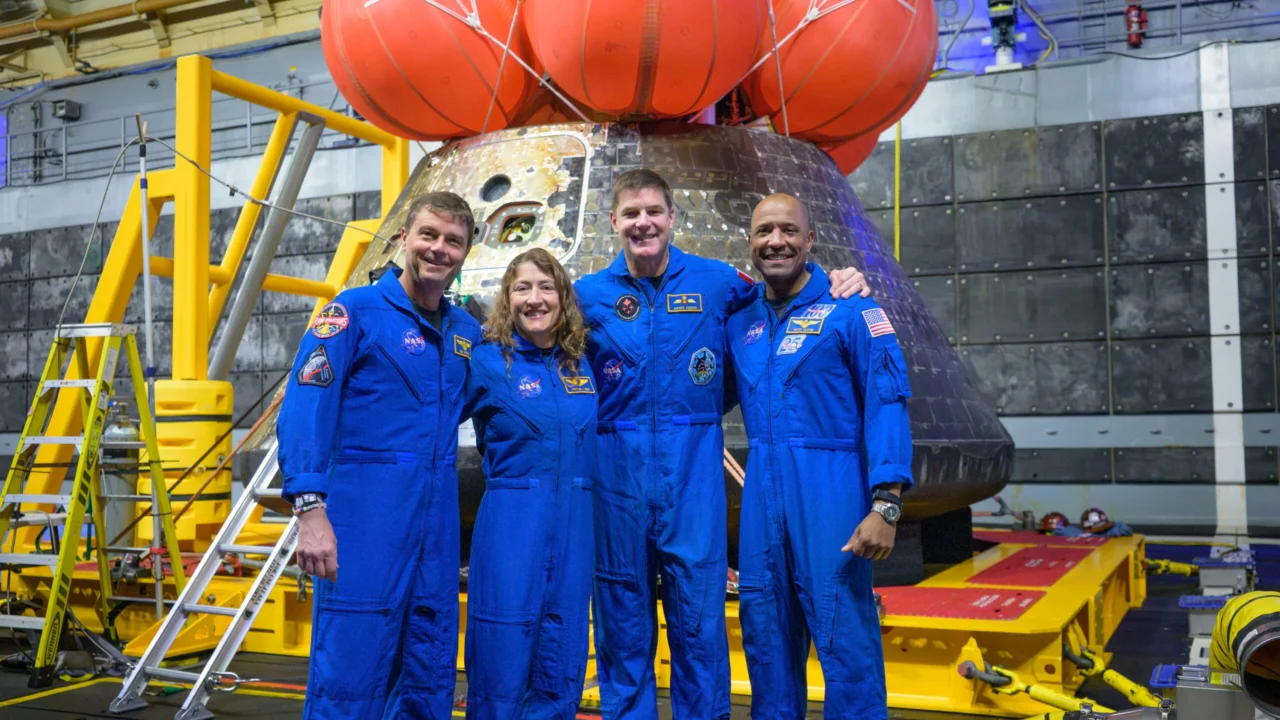
NASA’s Ames Research Center played a crucial role in the success of Artemis II, the first crewed lunar test flight under the Artemis program, launched on April 1, 2026. Ames contributed significant engineering, scientific, and technological expertise that ensured the safety and effectiveness of the Orion spacecraft and the Space Launch System (SLS) rocket, supporting the mission to travel around the Moon and return to Earth.
Enhancing Orion Spacecraft Safety
One of Ames’ primary contributions involved improving the Orion spacecraft’s heat shield, which protects astronauts from extreme temperatures during reentry. Data from the previous uncrewed Artemis I flight showed more char loss on the heat shield than expected due to internal gas buildup. Ames engineers developed advanced sensor suites to monitor temperature and pressure during reentry and conducted material testing to ensure the shield’s integrity for Artemis II’s crewed mission.
Ames also aided in developing Orion’s 3D-MAT compression pads, which connect the crew module to the service module while maintaining structural strength and insulation under high heat conditions.
Improving Rocket Aerodynamics and Safety
During Artemis I, the SLS rocket experienced higher-than-anticipated vibrations near the solid rocket boosters because of unsteady airflow. To mitigate this, engineers added four thin, fin-like structures—called strakes—to the SLS core stage for Artemis II. Ames validated this modification through supercomputer simulations and wind tunnel testing, using innovative measurement techniques such as Unsteady Pressure Sensitive Paint and high-speed imaging.
Ames personnel also contributed to debris impact analysis and launch monitoring, combining computational modeling with physical tests to refine the rocket design and enhance flight safety.
Lunar Science and Mission Assurance
Ames scientists were integral members of the Artemis II lunar science team, collaborating with NASA’s Johnson Space Center to guide astronauts on targeted lunar observations. The crew conducted geological and visual assessments of craters, volcanic structures, and surface colorations during their flyby, creating valuable data for future lunar exploration.
Additionally, Ames contributed to mission assurance by developing simulation tools, testing fault management systems, and providing real-time technical support during launch and flight operations. Their work helped detect potential issues early, reduced mission risk, and improved overall reliability for the Artemis II mission.
Why it matters
Ames Research Center’s multidisciplinary support was vital for Artemis II’s success in advancing NASA’s goals for sustainable human exploration of the Moon. The enhancements to spacecraft safety, rocket performance, and in-flight scientific observation provide a foundation for upcoming Artemis missions that aim to land astronauts on the lunar surface and establish a long-term presence.
Read more Space & NASA stories on Goka World News.
Sources
This article is based on reporting and publicly available information from the following source: