
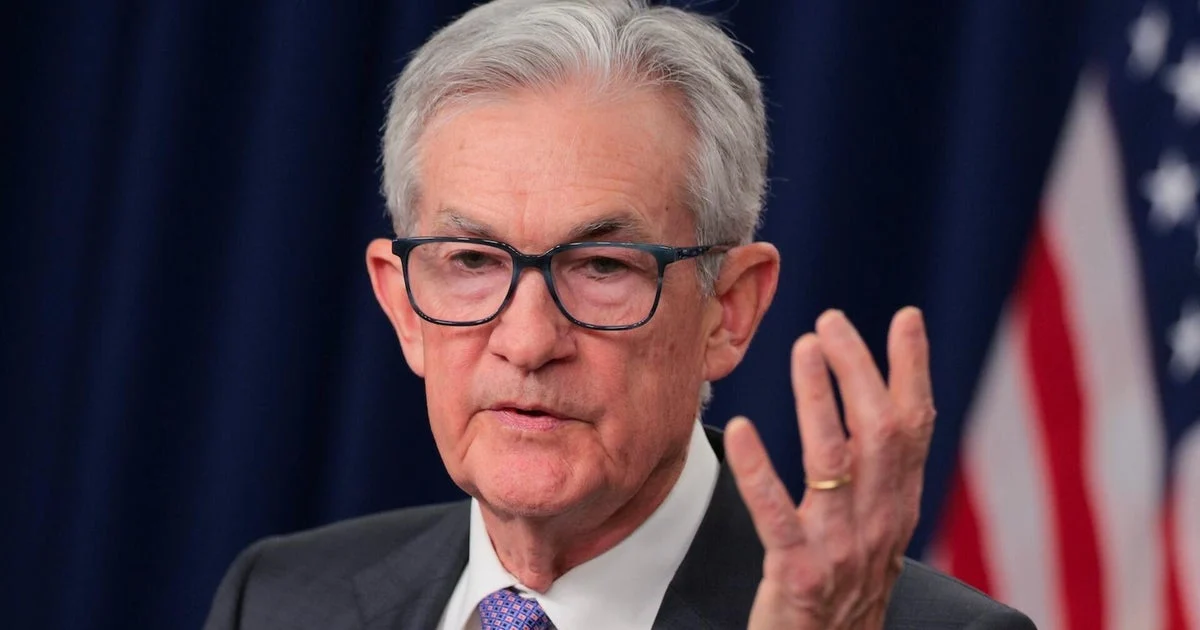
The Federal Reserve on Wednesday held its benchmark interest rate steady at 3.5% to 3.75% for the third consecutive meeting, amid uncertain economic conditions linked to rising inflation influenced by the ongoing conflict in Iran. Federal Reserve Chair Jerome Powell also announced that he plans to remain as a member of the Federal Reserve Board of Governors after his chairmanship term expires in May.
Powell’s announcement follows the Department of Justice’s recent decision to end its investigation into his role overseeing renovations at the Fed’s Washington, D.C., headquarters, a probe Powell had described as politically motivated. He emphasized that he is awaiting “transparency and finality” before stepping down as a governor.
This move marks the first time since 1948 that a Fed chair has opted to stay on as a governor after their chairmanship ended, underscoring Powell’s commitment to maintaining the central bank’s independence amid increasing political pressures. Powell expressed concern over attempts to influence Fed officials, including former President Donald Trump’s effort to remove Federal Reserve Governor Lisa Cook and his public criticism of Powell’s monetary policies.
Fed’s policy amid inflation and economic uncertainty
The Federal Open Market Committee (FOMC) cited elevated inflation partly driven by surging global energy prices following the Iran conflict. The Consumer Price Index (CPI) stood at 3.3% in March, with forecasts anticipating an increase to 3.9% in April due to higher fuel costs. Gasoline prices in the U.S. have risen to an average of $4.23 per gallon, roughly $1.25 higher than before the conflict began.
Investors widely expected the Fed’s decision to pause rate changes, with the CME FedWatch tool showing a 100% probability of holding rates steady. While Powell acknowledged no immediate rate hikes are expected, he affirmed the current rates provide flexibility to respond to changing economic conditions.
The FOMC statement maintained a bias towards potential future rate cuts, although four committee members dissented, reflecting differing views on the timing and wording related to policy adjustments. Powell attributed the difficulties in monetary policy decisions to multiple recent supply shocks, including the pandemic, the Ukraine invasion, tariffs, and the latest Middle Eastern conflict.
Labor market and consumer spending considerations
Federal Reserve officials are closely monitoring the labor market, which shows signs of uneven growth and layoffs in some sectors, partly attributed to technological changes such as artificial intelligence, though widespread job losses have not yet materialized. Powell described the employment situation as relatively balanced but recognized challenges faced by new college graduates.
Consumer spending remains a critical factor as higher energy costs erode real disposable income, potentially dampening purchases of durable and discretionary goods. This poses risks for the U.S. economy, which relies heavily on consumer spending for growth.
Why it matters
Powell’s decision to remain on the Federal Reserve Board signals his dedication to preserving the Fed’s independence in a politically charged environment, which is vital for maintaining credible monetary policy. The Fed’s steady interest rate stance reflects caution amid inflationary pressures and geopolitical uncertainties, affecting borrowing costs and economic growth forecasts. The handling of inflation and market stability in this period will influence economic conditions throughout 2026.
Read more Business stories on Goka World News.
Sources
This article is based on reporting and publicly available information from the following source: