
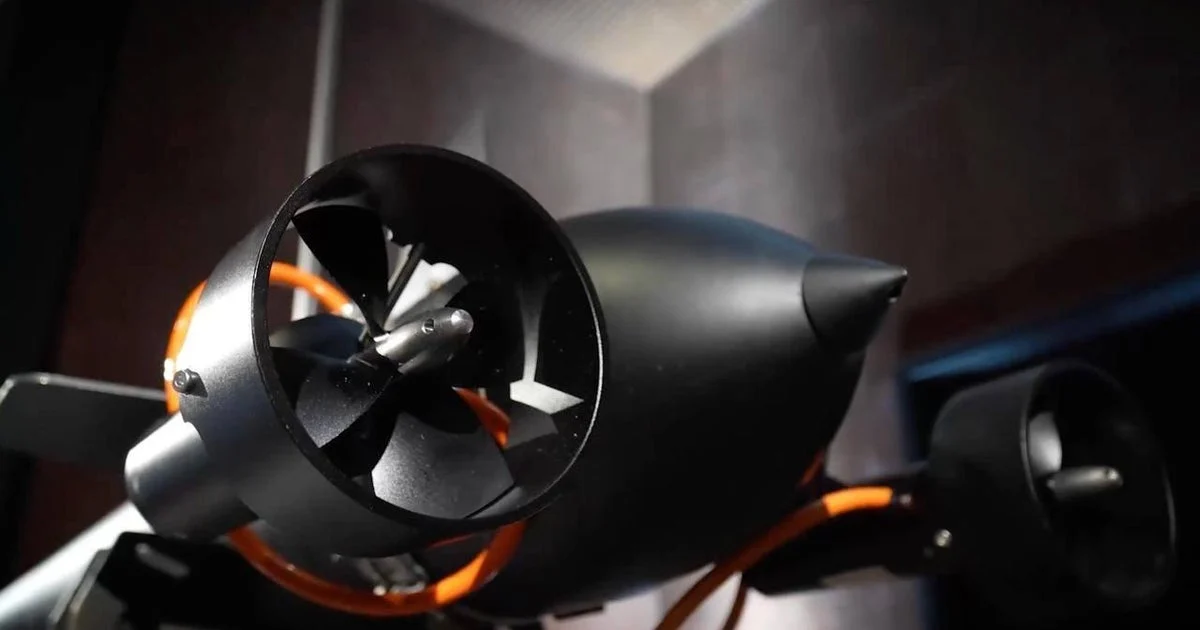
The Ukrainian-developed TLK-150 underwater drone, designed to locate and map sea mines, could assist the United States in clearing the Strait of Hormuz, which has been largely closed since Iran laid mines there in March 2026. The strait is critical for global energy supply, with around 20% of the world’s oil passing through it.
The TLK-150, manufactured by Ukrainian defense company Toloka, operates just below the surface and can traverse over 1,200 miles per mission using onboard rotors and artificial intelligence to transmit real-time data, a capability that sets it apart from conventional mine detection technology. Since Russia began deploying large numbers of mines in the Black Sea during its invasion of Ukraine in 2022, Ukraine has developed increasingly sophisticated drone systems to detect and neutralize underwater explosives.
Experts highlight the challenges of mine clearance in wartime and electronic warfare environments. Ryan Coast, a maritime security specialist, noted that locating mines is often more difficult than removing them. The TLK-150 addresses electronic jamming issues common in conflict zones by using AI identification that operates independently of GPS signals, a technological advancement vital for operations in regions where GPS jamming is expected, such as the Strait of Hormuz.
By contrast, U.S. mine countermeasure capabilities are limited. The Navy has relied on its Littoral Combat Ships equipped with sea drones and helicopters for mine detection in the Gulf region, but the small number of vessels—only two are stationed in the Middle East—and their metal hulls restrict close proximity to minefields, raising concerns about effectiveness. Additionally, some Western unmanned aerial vehicles have failed in electronic warfare environments like Ukraine, where GPS jamming is prevalent.
Despite these limitations, the Pentagon affirmed that U.S. forces are actively using manned and unmanned systems to ensure safe passage through the strait. Ukrainian President Volodymyr Zelenskyy has offered Kyiv’s expertise and technology to assist the U.S., though he noted that no formal request for help had been received as of April 2026.
Why it matters
The Strait of Hormuz is a strategic chokepoint for the global energy market, and its closure due to mine-laying poses serious risks to energy security and economic stability. Effective mine clearance is critical for reopening this trade artery. Ukraine’s experience in a complex wartime maritime environment offers relevant technological and operational innovations that could enhance the U.S. Navy’s mine countermeasure efforts, potentially shortening a prolonged disruption to global oil transportation.
Background
Mine warfare has long been a neglected area for the U.S. Navy, with limited investment in dedicated countermeasures over the past two decades. Ukraine’s recent conflict with Russia has accelerated its development of autonomous maritime mine detection and clearance technologies, including several models of sea drones with enhanced range, resistance to electronic jamming, and real-time data transmission. These advances contrast with existing U.S. systems and could represent a major shift in naval mine countermeasures if integrated.
Iran’s mining of the Strait of Hormuz in March 2026 follows similar tactics used by Russia in the Black Sea, presenting a renewed challenge to maritime security. The U.S. Navy’s current mine-clearing assets face operational constraints and technological challenges, underscoring the potential value of integrating foreign innovations such as Ukraine’s drones.
Read more World News stories on Goka World News.
Sources
This article is based on reporting and publicly available information from the following source: