
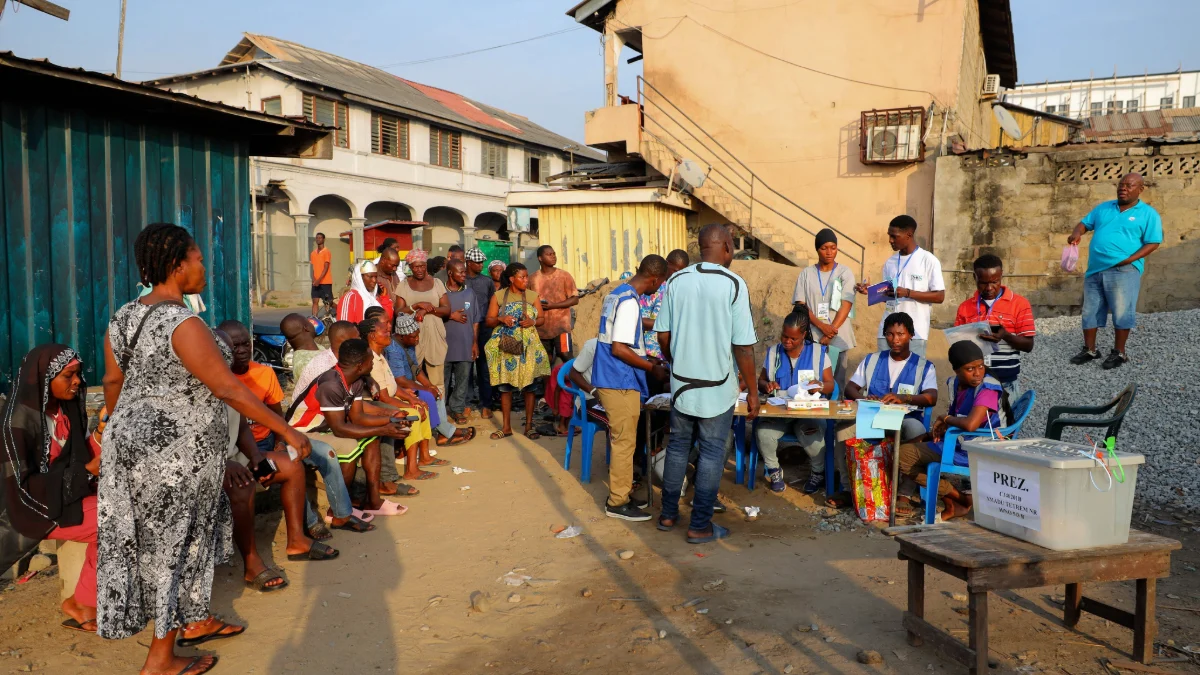
The African Commission on Human and Peoples’ Rights (ACHPR) recently condemned widespread human rights violations linked to elections across Africa and urged governments to end internet shutdowns and protect election bodies. However, deeper governance challenges remain as governments increasingly control information infrastructure, affecting election transparency and public participation.
Comparing Election Information Environments in Ghana and Tanzania
The December 2024 general election in Ghana featured intense dissemination of false content, including doctored images and AI-generated fake endorsements spread by the two main parties, the New Patriotic Party (NPP) and the National Democratic Congress (NDC). Despite the prevalence of misinformation, an open digital environment allowed these falsehoods to be contested. Fact-checking coalitions, community radio, and detection platforms worked to verify and correct misleading claims, helping maintain a degree of electoral integrity even amid partisan media coverage.
By contrast, Tanzania’s October 2025 election experienced severe restrictions on information flows. Stakeholders had established extensive fact-checking networks supported by platforms like Jamii Forums, which allowed widespread community verification. However, on October 29, 2025, the government imposed a six-day total internet blackout coinciding with the period when election results were announced and disputes likely to arise. This shutdown silenced fact-checkers and disrupted coordination among civil society groups.
Tanzania’s crackdown extended beyond digital restrictions. The opposition candidate was jailed well before the vote, media coverage was muted under informal government pressure, and political narratives overwhelmingly favored the ruling party. Subsequent protests were met with lethal force, with killings reported during demonstrations. The internet blackout prevented real-time documentation and reporting of these abuses. Tanzania’s constitutional structure further limits judicial challenges to election results, consolidating power within the ruling party.
Governance Structures and Digital Control
The cases of Ghana and Tanzania illustrate the impact of governance on the information environment during elections. Ghana’s relatively mature institutions allowed some accountability for state control over information flows, maintaining legal and democratic boundaries despite partisan interference. Tanzania’s dominant-party system grants extensive constitutional powers to the presidency and ruling party, enabling information blackouts and suppression without effective checks.
African governments are increasingly implementing digital public infrastructures—such as digital identity systems and centralized databases—that gather extensive data on citizens. While these infrastructures promise efficiency and inclusion, they also enhance state surveillance capabilities. Cases in Kenya, Tanzania, and Uganda show patterns of government misuse of digital data to monitor activists and control social behavior, often without strong data protection or enforcement mechanisms.
Why it matters
Information control during elections affects the integrity of democratic processes and human rights in Africa. Internet shutdowns and media suppression prevent accountability, allow electoral abuses to occur unseen, and restrict voter participation. The rise of digital surveillance infrastructure poses additional risks by concentrating power in governments that already limit political competition and civic freedoms.
The ACHPR’s calls to end internet shutdowns and protect electoral independence are critical but rely on voluntary government compliance in politically charged environments. Sustainable democratic governance requires constitutional guarantees for access to information, legal recourse for contested election outcomes, and power distribution mechanisms that prevent unilateral censorship.
Background
Eleven African countries are scheduled to hold elections in 2026, underscoring the urgency of addressing electoral information rights. Many African nations’ power structures, established during independence struggles, are now outdated in the digital era, where information flow is central to democratic participation. Civil society continues to develop resilience strategies such as community radio and fact-checking networks, but these cannot substitute for institutional reforms that ensure openness and accountable information governance.
Read more Digital Policy stories on Goka World News.
Sources
This article is based on reporting and publicly available information from the following source: