
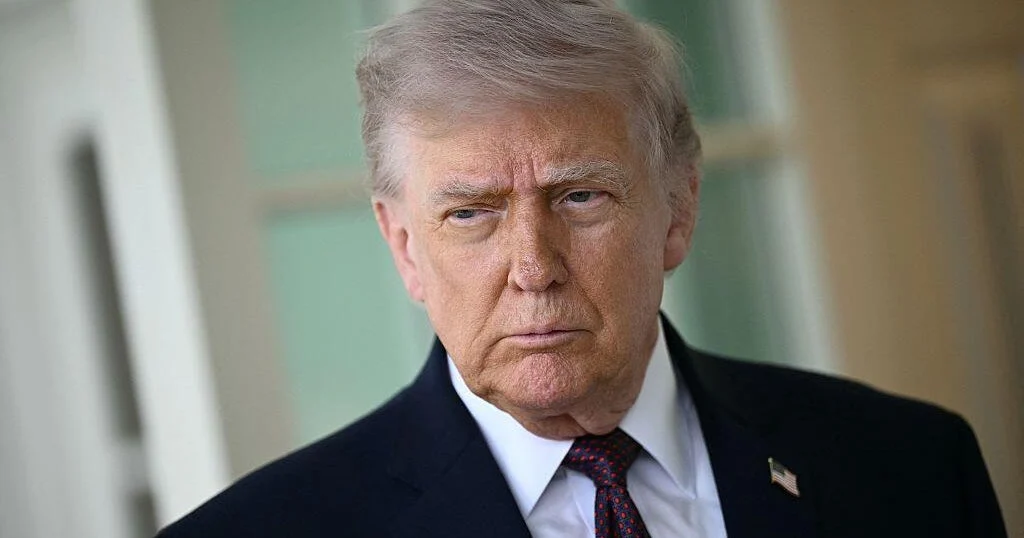
President Donald Trump confronts a critical deadline on Friday under the War Powers Resolution of 1973, which restricts the duration of U.S. military engagement without congressional authorization. The law requires the president to notify Congress within 48 hours of deploying forces into hostilities and limits continued military operations to 60 days unless Congress declares war or approves further action.
The current conflict with Iran began on February 28, with Trump formally notifying congressional leaders on March 2, triggering the 60-day clock that expires this week. Although the president may extend this period for an additional 30 days to withdraw forces safely, the law does not permit continuing offensive operations after 60 days without congressional approval.
Congressional Responses and Political Implications
Since the war’s onset, House and Senate Republicans have largely supported Trump, blocking numerous Democratic resolutions seeking to restrict military actions in Iran. However, some Republicans have signaled willingness to reconsider their stance after the 60-day deadline.
Senator John Curtis of Utah emphasized that a 60-day window is adequate for emergency military action, asserting that ongoing hostilities require congressional consent beyond that period. Missouri’s Senator Josh Hawley also stressed the importance of following the statute and seeking an exit strategy prior to extending the conflict.
Meanwhile, Senator Lisa Murkowski of Alaska is preparing formal legislation to authorize military force in Iran, although sufficient support for such a measure remains uncertain.
Uncertainty Over Future Military Engagements
The Iran war is at a pause following a ceasefire agreement on April 8 intended to facilitate broader talks, but the path forward is unclear. Trump recently extended the ceasefire indefinitely, yet abruptly canceled planned negotiations in Pakistan, complicating diplomatic efforts.
Legal experts note that the White House might attempt to argue the ceasefire interrupts the 60-day clock. However, such interpretations of the War Powers Resolution are contested and have historically been manipulated to allow prolonged military engagements without congressional approval.
Past administrations, including Obama and Clinton, have similarly extended hostilities beyond the 60-day limit by interpreting legal authority differently, often citing factors such as the absence of ground troops or congressional funding.
Effectiveness of the War Powers Resolution
Despite its intent, the War Powers Resolution has rarely constrained presidential military actions successfully. Trump vetoed a bipartisan resolution attempting to end U.S. involvement in Yemen, and Congress lacked the votes to override the veto.
Legal analysts regard court intervention on war powers matters as unlikely, given the judiciary’s hesitance to weigh in on constitutional war authority. Instead, the resolution functions more as a political tool, influencing debate and legislative efforts rather than enforcing legal limits on executive power.
Why it matters
The 60-day deadline represents a significant constitutional checkpoint, emphasizing Congress’s constitutional role to authorize acts of war. How Congress and the Trump administration navigate this deadline will affect both U.S. military engagement in Iran and the ongoing debate over presidential war powers.
The political divisions highlight tension between legislative oversight and executive action, with implications for future conflicts and the balance of war-making authority in the U.S. government.
Read more Politics stories on Goka World News.
Sources
This article is based on reporting and publicly available information from the following source: