
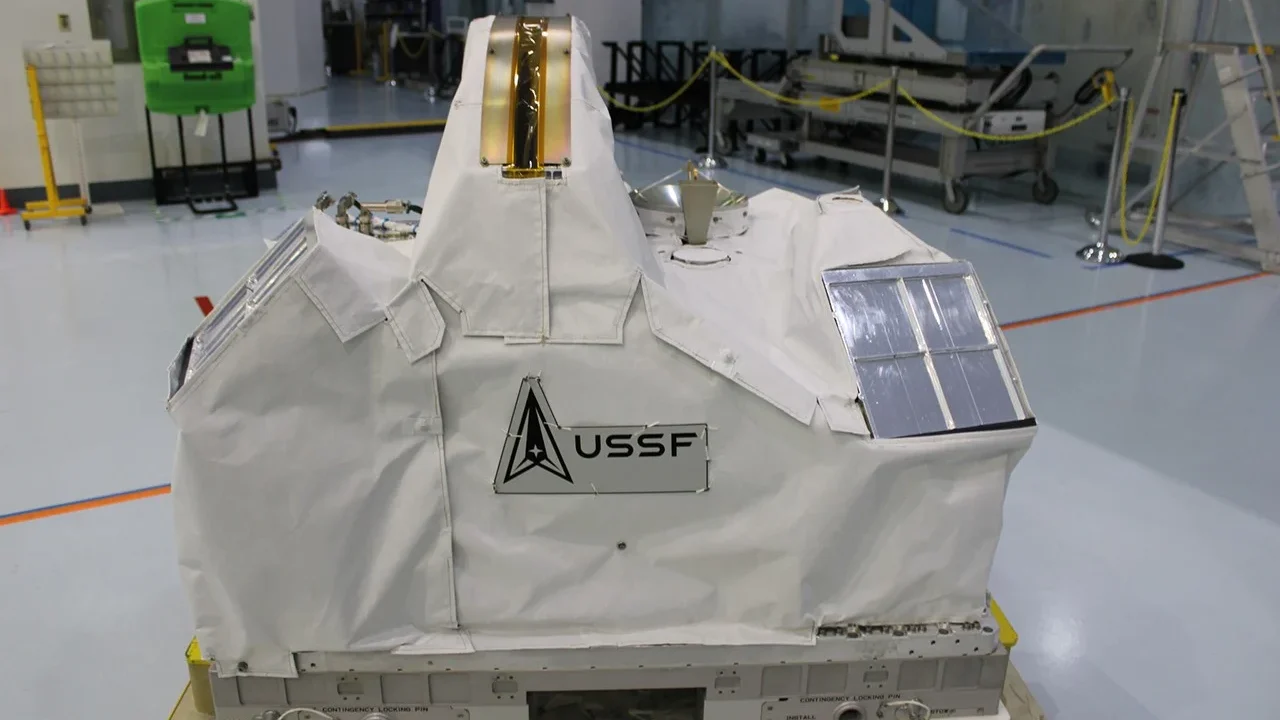
NASA is preparing to launch the STORIE (Storm Time O+ Ring current Imaging Evolution) mission in May to the International Space Station (ISS) to provide new insights into Earth’s ring current, a key feature of the planet’s magnetic environment that influences space weather and technological systems.
The STORIE instrument will be installed on the exterior of the ISS, where it will observe the ring current, a doughnut-shaped region of trapped, electrically charged particles surrounding Earth. This captive population affects various space weather phenomena, including magnetic disturbances and increased atmospheric drag on satellites during solar storms.
Mission objectives and technology
STORIE aims to address unresolved questions about the ring current’s composition, growth, and decline. Unlike previous missions that saw the ring current from above, STORIE offers an inside-out perspective by looking outward from the space station. This vantage point allows it to observe particles near Earth’s equator that are difficult to detect otherwise.
Since the ring current’s charged particles are invisible, STORIE will detect energetic neutral atoms (ENAs) formed when trapped ions capture electrons from Earth’s outer atmosphere (the exosphere) and escape the magnetic field. By measuring the energy and trajectories of these ENAs, especially positively charged oxygen ions (O+), scientists can determine the source of the particles—whether primarily from the solar wind or from Earth’s own atmosphere.
Significance and mission timeline
The ring current’s behavior is critical during solar storms because its charged particles produce electrical currents that can induce ground-level magnetic disturbances, potentially impacting power grids, pipelines, and satellite operations through electrical charging and increased atmospheric drag.
STORIE will build a comprehensive, updated picture of the ring current every 90 minutes as the ISS orbits Earth, monitoring its evolution over a planned six-month mission. This data will help scientists understand whether the ring current accumulates particles gradually or in sudden bursts and improve projections of space weather effects.
Background
The ring current operates alongside Earth’s Van Allen radiation belts but contains lower-energy particles that fluctuate more dramatically during solar activity. Past missions such as NASA’s IMAGE and TWINS satellites have imaged the ring current from above, but their views were limited by interference from Earth’s ultraviolet light and less effective geometry near the equator.
STORIE’s partnership between NASA and the U.S. Space Force through the Space Test Program – Houston 11 (STP-H11) represents a focused effort to deepen knowledge of magnetospheric processes that directly affect modern technology and satellite longevity.
Sources
This article is based on reporting and publicly available information from the following source:
Read more Space & NASA stories on Goka World News.