
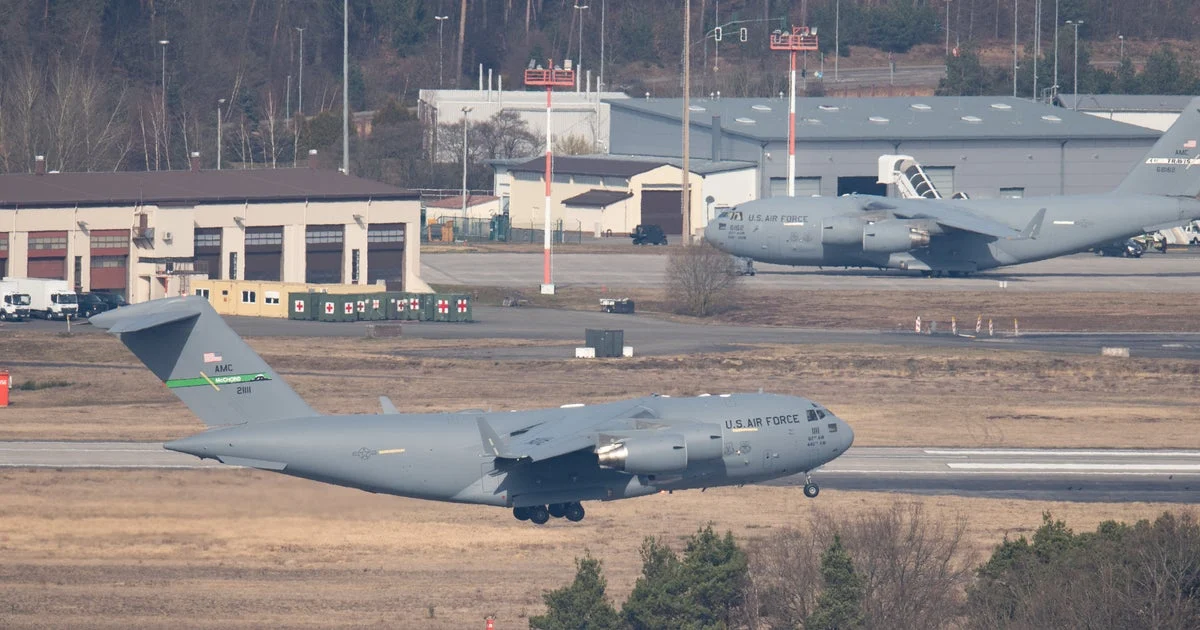
The Pentagon announced plans to reduce the number of U.S. troops stationed in Germany by approximately 5,000 over the next six to twelve months, officials confirmed Friday. This troop withdrawal reflects President Donald Trump’s frustration with the level of support from European allies, particularly Germany, in the ongoing U.S.-Iran conflict.
Scope of the Troop Reduction
Currently, about 36,000 active-duty U.S. troops are stationed in Germany, alongside nearly 1,500 reservists and 11,500 civilian personnel, making it the second largest U.S. military presence abroad after Japan. The planned cuts will affect one brigade combat team and include the reassignment of a long-range fires battalion initially scheduled for deployment to Germany later this year. Some personnel removed from Europe may return to the U.S. before being redeployed to other regions, with an emphasis on the Indo-Pacific and homeland defense.
The withdrawal will not hinder operations at critical facilities such as the Landstuhl Regional Medical Center, the largest U.S. military hospital overseas, which treats wounded American troops, including those injured in Iranian attacks. The U.S. European Command and Africa Command, both headquartered in Germany, will continue operations despite the drawdown.
Diplomatic Tensions and Strategic Considerations
President Trump’s decision follows growing public criticism of European leaders’ reluctance to support the U.S. military campaign against Iran. Trump has specifically faulted German Chancellor Friedrich Merz and other NATO officials for insufficient involvement, intensifying tensions within the alliance. Merz recently questioned the U.S. strategy on Iran, prompting a sharp response from Trump on social media. Despite the exchange, Merz stated that his relationship with the president remains cordial.
The troop adjustment aligns with a comprehensive Pentagon review of force posture in Europe, taking into account operational requirements and current geopolitical conditions. Officials emphasized that the reduction was not a reaction to diminished commitment to NATO but a reallocation of resources to address strategic priorities.
Why it matters
The decision signals a shift in U.S. military focus from Europe toward the Indo-Pacific and homeland defense, reflecting changing global security dynamics. It underscores ongoing strains within NATO regarding burden-sharing and highlights challenges in unified responses to conflicts such as the U.S.-Iran tensions. The move also revives debates over America’s long-term military presence in Europe against the backdrop of Russia’s war in Ukraine, where the U.S. has recently increased troop deployments.
Background
The U.S. has maintained a substantial troop presence in Germany since World War II, a key element of NATO’s collective defense framework during the Cold War and beyond. Efforts to reduce forces in Germany surfaced late in Trump’s initial term but were reversed by the Biden administration. The current drawdown follows heightened criticism from Trump regarding NATO’s funding and strategic priorities, as well as Europe’s handling of the Ukraine conflict and energy crisis linked to Russian aggression.
Sources
This article is based on reporting and publicly available information from the following source:
Read more Politics stories on Goka World News.