
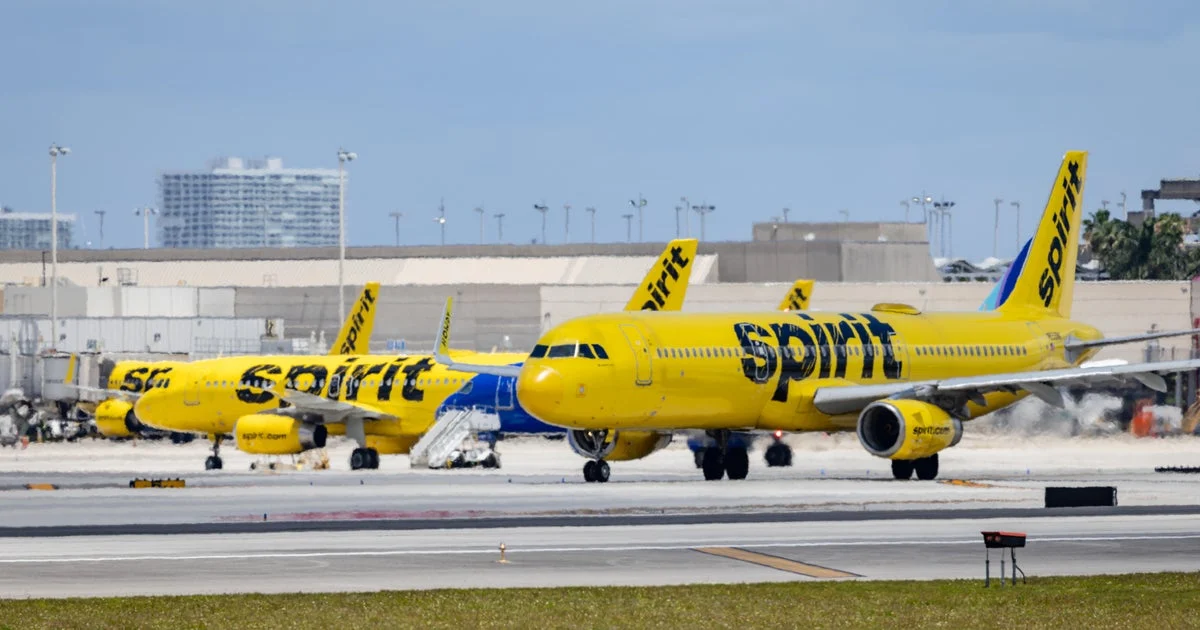
Spirit Airlines announced early Saturday that it is ceasing all operations after failing to obtain a $500 million federal bailout. The airline’s parent company, Spirit Aviation Holdings, confirmed the “orderly wind-down of operations” effective immediately, with all Spirit flights canceled and refunds underway.
Spirit advised customers not to go to airports and stated that refunds for tickets purchased by credit or debit card would be automatically processed. The Department of Transportation confirmed that Spirit has sufficient reserves to refund tickets paid directly to the airline. Customers who booked through third parties are advised to contact their original point of purchase.
Failed Rescue Effort and Creditor Disputes
Spirit CEO Dave Davis revealed that the airline had previously reached a restructuring agreement with bondholders in March 2026. However, a sudden and sustained increase in jet fuel prices made continued operations financially untenable.
Department of Transportation Secretary Sean Duffy attributed the collapse to longstanding financial struggles exacerbated by internal “creditor issues,” noting that Spirit had been struggling even before the Iran war triggered fuel cost spikes. Some major bondholders, including Citadel and Ares Management, opposed the bailout deal.
The Trump administration had proposed a bailout that would have granted the government a 90% ownership stake in Spirit. Despite President Trump’s efforts to find a solution, talks ultimately broke down as Spirit’s cash reserves dwindled.
Impact of Rising Fuel Prices and Bankruptcy History
Spirit cited a “material increase in oil prices” linked to the Iran war as a primary factor affecting its financial outlook. Industry forecasts estimate a $24 billion rise in annual fuel expenses among U.S. airlines, leading to fare increases and route cuts across the sector.
Spirit filed for bankruptcy twice since 2024. By November 2024, it had lost more than $2.5 billion since 2020, then cut nearly 4,000 jobs and 200 routes in 2025. In August 2025, the company again expressed serious doubts about its ability to continue operating.
End of a Budget Carrier’s Journey
Founded in 1983 as Charter One and rebranded as Spirit Airlines in 1992, the carrier became known for its no-frills, ultra-low-cost approach starting in 2007. Operating flights to over 40 U.S. cities and international destinations in the Caribbean and Latin America, Spirit’s shutdown marks the end of an era characterized by bright yellow planes and bargain fares.
Response from the Aviation Industry
Following Spirit’s closure, major airlines including United, Southwest, JetBlue, Delta, and American announced reduced fares on former Spirit routes to accommodate displaced travelers. American Airlines is also exploring ways to increase capacity and assist former Spirit employees with job opportunities.
Why it matters
Spirit’s shutdown illustrates the financial vulnerability of budget carriers amid volatile fuel prices and market pressures. The collapse highlights the challenges of sustaining ultra-low-cost models when confronted with fuel cost surges and creditor conflicts. This development may lead to less competition and higher fares on routes formerly served by Spirit, affecting millions of travelers seeking affordable air travel options.
Sources
This article is based on reporting and publicly available information from the following source:
Read more Business stories on Goka World News.