
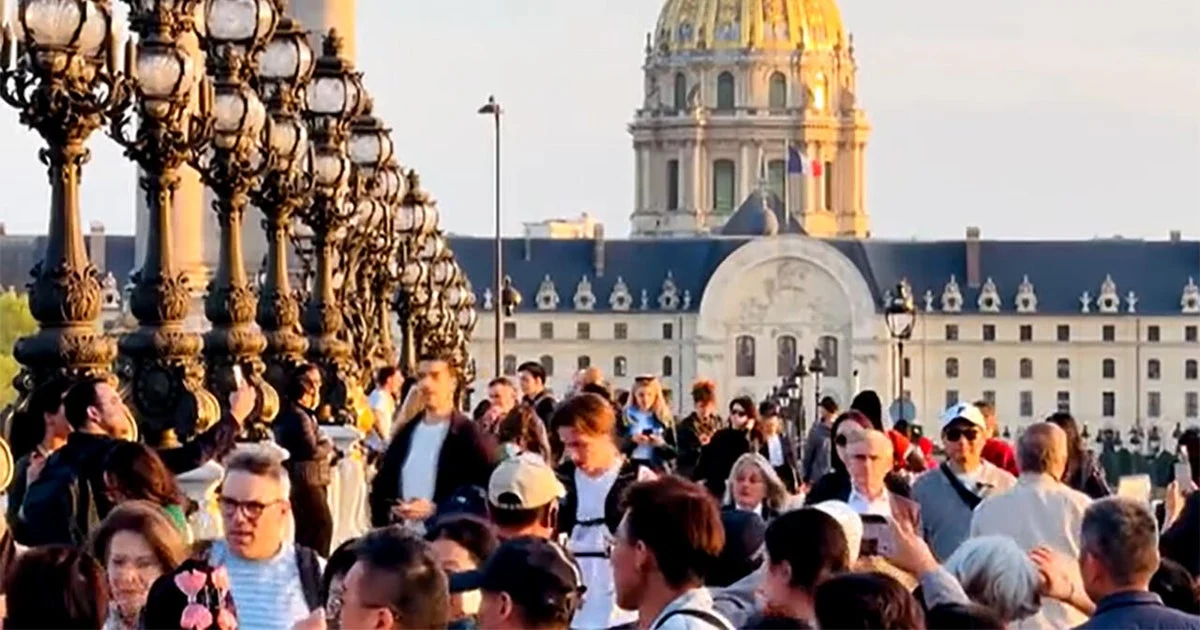
Several major European cities are taking new steps to address overtourism, the growing strain caused by millions of visitors overwhelming local infrastructure and communities. Popular destinations such as Venice, Amsterdam, and Paris have introduced regulations and tourist taxes aiming to control crowds and preserve urban life for residents.
Tourism’s expanding reach and challenges
Tourism accounts for about 10% of the global economy and represents roughly one in ten jobs worldwide. The surge in international travel—from 25 million global tourists in 1950 to over 1.5 billion today—is driven by factors including low-cost airlines, social media, and promotional campaigns. However, this growth has brought problems. Neighborhoods in some major cities are serving tourists more than residents, sparking local protests and pushback against tourism’s impacts.
One emblematic example is Paris’s Louvre Museum, the world’s most-visited museum, which faced worker strikes in June 2025 due to overcrowding. Such incidents highlight the need for better tourist management and infrastructure investment in iconic sites.
Regulatory responses across Europe
Venice, which sees about 30 million visitors annually—roughly 600 times its resident population—implemented a daytripper fee of 5 to 10 Euros during peak periods starting in 2024. The city has also banned large cruise ships from its historic center to reduce congestion. Similarly, the coastal town of Portofino introduced strict rules banning public alcohol consumption, sitting on streets, and certain attire during peak times, with fines up to 500 Euros for violations.
In the Netherlands, Amsterdam broke its own tourism records with 23 million visitors in 2024, despite having fewer than one million residents. The city responded by raising its tourist tax to 12.5%, the highest in Europe, and restricting guided tours in residential neighborhoods such as the red-light district. Residents and community groups have voiced concerns over the impact of large crowds, pushing for stronger measures and sustainable tourism practices.
Social media’s dual role and community efforts
Social media platforms have been credited both with boosting tourism and exacerbating overtourism. For instance, a canyon in Iceland was temporarily closed after a Justin Bieber music video drew excessive visitors, while an Italian farmer in the Dolomites installed a turnstile to charge visitors at popular Instagram spots.
In Amsterdam, initiatives like “Tours That Matter” and community campaigns such as “We Live Here” aim to spread visitors across lesser-known areas and raise awareness about respecting residential communities. However, economists and activists argue more decisive action is needed, including stricter caps on visitor numbers and higher taxes.
Why it matters
As tourism rebounds and grows, the economic benefits must be balanced against the social and environmental costs borne by cities overwhelmed with visitors. If left unchecked, overtourism can damage local cultures, degrade historic sites, increase living costs for residents, and ultimately harm the tourism industry itself.
Effective regulation, urban planning, and responsible tourist behavior are essential to ensure that popular destinations remain sustainable for both residents and international visitors.
Background
The phenomenon of overtourism gained attention as global travel expanded exponentially over recent decades, fueled by advances in transportation, digital media, and global affluence. In response, some leading destinations began experimenting with new policies, such as tourist caps and entry fees, to mitigate the negative effects on communities and infrastructure. These efforts reflect a broader shift toward sustainable tourism that prioritizes long-term viability over short-term gains.
Sources
This article is based on reporting and publicly available information from the following source:
Read more World News stories on Goka World News.