
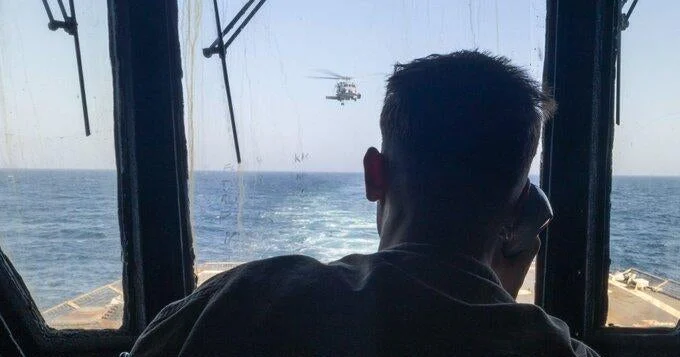
The United States has concluded its offensive military operation, known as Operation Epic Fury, against Iran and initiated a new, defensive effort called Project Freedom to safeguard commercial vessels transiting the Strait of Hormuz, U.S. officials announced on May 5, 2026.
Secretary of State Marco Rubio confirmed that Operation Epic Fury has ended, stating it successfully met its objectives. Project Freedom now focuses on guiding merchant ships safely through the strategic waterway amid heightened tensions following recent Iranian missile and drone attacks targeting ships and infrastructure in the region.
Secretary of Defense Pete Hegseth emphasized that the ceasefire with Iran “certainly holds” for the moment, describing Project Freedom as a temporary and separate mission from prior U.S. military actions. The operation is explicitly defensive, with U.S. naval forces only responding if attacked first while escorting commercial vessels.
The United Arab Emirates has suffered repeated attacks from Iran, with missile and drone strikes reported for two consecutive days. On May 4, Iran fired 15 missiles at the UAE, injuring at least three workers, followed by another missile and drone attack the next day. These incidents mark the first Iranian strikes on the Gulf nation since the ceasefire agreement on April 8.
Iran’s Revolutionary Guard issued a stern warning that it would respond firmly to any ships diverging from the Iranian-declared transit corridor through the Strait of Hormuz, reinforcing Tehran’s assertion of control over the waterway.
Why it matters
The Strait of Hormuz is a critical maritime chokepoint through which approximately 20% of the world’s oil passes. Stability in this corridor directly affects global energy markets and geopolitical security. The transition to Project Freedom signals a U.S. strategy focused on protecting commercial interests while avoiding further direct escalation with Iran.
The recent attacks on the UAE highlight ongoing risks of regional spillover from the U.S.-Iran conflict, raising concerns about the security of Gulf states and international shipping. The defensive posture aims to reassure commercial shippers and maintain open sea lanes essential for global trade and energy supplies.
Background
Hostilities between the U.S. and Iran escalated earlier in 2026, leading to Operation Epic Fury—a series of targeted military strikes intended to curtail Iranian aggression. The April 8 ceasefire was the first step toward de-escalation, but intermittent attacks by Iran have continued, prompting ongoing U.S. naval presence under Project Freedom.
U.S. officials have also noted that negotiations addressing Iran’s enriched uranium program are underway, though details remain undisclosed. Meanwhile, regional players such as Israel have remained on high alert, with military leaders warning of readiness to respond to Iranian provocations.
Sources
This article is based on reporting and publicly available information from the following source:
Read more US News stories on Goka World News.