
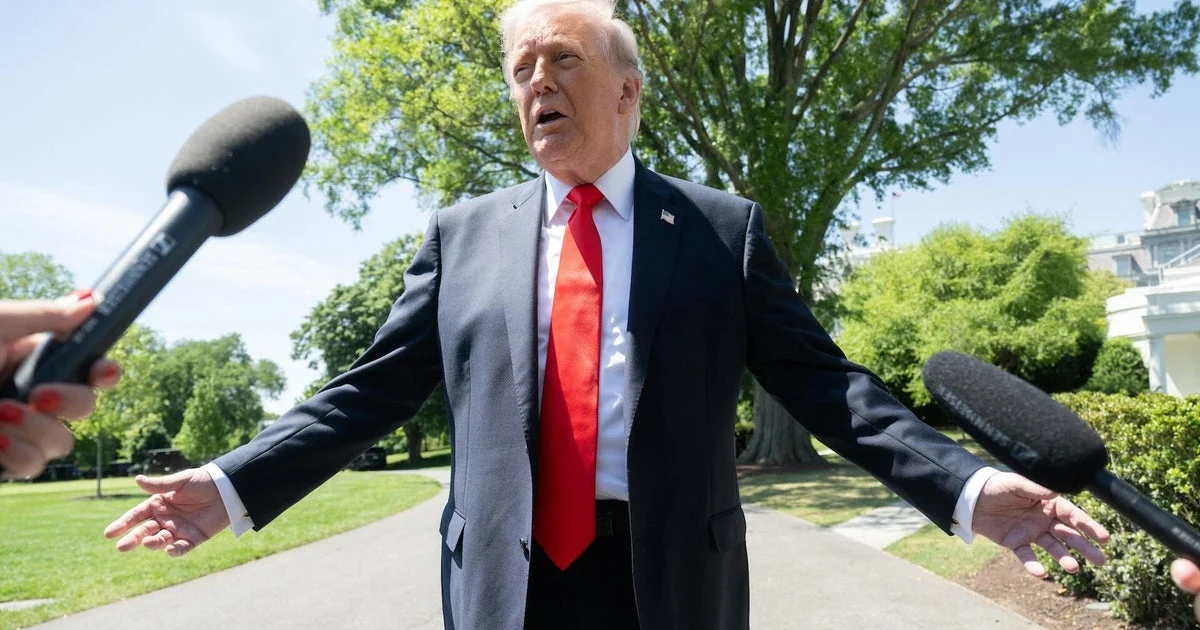
President Donald Trump announced Tuesday that the U.S. is temporarily pausing Project Freedom, a recently launched mission to escort commercial vessels through the Strait of Hormuz, to allow time for ongoing negotiations with Iran. The decision came as diplomatic efforts, mediated by Pakistan, have reportedly made significant progress toward a final agreement with Tehran.
Project Freedom was unveiled late Sunday and initiated Monday as a response to increased tensions in the strategic waterway, a narrow passage responsible for transporting about one-fifth of global oil supplies. The U.S. mission aimed to ensure safe passage for commercial ships amid threats and hostile actions from Iran.
Since its launch, the U.S. military escorted two American-flagged ships through the strait and contacted dozens of other vessels trapped in the Persian Gulf. The U.S. also cleared Iranian mines in a portion of the strait farther from Iran’s coast, directing commercial traffic to this safer route.
Despite the operational pause, the U.S. blockade of Iranian ports remains in place, signaling ongoing pressure on Tehran. The move reflects a shift toward diplomacy but maintains stringent measures against Iran’s regional activities.
Recent Hostilities in the Strait
The region has seen escalating confrontations since the U.S. began military strikes on Iran in February. Iranian forces have attempted to assert greater control over the strait, leading to a sharp drop in vessel traffic and rising oil prices worldwide.
Shortly before the temporary halt, two U.S. Navy destroyers crossing the strait were targeted by missiles, drones, and boats from Iranian forces. U.S. defenses, including air support, prevented any damage. Following the attacks, the U.S. Navy destroyed six Iranian small boats in response, though Iran denied the losses and claimed it had successfully struck an American warship—a claim refuted by U.S. officials.
The conflict has also affected other commercial shipping lines, including a French cargo ship and a tanker from Abu Dhabi’s state energy company. Iranian drone and missile attacks were also reported by the United Arab Emirates on Monday.
Diplomatic Efforts and Ongoing Tensions
Trump’s announcement cited requests from Pakistan—the mediator in talks between Washington and Tehran—as a key reason for pausing the escort mission. Iranian Foreign Minister Abbas Araghchi criticized Project Freedom as counterproductive, warning it might disrupt the peace process.
While Trump stated that Iran has made “Great Progress” toward a comprehensive deal, details of the negotiations remain unclear. Sticking points include Iran’s nuclear program and the U.S. blockade of Iranian ports. Trump noted that Tehran has yet to pay a “big enough price” to satisfy American demands.
U.S. officials, including Defense Secretary Pete Hegseth and Secretary of State Marco Rubio, emphasized that the ceasefire with Iran remains intact and that Project Freedom was a purely defensive measure.
Why it matters
The Strait of Hormuz is a critical chokepoint for global energy supplies, and stability in the area directly impacts international markets and geopolitical security. The pause in Project Freedom highlights the delicate balance between military deterrence and diplomatic engagement in resolving tensions with Iran. How these talks progress may influence future U.S. policy and regional security dynamics.
Background
The U.S. began a naval blockade of Iranian ports following heightened conflicts earlier in the year, aiming to curb Iran’s influence and nuclear ambitions. Iran has sought to control shipping and impose tolls in the strait, actions met with firm U.S. opposition. The current ceasefire and peace talks are fragile, with mutual accusations and military posturing continuing to challenge prospects for lasting peace.
Sources
This article is based on reporting and publicly available information from the following source:
Read more Politics stories on Goka World News.