
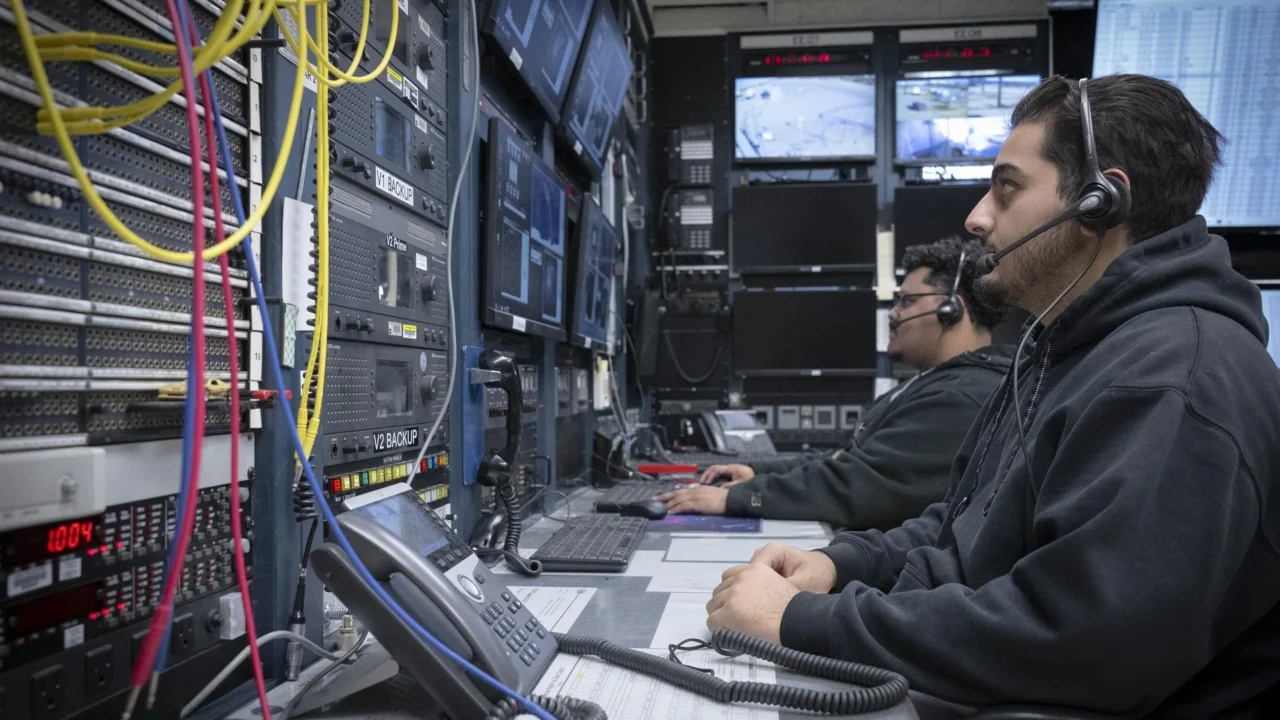
NASA’s Dryden Aeronautical Test Range (DATR) at the Armstrong Flight Research Center in Edwards, California, plays a vital role in advancing both aeronautical flight research and space mission operations through its communications, radar, telemetry, and video capabilities.
Support for Aeronautical Flight Research
DATR supplies real-time data, tracking, and situational awareness necessary for the safe and efficient conduct of many NASA Armstrong experimental flights. The range recently underwent modernization efforts, beginning in the early 2020s, to upgrade its electronic components, very high frequency (VHF) ground antennas, and software systems. These improvements prepare the range to support advanced test flights such as NASA’s X-59 quiet supersonic research aircraft and other experimental platforms.
DATR tracks a variety of research aircraft, including the ER-2 high-altitude science plane and the C-20A. Among ongoing projects is NASA’s Crossflow Attenuated Natural Laminar Flow (CATNLF) wing model attached to an F-15B research jet. CATNLF aims to enhance laminar airflow over aircraft wings to reduce drag and fuel consumption for future commercial aviation.
Enhancing Data Processing Efficiency
The range is actively developing methods to accelerate the processing and validation of flight data, aiming to reduce delays for researchers analyzing test results. Efforts include automating and consolidating data processing steps to streamline workflows and partnering with the U.S. Air Force to run parallel post-processing tasks. This collaboration targets cutting post-flight data processing time from about two hours to under 30 minutes.
Space Mission Communications and Tracking
DATR also supports International Space Station (ISS) missions by providing backup telemetry and communications during key phases such as launches, dockings, and reentries. NASA Armstrong, which houses the Dryden Range, is one of only two U.S. ground stations capable of sending and receiving signals on all ISS frequencies, alongside NASA’s Wallops Flight Facility in Virginia.
The range has continuously supported the ISS since the launch of its first module in 1998 and remains involved in communications for commercial cargo and crew missions. It operates within NASA’s Aeronautics Research Mission Directorate under the Flight Demonstrations and Capabilities project, maintaining capabilities crucial to NASA’s aeronautics, science, and spaceflight operations.
Why it matters
The Dryden Aeronautical Test Range’s upgrades ensure NASA can safely conduct cutting-edge aeronautical research and maintain reliable communications for human spaceflight operations. Faster data processing enhances research responsiveness, potentially accelerating technological advances in aviation efficiency, while its space communications infrastructure underpins critical ongoing International Space Station activities.
Sources
This article is based on reporting and publicly available information from the following source:
Read more Space & NASA stories on Goka World News.