
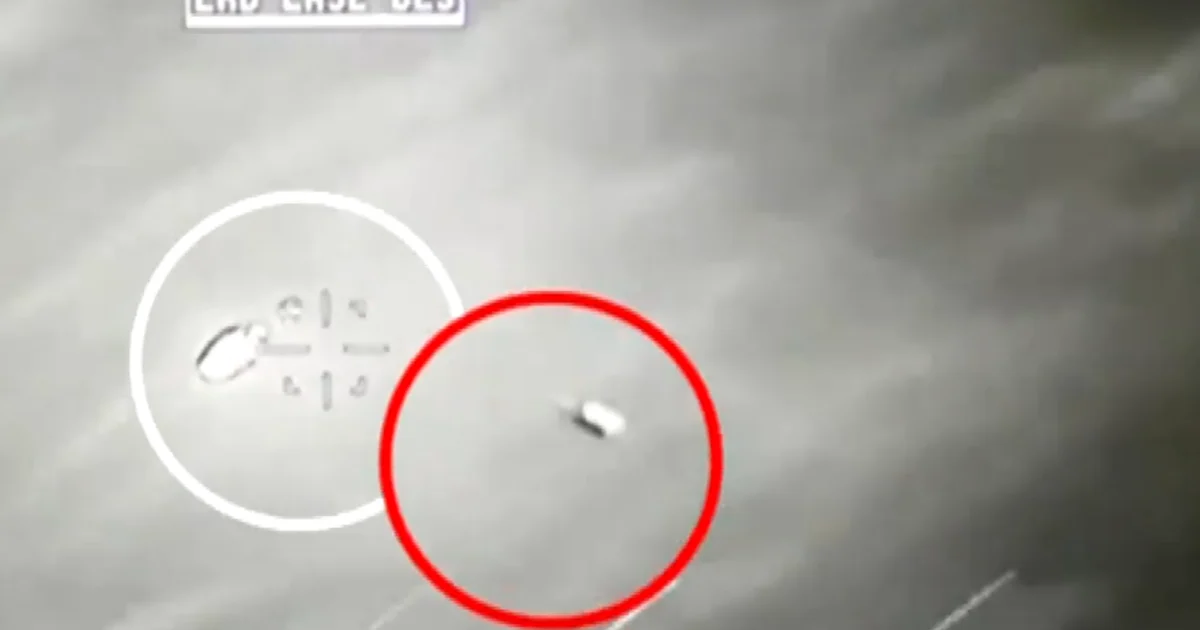
The Pentagon has initiated the release of declassified files on “Unidentified Anomalous Phenomena” (UAP), commonly known as UFOs, following calls from former President Donald Trump. These documents include photos, videos, and reports that have sparked public curiosity about the existence of extraterrestrial life.
On May 8, 2026, the Pentagon began posting previously classified information related to UAPs, responding to Trump’s directive issued earlier this year. Trump urged Defense Secretary Pete Hegseth and other officials to “begin the process of identifying and releasing Government files related to alien and extraterrestrial life, unidentified aerial phenomena, and unidentified flying objects.”
What the documents reveal
The files provide data on hundreds of UAP sightings gathered by U.S. military and intelligence agencies, including images from U.S. Indo-Pacific Command and videos showing unidentified objects interacting with missiles. One report cited more than 750 new UAP sightings recorded between May 2023 and June 2024. However, many details remain heavily redacted due to concerns over national security and surveillance technology.
Scientific perspectives on the released data
Experts reviewing the release emphasize a cautious and scientific approach, warning that no definitive evidence of extraterrestrial technology has emerged so far. Sean Kirkpatrick, former director of the Pentagon’s All-domain Anomaly Resolution Office (AARO), which investigates UAPs, told CBS News that the files are unlikely to contain proof of alien life. His investigations found explanations ranging from military exercises to covert defense projects. Kirkpatrick said, “The probability that extraterrestrial intelligent life is here is little to none.”
University of Delaware astronomer Federica Bianco, who served on a NASA UAP study panel, said she has seen nothing suggesting violations of physical laws or alien visits. Similarly, astrophysicist Neil deGrasse Tyson highlighted that billions of photos and videos uploaded daily do not show aliens, making secret government concealment implausible. Tyson described much UFO speculation as “aliens of our ignorance”—interpretations of ordinary phenomena through an extraordinary lens.
Other scientists, like Dr. Shelley Wright from UC San Diego and Harvard physicist Avi Loeb, advocate for continued scientific inquiry into UAP reports, separating mundane explanations from genuinely unexplained occurrences. Loeb pointed to past footage, explaining that some mysterious sightings turned out to be drones rather than anomalous objects.
Why it matters
The release of these files provides scientists a valuable opportunity to analyze UAP data that was previously inaccessible, potentially advancing understanding of aerial phenomena. Transparency may help dispel misinformation and conspiracy theories surrounding UFOs, while also safeguarding national security by preserving sensitive details. The public’s longstanding curiosity about unidentified flying objects ensures these disclosures will receive sustained attention.
Background
Government interest in UFOs has grown in recent years, with various agencies investigating UAP encounters. President Trump’s urging for disclosure reflected rising public demand for transparency. Prior to these releases, officials including former President Barack Obama acknowledged the likelihood of extraterrestrial life existing elsewhere in the universe but noted the absence of confirmed encounters. The new documents represent the most extensive official disclosure of UAP information to date, aligning with broader efforts to demystify and study these phenomena scientifically.
Sources
This article is based on reporting and publicly available information from the following source:
Read more Science Discoveries stories on Goka World News.