
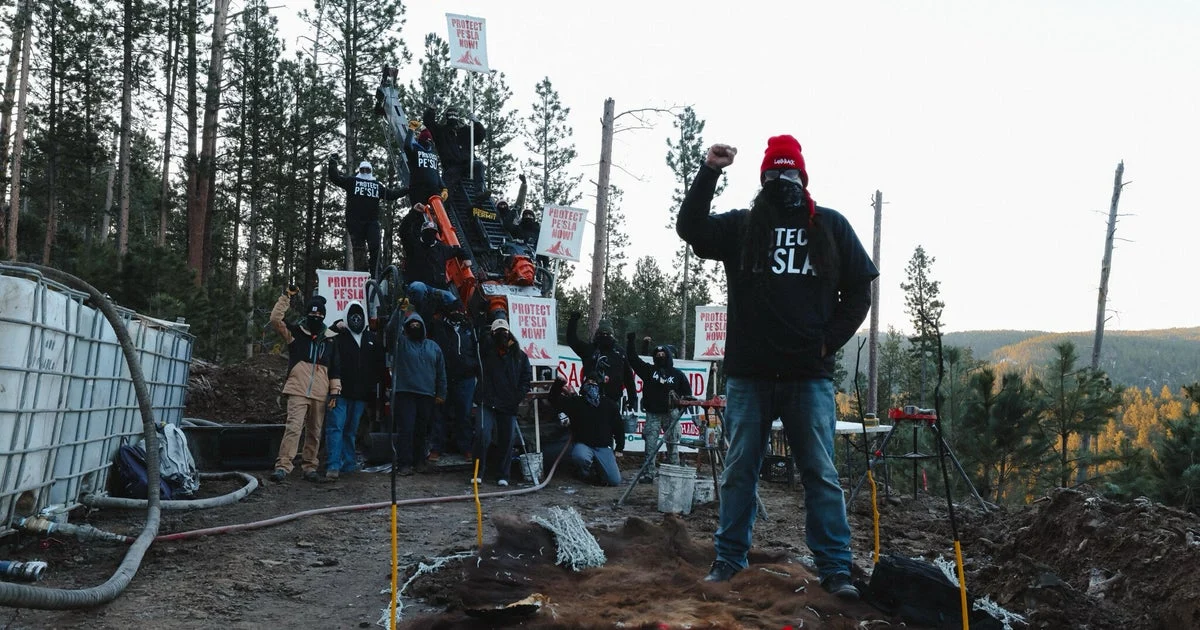
Nine Native American tribes from South Dakota, North Dakota, and Nebraska have filed a federal lawsuit seeking to stop exploratory drilling for graphite near Pe’Sla, a sacred ceremonial site in the Black Hills. The tribes allege that the U.S. Forest Service and U.S. Department of Agriculture violated federal laws by approving the drilling project without proper consultation or environmental review.
Pe’Sla, a meadow in the central Black Hills, is used year-round by the tribes for ceremonies, prayer, and youth camps. The region, known as He Sapa to the Sioux, holds profound spiritual significance and is considered “the heart of everything that is,” according to the lawsuit. Although parts of Pe’Sla are owned by Sioux tribes following land purchases in 2012, 2015, and 2018, the site sits adjacent to public lands managed by the Forest Service. An existing agreement between the tribes and the Forest Service established a two-mile buffer zone on public land around Pe’Sla.
The lawsuit contends that the mining company Pete Lien & Sons, based in Rapid City, South Dakota, broke ground on the drilling project in late April without appropriate federal environmental assessments. The Forest Service approved the project in February, categorizing it under a “categorical exclusion” which the tribes dispute, arguing the drilling could impact the site’s traditional, cultural, and religious uses. The project involves drilling up to 18 exploratory holes as deep as 1,000 feet to sample graphite deposits. Tribal advocates and environmental groups also sought a temporary restraining order and preliminary injunction to halt the drilling.
The tribes have protested at the drilling site and the mining company’s headquarters since the project began. Demonstrators have used banners with messages such as “Sacred ground not mining bound” and “Protect Pe’Sla.” The Oglala Sioux Tribe’s president, Frank Star Comes Out, described the lawsuit as a “historic demonstration of unity” among the nine tribes, emphasizing the site’s significance to Lakota people who have held ceremonies there for over 2,000 years.
The Forest Service declined to comment on the ongoing legal case and denied providing details on the project. Pete Lien & Sons did not respond to requests for comment. Activists continue to protest to protect Pe’Sla, asserting that drilling projects often precede larger mining operations that could further disrupt the sacred site.
Why it matters
This lawsuit highlights the ongoing conflict between Native American tribes’ efforts to protect culturally and spiritually significant lands and federal and commercial interests in mineral extraction. The case raises important legal questions regarding compliance with the National Historic Preservation Act and National Environmental Policy Act, specifically about consultation and environmental review processes. It also reflects broader tensions over land use and sovereignty in historically significant Native American territories.
Background
The Black Hills, spanning over 1.2 million acres in South Dakota and Wyoming, are a region rich in natural resources and cultural heritage. They attract millions of tourists annually and include landmarks such as Mount Rushmore. However, the Black Hills have long been sacred to the Sioux tribes, despite significant environmental changes since the 1870s gold rush and displacement of indigenous peoples. Recent increases in mining interests, including for gold and graphite, have revived disputes over land protection and tribal rights. The area of Pe’Sla was historically used by Lakota and other tribes and continues to serve as a key site for spiritual practices and cultural events.
Sources
This article is based on reporting and publicly available information from the following source:
Read more US News stories on Goka World News.