
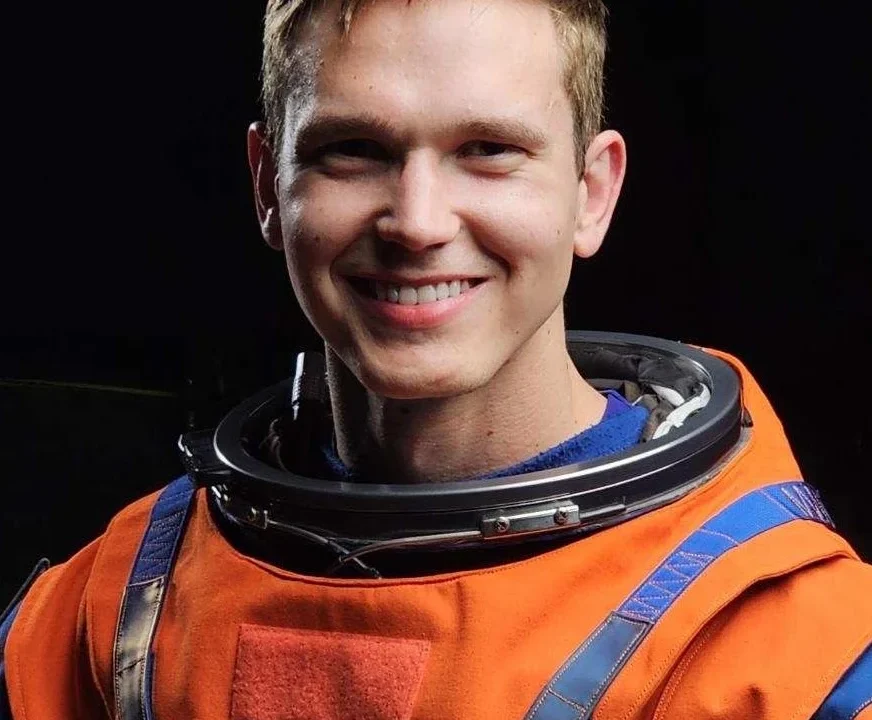
Nicholas Houghton, an engineer at NASA’s Johnson Space Center, plays a key role in developing safety systems for astronauts aboard the Orion spacecraft during NASA’s Artemis II mission around the Moon.
Houghton is part of the Orion Crew Survival Systems (OCSS) team, which designs and certifies the orange pressure suits worn by Artemis II astronauts, as well as the integrated survival hardware. He manages critical flight hardware components that ensure crew safety during potential emergency scenarios before launch, in flight, and after splashdown.
This hardware includes the Orion Crew Survival Kits, Suit-Worn Survival Suite, and Life Preserver Units. Houghton oversees these systems throughout their development, from initial design and rigorous testing to final certification, ensuring they meet all in-flight performance requirements.
Engineering the OCSS hardware requires collaboration across multiple specialties, including experts in electromagnetic interference, radiation shielding, structural stresses, and materials science. Houghton also contributes significantly to developing water survival and post-landing equipment by writing manufacturing and assembly procedures and resolving integration issues during testing.
Besides hardware development, Houghton supports astronauts and recovery teams in operational preparation. He assists with suit-up activities, trains Department of Defense recovery personnel, and participates in Underway Recovery Training exercises with the U.S. Navy to rehearse splashdown recovery procedures.
Ground testing is a crucial phase where systems undergo extreme conditions to identify and correct flaws prior to flight. Houghton noted that failures during testing demand teamwork, technical expertise, and detailed problem-solving to provide reliable solutions.
Before joining NASA full-time, Houghton worked as a Pathways intern. Outside of his NASA career, he volunteers as a firefighter and emergency medical technician, reflecting his commitment to public service.
Why it matters
The safety of astronauts on deep space missions like Artemis II depends on carefully engineered survival systems. These systems protect crews during emergencies and ensure safe recovery after landing, directly influencing mission success and crew well-being as NASA advances human exploration beyond Earth orbit.
Background
Artemis II is NASA’s first crewed mission in the Artemis program, aiming to orbit the Moon and pave the way for future lunar surface missions. The Orion spacecraft is central to this effort, equipped with advanced pressure suits and survival gear developed by teams including OCSS to meet the challenges of space travel and re-entry conditions.
Sources
This article is based on reporting and publicly available information from the following source:
Read more Space & NASA stories on Goka World News.