
As President Donald Trump prepared to meet Chinese President Xi Jinping, discussions intensified about the narrative of China’s rise as a dominant global power. The impending summit brought attention to contrasting perspectives on whether the notion of an ascendant China and American decline reflects geopolitical reality or is an overstatement.
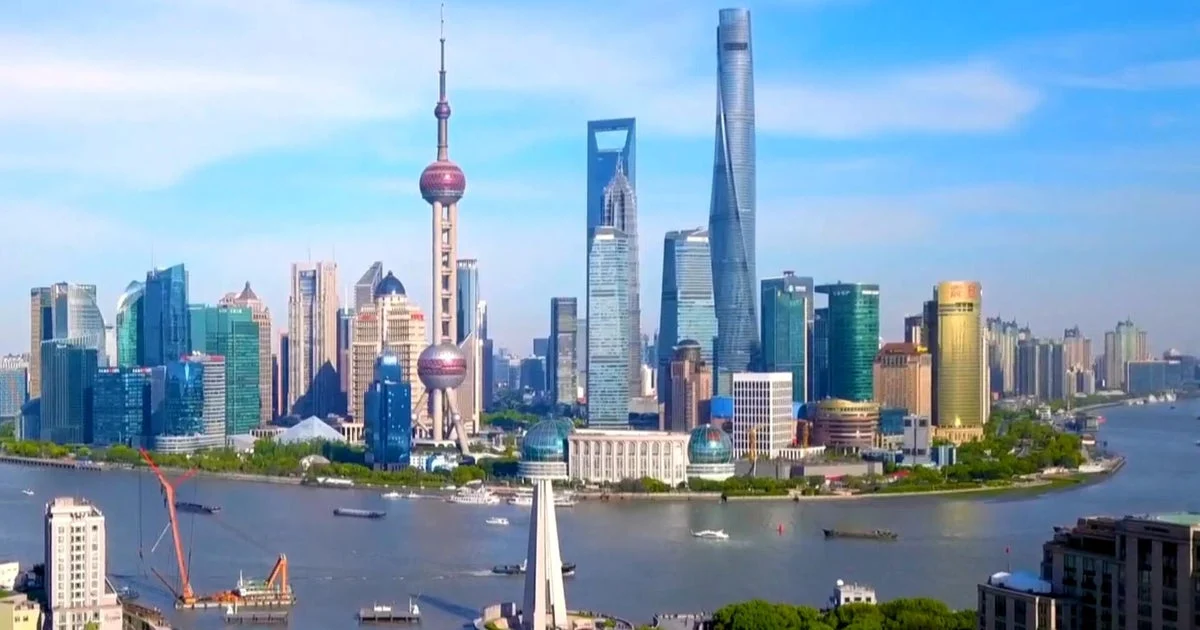
Chinese officials and media frequently promote the idea of a powerful new China emerging on the world stage. This narrative underscores China’s rapid economic growth, expanding military capabilities, and increasing influence in international affairs over recent decades. Many within China view this as a justified and inevitable development after years of modernization and reform.
In contrast, some American analysts and commentators question the extent of China’s ascendancy. They argue that despite impressive progress, China still faces challenges including an aging population, economic imbalances, and internal political constraints. The United States, although competing with China in many arenas, remains a preeminent global actor militarily, economically, and culturally.
The meeting between the two leaders provided a backdrop for these competing narratives to play out publicly, especially in the context of ongoing trade tensions, technological competition, and diplomatic frictions. Observers noted that the discourse surrounding their encounter often framed the relationship as a defining feature of 21st-century geopolitics, with significant implications for global stability and economic order.
Why it matters
The debate over China’s rise influences policymaking, international alliances, and public perceptions. How the U.S. responds to China’s growth affects trade negotiations, military strategy in the Asia-Pacific region, and global governance institutions. The narrative adopted by leaders and media can shape diplomatic tone and strategic decisions, impacting millions worldwide.
Background
China’s economic reform policies since the late 1970s have transformed it from a largely agrarian society into the world’s second-largest economy. Military modernization efforts have paralleled economic gains, prompting shifts in power dynamics, especially with the United States. Meanwhile, domestic challenges such as demographic shifts, environmental concerns, and political controls complicate China’s trajectory.
U.S.-China relations have oscillated between cooperation and competition, with trade disputes and strategic rivalry defining recent years. The Xi-Trump meetings were seen as pivotal moments to potentially recalibrate these relations amid heightened global uncertainty.
Sources
This article is based on reporting and publicly available information from the following source:
Read more Politics stories on Goka World News.