
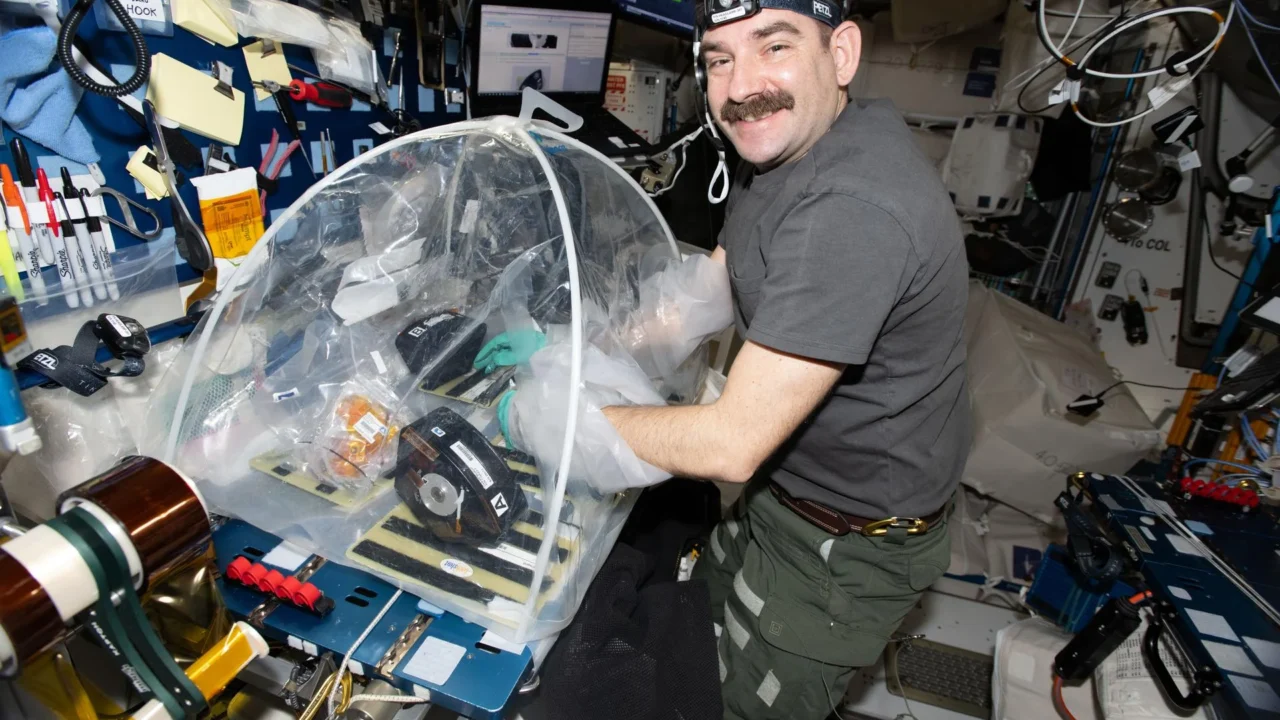
A team of researchers aboard the International Space Station (ISS) is studying how the bacteria that cause pneumonia may lead to long-term heart damage. By observing stem cell-derived heart tissues exposed to Streptococcus pneumoniae—the leading cause of community-acquired pneumonia (CAP)—scientists hope to uncover cellular responses that contribute to cardiovascular complications following infection.
In the microgravity environment of space, bacteria display heightened severity and increased drug resistance. Researchers are taking advantage of these amplified effects to better understand how bacterial infections develop and impact heart cells, revealing subtle factors that may be difficult to detect under normal Earth conditions. This approach aims to identify potential targets for treatment by clearly distinguishing infected tissue responses from uninfected controls.
“By exacerbating the infection, we anticipate clear separation of the infection and control groups, making it easier to identify subtle factors that promote bacterial virulence,” said Dr. Palaniappan Sethu, professor of Medicine and Biomedical Engineering at the University of Alabama at Birmingham.
CAP causes millions of deaths worldwide annually, and more than 25% of adults hospitalized for pneumonia develop heart disease. Even after clearing severe pneumonia infections, survivors remain at risk for cardiovascular issues. Understanding these complex interactions could enhance patient care on Earth and support health management for astronauts on long-duration missions.
Why it matters
This research has dual relevance: improving treatment options for pneumonia-related heart complications on Earth and informing health strategies for astronauts embarking on deep space exploration. As space missions extend in duration and distance, managing infectious diseases and cardiovascular risks in microgravity environments becomes essential for crew safety and mission success.
“Addressing these questions is essential for ensuring human health during long duration space travel and for enabling sustainable habitation beyond Earth,” said Dr. Carlos J. Orihuela, professor of Microbiology at the University of Alabama at Birmingham. “Our experiments are expected to generate new insights into how space-specific factors influence disease progression.”
Background
The ISS has been a valuable platform for over 25 years in studying human physiology and microbial behavior in space. Microgravity and other environmental conditions aboard the station alter how pathogens behave and affect human cells, allowing researchers worldwide to explore disease mechanisms, test drugs, and develop diagnostics.
Leveraging the unique attributes of the space environment, current investigations like the MVP Cell-09 experiment broaden scientific understanding of infectious diseases and their systemic effects, providing benefits that span terrestrial medicine and space health.
Sources
This article is based on reporting and publicly available information from the following source:
Read more Science Discoveries stories on Goka World News.