
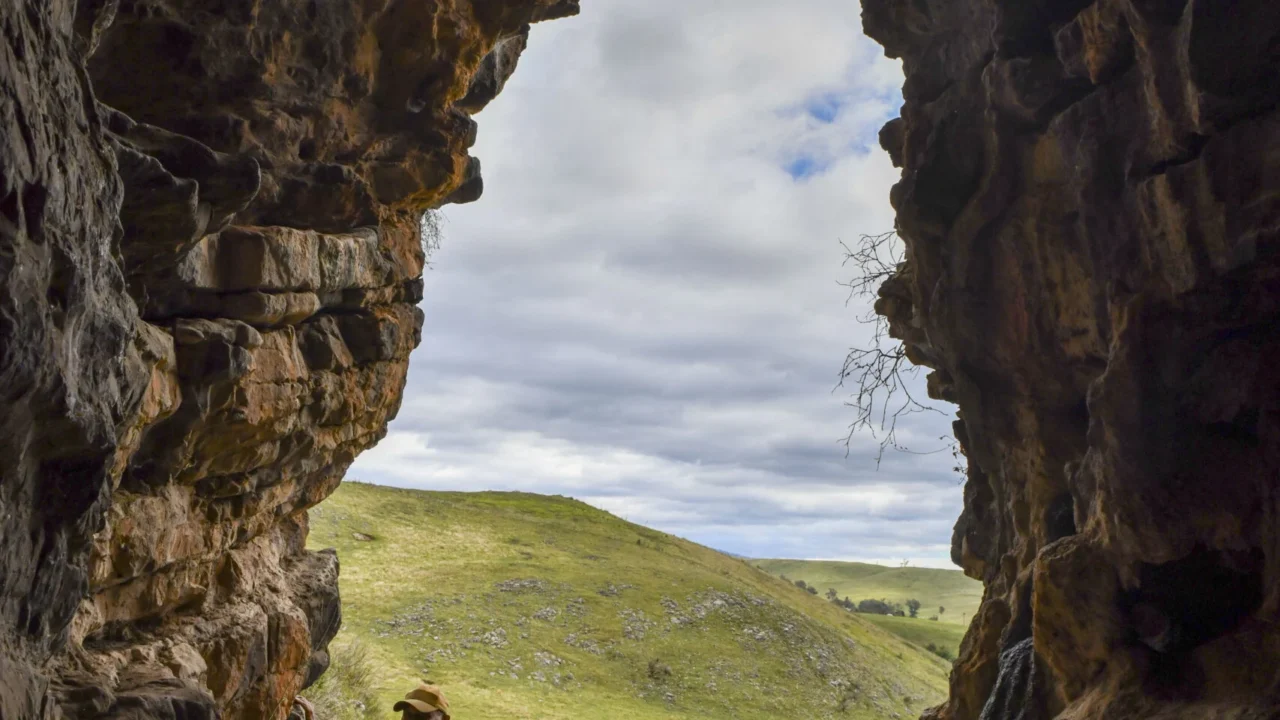
Archaeologists have documented a continuous 25,000-year history of Indigenous Australians selecting, gathering, and burning whole grasses inside Cloggs Cave in southeastern Australia, revealing long-held ritual practices connected to magic, healing, and cursing. This research offers new insights into how ancient peoples managed and used plant resources symbolically within sacred sites.
What Happened
In excavations conducted in 2019 and 2020, a team including researchers from Australia, France, and New Zealand studied plant remains recovered from deposits within Cloggs Cave on GunaiKurnai land in Victoria’s southern Alps. Using advanced microscopy techniques, they analyzed thousands of phytoliths—microscopic silica particles forming inside plant tissues—across sediment layers dated up to 25,000 years old. The investigation highlighted repeated human activity bringing selected whole grasses into the cave, which were then deliberately burned in thin layers over millennia. Complementing these findings was the discovery of a 28-centimeter standing stone inside the cave, erected around 2,000 years ago for ritualistic purposes.
Key Facts
The phytolith analysis identified 29 plant types predominantly dominated by grasses, specifically from the Pooideae (temperate/cool climate) and Panicoideae (warm/humid climate) subfamilies. Drought-resistant Chloridoideae grasses and woody plants were found in smaller proportions. Approximately 18% of the phytoliths showed evidence of burning or melting, corroborating repeated fire use inside the cave. Sedimentary dating employed optically stimulated luminescence and accelerator mass spectrometry, dating the ashy layers primarily between 4,400 and 1,600 years ago. The study was published in Frontiers in Environmental Archaeology (2026) and conducted in close collaboration with the GunaiKurnai Land and Waters Corporation, who guided research design and interpretation.
What This Means
This extensive record of selective grass burning demonstrates that the ancient occupants of Cloggs Cave maintained sophisticated botanical knowledge and cultural practices relating to ritual activities. Rather than random plant use, the deliberate gathering of entire grasses—including stems, leaves, flowers, and roots—suggests a symbolic purpose beyond nutritional needs, aligned with Indigenous traditions of magic, healing, and spiritual tracking. This highlights the enduring cultural significance of fire and plant resources in Aboriginal ceremonial contexts. The study bridges scientific archaeology with living Indigenous heritage, deepening understanding of how ecological knowledge and spiritual customs have coexisted for tens of thousands of years.
For communities today, these findings reinforce the importance of protecting traditional sites and knowledge systems that carry millennia of environmental and cultural stewardship. The recorded practices also contribute to the broader discourse on human-plant relationships, showing how ritual and environmental management are intertwined in ancient societies in ways that modern conservation and cultural heritage projects might integrate and respect.
Background
Cloggs Cave is known from 19th-century ethnographic accounts and oral traditions as a place used by GunaiKurnai spiritual practitioners called “mulla-mullung” for magic, healing, and cursing rituals. Prior archaeological evidence has indicated human occupation of the cave site for tens of millennia. This recent research builds on earlier macro-botanical finds in deeper deposits, such as fat-smeared wooden sticks from Casuarina trees, and now clarifies that grass burning was a central ritual element sustained through the entire occupation period.
What Comes Next
The researchers intend to continue collaborating with the GunaiKurnai community to further explore the archaeological record and better understand the complex ritual landscape of the cave. Ongoing studies aim to analyze additional sediments and plant remains to refine the timing and cultural contexts of the plant use, as well as to inform preservation efforts aligned with Indigenous custodianship.
Sources
This article is based on reporting and publicly available information from the following source:
Read more Science Discoveries stories on Goka World News.